What Is an Ultra Runner? Everything You Need to Know
August 27, 2026
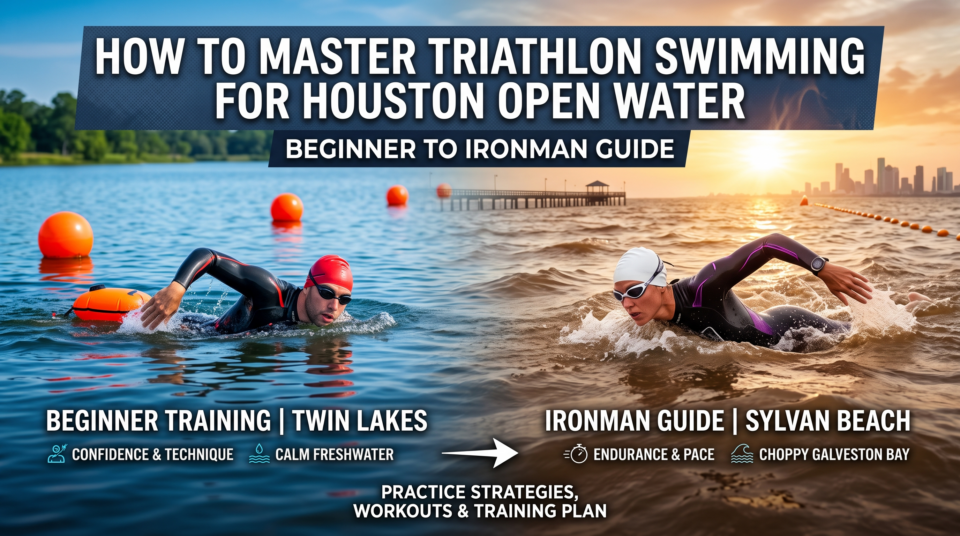
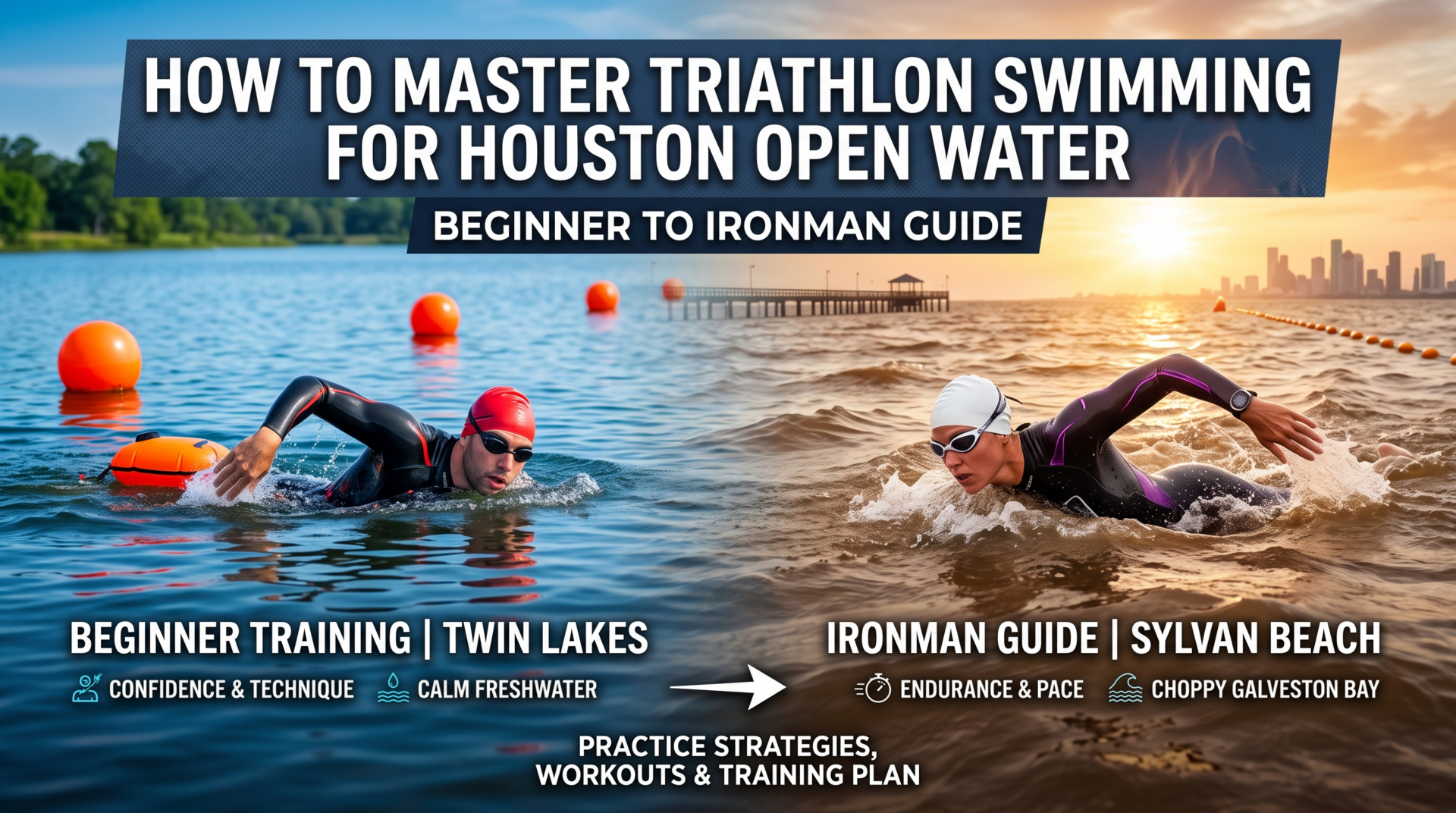
How to Master Triathlon Swimming Training for Houston Open Water
August 30, 2026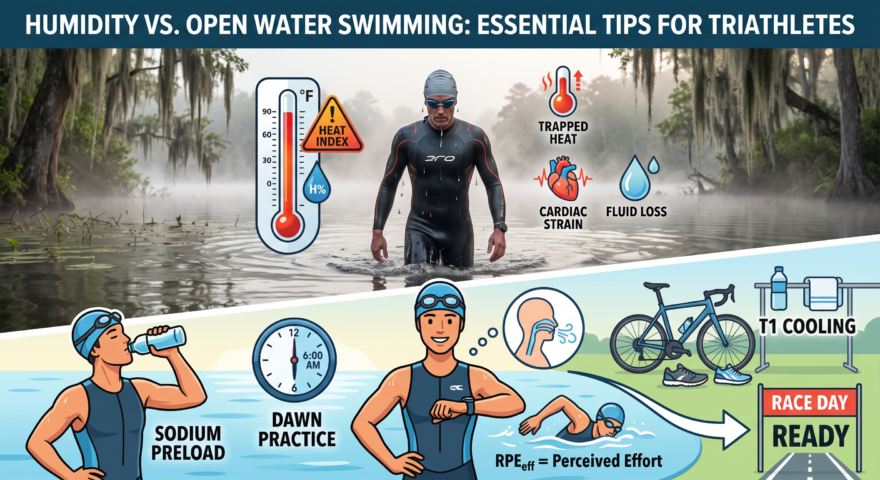
How Houston’s Humidity Affects Your Open Water Swimming Practice: Essential Tips for Triathletes
Have you noticed how your open water swimming practice in Houston feels brutally harder than training anywhere else? Humidity can hit your performance and safety just as hard as temperature itself. A dry 32°C day and a humid 32°C day feel like completely different planets. Your body cools itself through sweat evaporation – but Houston’s saturated air shuts that process down, sending your core temperature climbing faster and placing serious strain on your cardiovascular system.
That’s the Gulf Coast trap. Training for an open water swim here demands specific adjustments to your triathlon open water swim strategy that athletes from drier climates simply don’t need. Sweat rates during long-course triathlon commonly range from 0.8 to over 2.0 liters per hour – yet much of that sweat won’t evaporate when the air is already saturated. Whether you’re heading to Twin Lakes or Sylvan Beach, knowing where to practice open water swimming and how to do it safely in Houston’s heat isn’t optional. It’s critical.
Don’t worry – this guide breaks it all down. From heat acclimation and hydration protocols to training modifications and race day cooling tactics, everything here is built specifically for Gulf Coast multisport athletes.
Understanding Houston’s Humidity Challenge for Open Water Swimming
Why Gulf Coast Humidity Differs from Dry Heat
Arizona registers 85°F at 20-30% relative humidity. Houston sits at the same temperature with 70% or higher moisture levels. That gap changes everything for your open water swimming practice.
Gulf Coast humidity flows northward from the Gulf of Mexico, creating conditions that desert-climate athletes simply don’t prepare for. The numbers tell the real story. At 80°F with 35% humidity, the heat index matches the actual air temperature. Push humidity to 70%, and your body experiences 83°F. Climb to 90% humidity, and conditions feel equivalent to 86°F. For triathletes training at Twin Lakes or Sylvan Beach during peak summer months, morning humidity routinely exceeds 80% – turning an 85°F dawn session into a physiological challenge that matches 90°F+ conditions.
Humid heat proves more dangerous than dry heat for one specific reason: your body’s primary cooling mechanism stops working. Desert athletes benefit from rapid sweat evaporation that pulls heat away from skin efficiently. Gulf Coast swimmers face air already saturated with moisture, leaving almost no gradient for evaporative cooling to occur. The system breaks down entirely.
How Humid Air Reduces Sweat Evaporation During Swims
Here’s the physics behind it. Your body secretes water and salts through skin pores. As sweat converts from liquid to vapor, significant thermal energy transfers away from your body. The catch? This process only works when surrounding air can actually absorb more moisture.
On a dry day, sweat evaporates quickly and carries heat away fast. At high humidity, it evaporates slowly – or not at all. At 100% humidity, think steam room conditions, evaporation becomes impossible. Sweat pools on your skin and drips off, removing almost no heat in the process.
Research demonstrates athletes sweat more as humidity increases, with studies showing higher sweat rates at 60% and 80% relative humidity compared to 24%. Post-exercise sweat loss also remained elevated at 85% humidity versus 19% humidity at identical temperatures. For Houston triathletes finishing brick workouts before heading into an open water swim session, you’re arriving at the lake already fluid-depleted.
An 80°F day with 85% humidity registers as 88°F on your body. Factor in cardiovascular strain, and conditions feel equivalent to 110°F. Even standing in the shade becomes genuinely dangerous.
The Combined Effect of Warm Water and High Humidity
Water adds another layer to this problem. Once submerged, evaporative heat loss disappears entirely. On land, evaporation accounts for roughly 90% of total body heat loss during exercise. Underwater, that mechanism vanishes. Your only remaining option is the temperature gradient between your skin and the surrounding water.
When Twin Lakes or Sylvan Beach water temperatures climb to 80°F or higher – which happens routinely through summer – that gradient narrows dramatically and heat dissipation slows to a crawl. Research shows prolonged swimming in warm water still produces sweat rates exceeding 1 liter per hour, yet none of that sweat evaporates to help you. Your body keeps working to cool itself. The environment refuses to cooperate.
Water’s thermal conductivity sits 25 times greater than air. In cool water, that accelerates heat loss. In warm water approaching body temperature, it accelerates heat gain instead. Blood supply gets pulled between working muscles and skin simultaneously, driving meaningful cardiovascular strain as fluid volume drops.
Then you exit the water and step back into saturated air that blocks post-swim heat dissipation. Your core temperature keeps climbing even during rest stops between intervals.
The warm water and humid air don’t just compound each other – they trap Gulf Coast athletes in a physiological cycle that has no easy exit point during summer training months.
How Warm Water Temperature Affects Your Swim Performance
Typical Houston Water Temperatures Throughout the Year
August at Galveston averages 86.7°F – and frequently climbs to 90.7°F. That single number tells you everything about what Houston’s open water swimming practice venues demand from your body during peak season.
Water temperatures at Gulf Coast locations range from 77°F to 86.7°F between May and September. Twin Lakes and Sylvan Beach follow the same pattern, with afternoon readings routinely exceeding 84°F through summer. Spring offers a genuine window – April averages 71°F, making it the smartest time to build your open water triathlon fitness before heat becomes the limiting factor. The swimming season technically runs March through November, staying above 68°F, yet June through September presents conditions that stress even well-conditioned athletes.
Plan your triathlon open water swim training calendar around these temperature windows. They matter more than most athletes realize.
Why Your Body Struggles to Cool in 80°F+ Water
Water temperatures above 78°F create dangerous conditions for high-intensity endurance activity. The World Health Organization classifies 78-86°F as comfortable only for moderate physical activity. Your triathlon open water swim is anything but moderate.
Here’s the physics. Your body needs a temperature gap between your skin and the surrounding water to shed metabolic heat. As water climbs toward 80°F and beyond, that gap narrows. When water temperature exceeds skin temperature, something alarming happens – cutaneous vasodilation reverses its normal function. Instead of moving heat out of your core toward the water, dilated blood vessels start pulling heat from your skin back into deep body tissues. Core temperature accelerates upward rather than stabilizing.
The performance consequences are measurable. Research shows swimming efficiency of 15.3 meters per liter of oxygen at 25°C water temperature, dropping to just 14.2 m/L at 18°C. Muscles fatigue faster above 84°F, and sweating increases without delivering any cooling benefit. Your heart compensates by pumping faster to maintain blood pressure as fluid volume drops – a compounding cycle that carries real cardiac risk for athletes with underlying rhythm issues.
Core Temperature Rise During Extended Open Water Practice
75% of elite open water swimmers show mild hyperthermia during swims in water temperatures between 18.2-25.5°C. Those are elite athletes – not beginners, not age-groupers. You.
Higher water temperatures push peak core temperature up by 0.013-0.111°C. In conditions approaching 31°C, unpublished data indicate core temperatures exceeding 39°C within just 120 minutes of swimming. A study tracking triathletes in 27.9-28.3°C water recorded maximum core temperatures of 37.76°C without wetsuits. That matters because even a 1.5-2°C deviation from the normal 37°C baseline proves detrimental to both health and performance.
The progression during race-pace efforts in 32°C water is striking – rectal temperatures hit 38.1°C at 20 minutes, 38.3°C at 60 minutes, and 38.4°C at 120 minutes, with individual peaks reaching 39.5°C. Houston’s summer open water sessions sit squarely in this danger zone.
Heart Rate Elevation in Warm Water Conditions
Meta-analysis confirms increased heart rate following single hot-water immersion sessions compared to controlled conditions. For athletes managing heart conditions, warm water exercise compounds those vulnerabilities further.
Blood pressure can drop rapidly. Dizziness and loss of consciousness become real possibilities. These aren’t extreme edge cases at Sylvan Beach or Twin Lakes in July – they’re risks that show up in normal summer training sessions. Knowing the early warning signs isn’t optional. It’s the difference between a productive workout and a medical emergency.
Adjusting Your Training Zones for Gulf Coast Conditions
Why Your Pool Pace Doesn’t Translate to Houston Open Water
That 1:40 per 100m you hold comfortably in the pool? Expect it to look more like 1:50-2:00 per 100m at Twin Lakes or Sylvan Beach. Your open water swimming practice pace will run 10-20% slower than pool intervals at identical effort levels. This isn’t a fitness problem. It’s physics.
Several factors drive this gap, and none of them exist in a controlled pool environment:
- Wall push-offs contribute 3-5% to your pool speed. Over 1,500 meters in a 25-meter pool, you rack up 60 push-offs worth 2-3 seconds each. Open water gives you zero.
- Sighting adds 3-10 seconds per 100m. Every time you lift your head to navigate, your body position drops and drag increases. Even experienced swimmers still deviate 3-8% from the ideal course line.
- Waves and chop at Sylvan Beach can stack another 5-25 seconds per 100m depending on conditions.
- Wetsuit buoyancy and saltwater lift mask technical flaws in the pool. Tight ankles pointing toes down or knees pushing lower legs upward create real drag in open freshwater.
Stroke tempo typically climbs in open water due to fewer opportunities to glide between push-offs. Cooler conditions often let athletes convert that higher tempo into faster pace. Houston’s warm water cancels that benefit entirely through the cardiovascular strain already described above.
Training by Perceived Effort Instead of Target Times
Forget pace targets during summer sessions at Twin Lakes. Session rating of perceived exertion (RPE) becomes your most reliable tool when heat makes traditional metrics misleading. RPE pulls together breathing rate, muscle tension, rhythm, and mental focus into one honest assessment of effort.
Here’s something worth knowing. More experienced swimmers consistently match their RPE to actual physiological zones – correlation climbs from r = 0.31 in younger swimmers to r = 0.74 in more experienced ones. That awareness develops over time, and it pays off when technology fails mid-race.
One critical distinction: swimming RPE doesn’t behave like cycling or running RPE. Research shows swimming heart rate at RPE 12 runs significantly higher than cycling heart rate at the same perceived effort. Arm-based exertion requires its own calibration. You can’t simply borrow your bike effort zones and drop them into the water.
Modified Heart Rate Zones for Warm Water Sessions
Swimming heart rate zones typically run 10-15 BPM lower than land-based zones. Water cools circulation, buoyancy reduces gravitational load, and your horizontal body position improves cardiac efficiency. Well-trained younger swimmers see only a 5-7 BPM reduction.
Houston’s summer conditions flip this entirely. Heart rate jumps 2-4 BPM as temperatures rise from 60-75°F, then climbs another 10 BPM between 75-90°F. Add high humidity on top of that heat, and your zones shift further still. Dehydration piles on another layer – just 1% fluid loss raises heart rate by 7 BPM. A 150-pound athlete dropping 1.5 pounds during a single hour outdoors crosses that threshold.
Breathing zones offer a more reliable intensity marker under these conditions:
- Endurance zone – full conversation flows easily
- Stamina zone – 1-2 sentences before needing a breath
- Speed zone – single words only
- Sprint zone – grunts
Use these cues to guide effort when your heart rate monitor tells you one thing and your body tells you something different.
Accepting Slower Splits Without Losing Fitness
Slower swimming isn’t wasted swimming. Pulling back your pace during longer sets fixes technique, builds aerobic base, and teaches you to sustain effort without blowing up. Work on one stroke mechanic at a time rather than chasing the clock. Starting endurance sets at a pace you can genuinely hold prevents the mid-set collapse that produces poor average times anyway.
Your aerobic capacity builds at intensities that feel almost too easy. Training at 50-60% maximum heart rate delivers warm-up and recovery benefits that matter enormously in Houston’s conditions. Fat-burning and aerobic fitness improvements appear at 60-70% MHR – the zone where you can speak to your coach immediately post-swim without gasping. General aerobic training at the lactate threshold, where lactic acid production and clearance stay balanced, makes up 40-50% of effective programming. Trust the process. The fitness compounds even when the splits disappoint.
Hydration Strategy: Sodium Intake and Fluid Absorption in Heat
Why You Sweat More Than You Think During Water Workouts
Here’s something most swimmers miss entirely. Submerged in Twin Lakes or Sylvan Beach, you don’t feel sweat dripping down your face – so you assume you’re not losing much fluid. You are. Competitive swimmers lose an average of 0.9 liters of sweat per hour during training, with rates climbing to 1.07 L/h in warmer 33°C water. Your body sweats to regulate core temperature whether surrounded by air or water.
The numbers back this up. Swimmers carry sweat sodium concentrations of 65.4 mmol/L and chloride levels of 61.2 mmol/L – matching the electrolyte profiles of land-based endurance athletes. That means during your open water triathlon swim preparation in Houston’s 84°F+ waters, you’re losing substantial sodium despite being fully immersed. For every pound of body weight lost during swimming, replace 20 to 24 ounces of fluid.
High-Sodium Hydration Protocol for Houston Swimmers
The American College of Sports Medicine recommends 300-600 mg of sodium per hour during prolonged exercise. Sports drinks should land in the 230-690 mg/L range for optimal absorption and hyponatremia prevention. A practical target: 300 milligrams of salt per 16-ounce serving.
Houston’s extreme humidity pushes these requirements higher. Athletes exceeding sweat rates of 1.2 L/h, exercising beyond 2 hours, or noticing that familiar “salty sweat” sensation need additional sodium during and after training. White salt deposits on your swimsuit post-workout tell the story clearly – high sweat rate, high sweat sodium concentration. Don’t ignore those white marks. They’re data.
Understanding Your Fluid Absorption Limits
Your intestines absorb a maximum of approximately 600 ml of fluid per hour. Push beyond that and you get gastric distention, blood flow diverted from working muscles, and gastrointestinal distress. Forced fluid consumption at 900 ml/h caused earlier exercise termination and shorter session durations compared to voluntary drinking at 472 ml/h.
One mistake triathletes make before their open water swimming practice – chugging plain water. This dilutes blood sodium levels and raises your hyponatremia risk. More water isn’t always better. Smarter water is.
Pre-Swim and Post-Swim Hydration Timing
Preload with a high-strength electrolyte drink containing 1,500 mg sodium per liter approximately 60-90 minutes before swimming. Drink one serving the night before, another 90 minutes pre-swim, and finish 45 minutes before you enter the water.
Post-swim recovery demands consuming 150% of fluid losses within 2-3 hours. Weigh yourself before and after sessions at Twin Lakes to track actual losses. Adding sodium to post-swim beverages promotes water retention, which speeds rehydration before your next training session.
Practical Training Modifications for Houston’s Climate
Scheduling Dawn Open Water Swim Sessions
The coolest part of a Houston summer day disappears fast. Starting your open water swimming practice at 7am or earlier puts you in the water before heat index values climb into dangerous territory. Early morning sessions at Twin Lakes or Sylvan Beach also come with lower trail and road traffic, giving you cleaner conditions for transition practice and brick workouts.
Morning humidity still tops 80% along the Gulf Coast. But air temperatures run 8-12°F cooler than afternoon peaks – and that gap is enough to get your technique work done before metabolic heat becomes the limiting factor.
Indoor Pool Training During Peak Heat Hours
Late morning through late afternoon belongs indoors. Pool temperatures held at 78-80°F give you a stable thermal environment stripped of solar radiation and saturated air. No squinting through backstroke sets into direct sun. No environmental variables derailing your lactate threshold efforts. Just clean, controlled interval work where pace targets actually mean something.
Heat Acclimation Through Sauna or Hot Bath Protocols
Here’s something most Gulf Coast triathletes skip entirely – deliberate heat acclimation outside of training. Post-workout sauna sessions build heat adaptation without piling onto training stress. The protocol is straightforward: 30 minutes in a sauna, four times per week, for three weeks, with temperature set to 180-194°F. Benefits appear within 5-7 exposures and peak after 10 consecutive sessions.
Hot water immersion works equally well. Submerge to neck level in 104°F water for 30-40 minutes immediately after your workout. Six consecutive days of 40-minute sessions delivers meaningful adaptation, though most athletes need to build up from shorter initial exposures. Both approaches expand plasma volume and sharpen sweat efficiency – without adding a single yard to your training load.
Where to Practice Open Water Swimming Near Houston
Two venues stand out for Gulf Coast triathlon prep:
Lake Longhorn in League City offers 43 acres of freshwater with summer temperatures reaching 89°F. Personal swim buoys are mandatory – no lifeguards on duty. Marked course layouts make it practical for learning how to train for an open water swim at any experience level.
Twin Lakes Scuba Park in Manvel runs $10 cash entry. Wetsuit or personal flotation device requirements are non-negotiable – liability insurance demands it. Get there early. Parking restrictions kick in once the gates close.
Cross-Training on Indoor Trainers to Preserve Energy
Shift your bike intervals to indoor trainers when the afternoon heat index goes triple digits. Your legs stay sharp for evening open water triathlon sessions. Your body avoids the cumulative fatigue that stacks up fast when you grind through dangerous heat multiple times a day.
Race Day Core Cooling and Heat Illness Prevention
Pre-Race Cooling Tactics: Ice Vests and Cold Towels
Race morning at Memorial Hermann IRONMAN Texas. The sun isn’t fully up yet, and you’re already sweating. What you do in the 30 minutes before your swim start can meaningfully impact how your core temperature holds through the entire race.
Cold water immersion ranks as the most effective method for dropping core temperature before racing, yet ice slurry ingestion stands out as the most practical alternative. Consume 6.8-14 g/kg body mass spread over 30 minutes before your swim start. Cooling vests get used frequently at hot race starts, yet research shows they test as less effective than ice slushies. Here’s why – vests cool efficiently only when a temperature gradient exists between your skin and the ice. Once the vest warms up, that gradient disappears. Worse, a warm vest actively impedes evaporation.
Drink the slushie. Skip the vest.
Managing Body Temperature at Triathlon Swim Starts
Apply cold towels to your neck, wrists, and head immediately before entering the water. The neck is particularly effective – major blood vessels sit close to the surface there, making it one of the fastest routes to regulate core temperature. Right before you wade in, splash cold water over your head and down the front of your wetsuit to minimize the thermal contrast.
Small steps. Big difference when the heat index is pushing 105°F.
Recognizing Early Signs of Heat Stress
Every Gulf Coast triathlete needs to know these warning signs. Heat exhaustion produces:
- Heavy sweating
- Headache
- Dizziness
- Nausea
- Elevated heart rate
Core temperature during heat exhaustion typically runs 101-104°F. These symptoms are serious – but manageable if caught early.
Confusion, slurred speech, or loss of consciousness are different. These signal heat stroke – a medical emergency with core temperature exceeding 104°F that requires immediate cooling and emergency services. Don’t wait. Don’t walk it off. Act immediately.
Post-Swim Cooling Strategies Before Transition
The moment you exit the water, your window for rapid cooling opens. Apply ice towels directly to your neck and head before moving through transition. Cold water immersion post-swim remains the fastest method for pulling core temperature back down. Even a 60-second cold water dunk buys meaningful recovery before you mount your bike and head into the Houston heat for the long haul.
Key Takeaways
Houston’s heat doesn’t play fair. The combination of extreme humidity and warm water temperatures creates physiological demands that generic heat protocols simply won’t solve. Your open water swimming practice at Twin Lakes or Sylvan Beach needs modified training zones, aggressive sodium replacement, strategic session timing, and deliberate heat acclimation built into your program.
The Gulf Coast conditions are brutal. There’s no getting around that. What separates athletes who thrive here from those who struggle comes down to preparation and consistency. Apply these strategies session after session, and Houston’s climate stops being a limiting factor. It becomes the very thing that toughens you up for race day.
Respect your body’s cooling limitations. Recognize early heat stress symptoms. Stay disciplined with your hydration and timing. The conditions demand it – and proper preparation makes them manageable.
Key Takeaways
Houston’s extreme humidity and warm water create unique physiological challenges that demand specific training adaptations beyond standard heat protocols for successful triathlon preparation.
• Expect 10-20% slower pace in open water: Your pool times won’t translate to Houston venues like Twin Lakes due to warm water (80°F+), humidity, and lack of wall push-offs.
• Train by effort, not pace targets: Use RPE (rate of perceived exertion) and breathing zones instead of heart rate or pace when heat makes traditional metrics unreliable.
• Consume 300-600mg sodium per hour: Houston’s humidity increases sweat rates beyond 1L/hour even while swimming, requiring aggressive electrolyte replacement to prevent hyponatremia.
• Schedule sessions at dawn: Early morning training (before 7am) provides 8-12°F cooler temperatures and lower heat index values before dangerous afternoon conditions develop.
• Implement heat acclimation protocols: Post-workout sauna (30 min, 4x/week) or hot bath immersion (104°F, 30-40 min) expands plasma volume and improves sweat efficiency within 5-7 sessions.
The Gulf Coast climate becomes a competitive advantage when you respect your body’s cooling limitations, recognize early heat stress symptoms (confusion, dizziness, rapid heart rate), and consistently apply these evidence-based strategies throughout your training season.
FAQs
Q1. How can I overcome fear of open water swimming as a beginner triathlete? Start by using a swim buoy for safety and visibility—it provides something to hold onto if you need a breather. Practice in shallow, clear water close to shore before venturing deeper. Swimming with a buddy or joining a local triathlon group helps build confidence. Gradually increase your distance from shore as you become more comfortable, and remember that wearing a wetsuit adds buoyancy that makes floating easier.
Q2. Why does my swimming pace feel so much slower in open water compared to the pool? Open water swimming typically runs 10-20% slower than pool swimming due to several factors. You lose the speed advantage of wall push-offs, which contribute 3-5% to pool pace. Sighting to navigate adds 3-10 seconds per 100 meters, and waves or chop can add another 5-25 seconds depending on conditions. Additionally, you can’t see lane lines to guide you, causing most swimmers to deviate 3-8% from the ideal course line.
Q3. How much should I drink during open water swim training in hot conditions? Your body can absorb approximately 600ml of fluid per hour maximum. Aim for sodium intake of 300-600mg per hour during prolonged exercise, with sports drinks containing 230-690mg of sodium per liter. Preload with a high-strength electrolyte drink (1,500mg sodium per liter) about 60-90 minutes before swimming. After your session, consume 150% of fluid losses within 2-3 hours to properly rehydrate.
Q4. What’s the best time of day to practice open water swimming in Houston’s heat? Schedule your open water sessions before 7am to take advantage of the coolest temperatures of the day. Early morning training provides 8-12°F cooler air temperatures compared to afternoon peaks, though humidity will still be high. Reserve high-intensity interval work for indoor pools during late morning through late afternoon when outdoor heat becomes dangerous.
Q5. How can I tell if I’m experiencing heat stress during open water swimming? Watch for heavy sweating, headache, dizziness, nausea, and elevated heart rate—these indicate heat exhaustion with core temperature typically between 101-104°F. More serious warning signs include confusion, slurred speech, or loss of consciousness, which signal heat stroke (core temperature above 104°F) requiring immediate medical attention. If you experience any of these symptoms, exit the water immediately and begin cooling measures.