

The Hidden Benefits of Running Hills: What Science Actually Proves
September 2, 2025
Top 10 Benefits of Private Triathlon Swim Lessons for Faster Skill mastery
September 15, 2025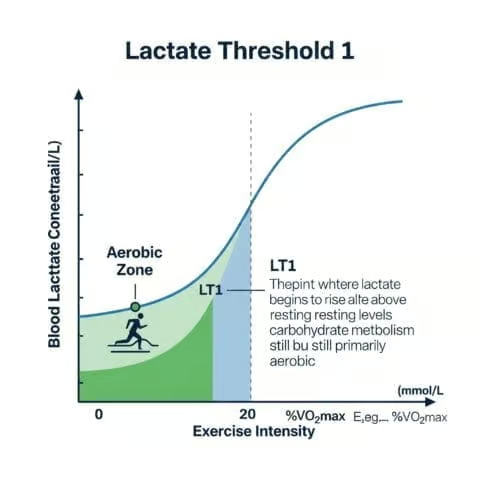
Lactate Threshold LT1 is a critical concept for athletes, especially those engaged in endurance sports like running, cycling, and swimming. It represents the point during exercise when lactate begins to accumulate in the bloodstream at a faster rate than it can be removed. Unlike the more commonly discussed Lactate Threshold LT2, which marks a more pronounced increase in lactate levels, LT1 occurs at a lower intensity and is crucial for establishing a baseline for endurance training.
Understanding LT1 is vital as it helps you gauge the intensity at which you can train for prolonged periods without experiencing fatigue. This threshold is typically expressed in terms of heart rate or power output, and identifying it allows you to tailor your workouts to improve performance effectively. By training at or just below this threshold, you can enhance your body’s ability to utilize oxygen more efficiently, leading to better endurance.
Incorporating LT1 into your training regimen requires a solid understanding of your physiological responses. It helps you optimize your training zones, ensuring that you are neither overtraining nor undertraining. By focusing on LT1, you can progressively build your endurance base, which is the foundation for more intense training stimuli as you advance.
The Science Behind Lactate Threshold LT1
The science of Lactate Threshold LT1 is rooted in the body’s metabolic processes. During exercise, your muscles convert glucose into energy. This process produces lactate as a byproduct. At lower exercise intensities, the body efficiently clears lactate, maintaining a balance. However, as intensity increases to LT1, lactate production begins to surpass the clearance rate.
This physiological phenomenon is crucial because it indicates the shift from aerobic to anaerobic energy systems. While the body primarily relies on aerobic metabolism at lower intensities, the gradual accumulation of lactate signals the increased involvement of anaerobic pathways. Training around LT1 can enhance your aerobic capacity, allowing you to exercise longer before lactate builds up.
Research has shown that improving your LT1 can directly enhance your performance in endurance sports. By increasing the intensity at which LT1 occurs, you can sustain higher exercise intensities for longer durations before fatigue sets in. This makes understanding and optimizing LT1 a key element in any serious athlete’s training plan.
Importance of Lactate Threshold LT1 in Endurance Training
Lactate Threshold LT1 is not just a physiological marker; it is a cornerstone of effective endurance training. Training at or near LT1 can help improve your cardiovascular efficiency and muscular endurance. By regularly engaging in workouts that target LT1, you increase the mitochondria in your muscles, enhancing your body’s capacity to produce energy aerobically.
For endurance athletes, maintaining a steady pace over long distances is crucial. Training around LT1 allows you to develop this skill, as it teaches your body to efficiently manage energy resources. This is essential for events like marathons, long-distance cycling races, or triathlons, where pacing and stamina are key determinants of success.
Additionally, focusing on LT1 helps in preventing overtraining, a common pitfall for endurance athletes. It encourages a balanced approach to training that prioritizes gradual improvement and recovery. By understanding and applying LT1, you ensure that your training is both effective and sustainable, reducing the risk of injury and burnout.
How to Determine Your Lactate Threshold LT1
Determining your Lactate Threshold LT1 can be achieved through various methods, each with varying degrees of complexity and accuracy. One of the most accurate ways is through a laboratory test, where blood lactate levels are measured at different exercise intensities. However, this option may not be accessible to everyone due to cost and availability.
For a more practical approach, you can estimate your LT1 using field tests. These involve performing steady-state exercises, such as running or cycling, at gradually increasing intensities while monitoring your heart rate or power output. By identifying the point at which your heart rate or power output plateaus or slightly increases, you can approximate your LT1.
Wearable technology has also made it easier to track and estimate LT1. Devices equipped with heart rate monitors and GPS can help you log data during workouts, which can then be analyzed to find your LT1. This data-driven method offers a convenient way to personalize your training and make informed adjustments as your fitness level progresses.
Training Methods to Improve Lactate Threshold LT1
Improving your Lactate Threshold LT1 requires a structured approach that blends various training methods. One effective strategy is the incorporation of long, steady-state aerobic workouts. These sessions should be performed at or just below LT1, allowing your body to adapt to sustained efforts and improve its efficiency at utilizing oxygen.
Interval training is another powerful tool for enhancing LT1. By alternating between periods of high-intensity effort and recovery, you stress your aerobic and anaerobic systems, prompting adaptations that raise your LT1. It’s essential to ensure that the high-intensity intervals are challenging enough to stimulate improvement but not so strenuous that they lead to overtraining.
Incorporating cross-training activities can also benefit your LT1. Engaging in different endurance disciplines, such as swimming or cycling, provides variety and reduces the risk of injury while still targeting your aerobic capacity. This holistic approach ensures that your training remains balanced and effective, promoting long-term development in your endurance capabilities.
Common Misconceptions About Lactate Threshold LT1
One common misconception about Lactate Threshold LT1 is that it is a fixed point that cannot be changed. In reality, LT1 is dynamic and can be improved through targeted training. Many athletes mistakenly believe that their LT1 is determined solely by genetics, but with consistent and well-designed training, significant improvements can be made.
Another misunderstanding is that LT1 is only relevant for elite athletes. While it is true that professional athletes benefit greatly from optimizing their LT1, recreational athletes can also enjoy substantial gains. By focusing on LT1, even amateur athletes can enhance their endurance, leading to better performance and increased enjoyment of their sport.
Lastly, some athletes confuse LT1 with LT2, assuming they are the same. While both thresholds are critical, they occur at different intensities and serve distinct purposes. LT1 is the initial point of lactate accumulation, while LT2 marks a more significant increase. Understanding the difference between these thresholds is crucial for effective training and performance enhancement.
The Role of Nutrition in Lactate Threshold LT1
Nutrition plays an integral role in optimizing your Lactate Threshold LT1. Consuming a balanced diet rich in carbohydrates, proteins, and fats provides the necessary fuel for training and recovery. Carbohydrates, in particular, are vital as they serve as the primary energy source during endurance activities.
Timing your nutrition intake can also impact your LT1. Consuming carbohydrates before and during prolonged workouts helps maintain glycogen stores, delaying the onset of fatigue and allowing you to train effectively at or near LT1. Post-workout nutrition, including proteins and carbohydrates, aids in recovery and supports the adaptations needed to improve your LT1.
Hydration is another crucial factor. Adequate fluid intake ensures that your body maintains optimal physiological functions during exercise. Dehydration can impair your performance and recovery, hindering progress towards improving your LT1. By prioritizing nutrition and hydration, you provide your body with the tools it needs to enhance endurance and performance.
Monitoring Progress: Tracking Your Lactate Threshold LT1
Tracking your progress in improving Lactate Threshold LT1 is essential to ensure that your training is effective. Regularly testing your LT1 through field tests or using wearable technology provides valuable insights into how your body is adapting. This data allows you to adjust your training regimen to continue making gains.
Creating a training log can be incredibly beneficial. By recording your workouts, including intensity, duration, and perceived exertion, you can identify patterns and make informed decisions about your training. This systematic approach helps you stay accountable and focused on your goals, making it easier to track improvements in your LT1 over time.
Engaging with coaches or utilizing specialized software can further enhance your ability to monitor LT1. Coaches can offer personalized feedback and adjustments to your training plan, while software can analyze your data to provide detailed insights. Both resources can help ensure that you are on the right track to achieving your endurance goals.
Case Studies: Athletes Who Improved Their Performance Through LT1 Training
Examining case studies of athletes who have successfully improved their performance through LT1 training can provide valuable insights and inspiration. Many elite endurance athletes have documented their experiences with LT1-focused training, highlighting its role in achieving personal bests and breaking records.
For instance, a distance runner may share how incorporating LT1 workouts into their training plan allowed them to run faster marathons by improving their pacing and stamina. Similarly, a cyclist might discuss how LT1 training helped them sustain higher power outputs over long distances, leading to better race results.
These real-world examples underscore the transformative potential of LT1 training. By following the principles and methods discussed in these case studies, you can apply similar strategies to your own training, unlocking new levels of performance and endurance.
Conclusion: Embracing Lactate Threshold LT1 for Enhanced Endurance
Embracing Lactate Threshold LT1 as a fundamental aspect of your training can significantly enhance your endurance and overall athletic performance. By understanding what LT1 is and how it impacts your body, you can tailor your training to maximize its benefits. From adjusting nutrition to incorporating specific workouts, every element plays a vital role in optimizing your LT1.
As you continue on your endurance journey, remember to monitor your progress and remain flexible in your approach. By doing so, you can ensure that your training remains effective and aligned with your goals. Whether you are an elite athlete or a recreational enthusiast, focusing on LT1 can lead to meaningful improvements and a deeper enjoyment of your sport.
Take The Next Step
Are you ready to take your endurance training to the next level? Start by determining your Lactate Threshold LT1 and incorporating it into your training plan. With the right approach, you can enhance your performance and achieve your athletic goals. As you focus on breaking through performance plateaus, consider adjusting your interval training sessions and exploring new workout techniques. These changes can provide the stimulus your body needs to adapt and grow stronger. Remember, variety is key to keeping your training engaging and effective.
Schedule a Performance Test To Determine Your Lactate Threshold LT1