
Understanding Lactate Threshold LT1 and Its Importance in Endurance Training
September 4, 2025
Triathlon Swim Distances: Complete Breakdown for Every Race Type
September 17, 2025
Swimming might feel like your biggest challenge in triathlon training. Don’t worry – you’re not alone.
Most triathletes find themselves struggling with the swim segment, watching precious minutes slip away before they even reach their bikes. Group classes follow a one-size-fits-all approach that leaves many athletes frustrated with their progress. Private swimming instruction changes this equation entirely.
Here’s the reality: one-on-one attention allows instructors to spot and fix your technique flaws immediately, building proper form from day one instead of reinforcing bad habits. You progress at your own pace without feeling self-conscious around stronger swimmers. Every minute of instruction focuses exclusively on your needs.
The investment runs higher upfront – typically $300-$1,000 per package versus $50-$200 for group sessions. Yet this focused approach delivers superior value over time. Private lessons require fewer total sessions to achieve mastery, often cutting your learning curve in half. For triathletes specifically, this personalized coaching can dramatically improve your stroke mechanics and water efficiency.
Time matters in triathlon performance. These 10 benefits show exactly why private swim coaching delivers the fastest path to swimming success.
Tailored Swim Instruction for Triathlon Success
Did you know that elite swimmers use 70% less energy than beginners to cover the same distance? Private triathlon swim coaching bridges this efficiency gap through personalized instruction that targets your specific weaknesses.
Key features of private triathlon swim lessons
Modern private swim instruction goes far beyond traditional coaching methods:
- Video analysis technology with multiple in-pool cameras that capture 360-degree views of your freestyle stroke technique
- Immediate feedback with instant video replay to identify and correct mistakes in real-time
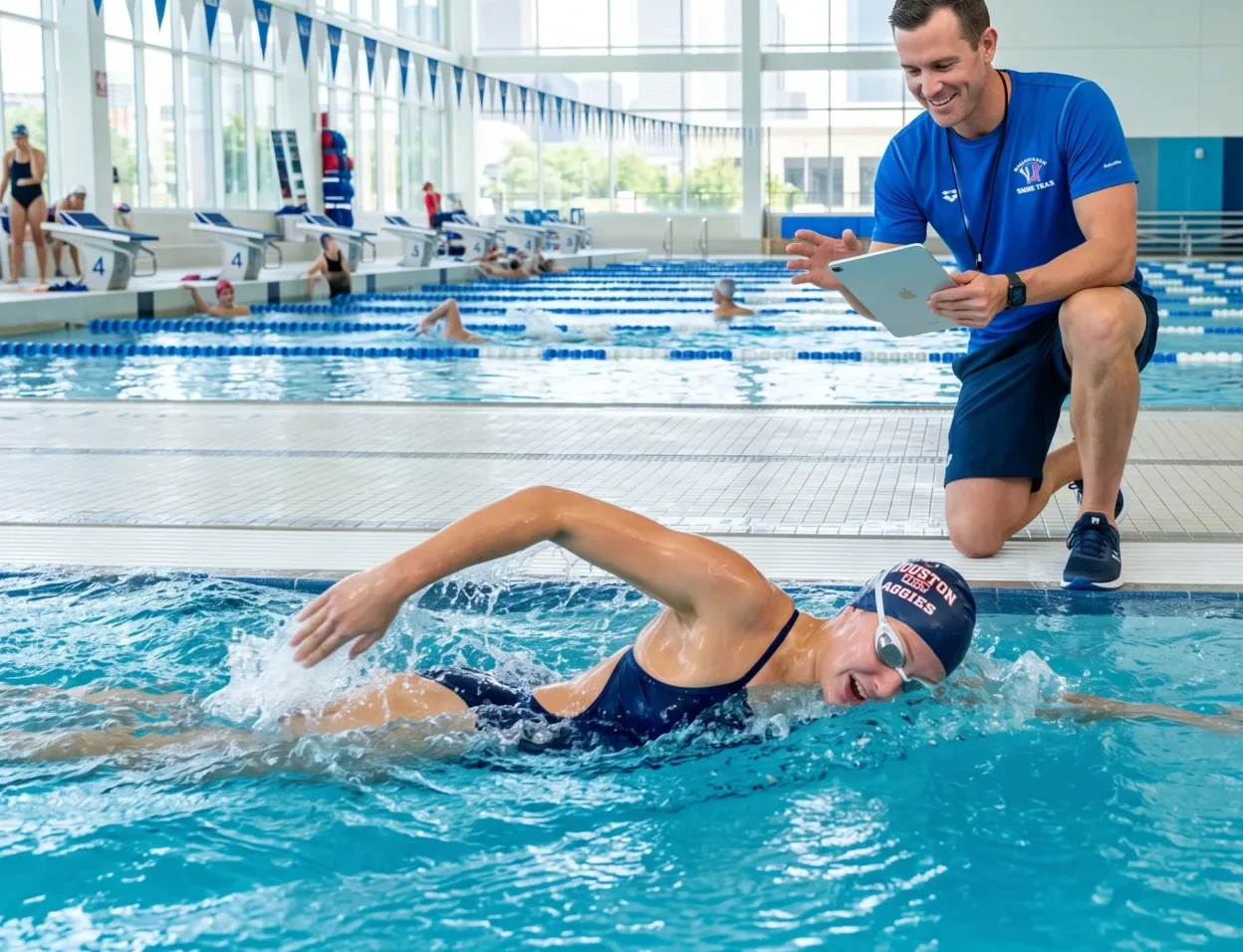
- Personalized attention from instructors focused solely on your technique and progress
- Warm water pools with mirrors on the bottom in some facilities to help visualize proper body position
- Flexible scheduling options that accommodate your existing training regimen
Why tailored instruction matters for triathletes
Swimming efficiently can make or break your race performance. Triathlon swimming demands specialized skills that basic pool lessons simply don’t address.
Energy conservation takes priority over raw speed. Expert coaches teach you to exit the water with a lower heart rate, preserving strength for the bike and run segments ahead. This strategic approach pays dividends when fatigue sets in during later race stages.
Personalized coaching attacks your specific weak points head-on. Struggling with bilateral breathing? Poor sighting technique? Inefficient stroke mechanics? Your instructor develops targeted drills that address these exact issues.
Need help with your swim performance? Schedule a consult and discuss your training needs and options with a swim coach.
Best for beginners and advanced athletes alike
Swimming proficiency shouldn’t determine whether private lessons benefit you.
Beginners gain a supportive environment to build fundamental skills without comparison pressure. You master concepts at your own pace, spending extra time on challenging techniques.
Advanced triathletes access highly specialized instruction focused on race-specific demands. Coaches refine minute stroke details for maximum efficiency, develop pacing strategies, and incorporate transition training from swim to bike.
Private swimming instructions vs. group training
The differences between private and group instruction become clear quickly.
Private lessons adapt to your learning speed – racing through easy concepts or drilling challenging techniques until mastery occurs. Group classes follow predetermined progressions that rarely match individual needs.
Undivided attention throughout your entire session accelerates improvement through increased practice repetitions and immediate corrections. Every stroke receives scrutiny and guidance.
Private lessons typically start around $70 for a 30-minute session versus group rates beginning around $50. Most triathletes discover this investment delivers superior value through fewer total sessions required for skill mastery.
Accelerated Learning Curve for Triathletes
Most swimmers think building strength and endurance will make them faster. The reality? Private coaching can transform your technique in as few as 5 lessons – a breakthrough that typically takes months through traditional group training.
How private lessons shorten the learning curve
The mathematics behind accelerated improvement proves straightforward:
- Immediate error correction – coaches identify and fix technique issues on the spot
- Focused practice time – no waiting for turns or sharing instructor attention
- Customized drills – exercises tailored specifically to your weaknesses
- Accelerated learning format – lessons taught over consecutive days instead of weekly sessions
Students in private lessons often see dramatic improvements daily as opposed to incremental progress over weeks or months. This concentrated approach allows you to build upon skills rapidly without forgetting between sessions.
Private instruction creates “self-coaching” capabilities much faster. You learn not just what to do, but why proper techniques work. This understanding enables you to identify and correct your own movements while swimming. The self-awareness continues improving your performance long after formal lessons end.
Real-world examples of faster skill mastery
Many triathletes perfect their strokes in just 5 private sessions, though 8 lessons are typically recommended for optimal results. You can achieve in weeks what others struggle with for months.
Video analysis particularly accelerates this process. Instead of trying to visualize corrections based on verbal feedback alone, you see your mistakes and improvements in real-time. This visual confirmation substantially speeds up technique implementation.
Why this matters in race preparation
Efficient technique mastery directly impacts your race performance. Unless you’re an elite athlete, your primary goal should be exiting the water with a low heart rate. Energy conservation during the swim pays dividends throughout your bike and run segments.
Proper technique learned through private coaching significantly reduces injury risk. Swimming with incorrect form commonly leads to shoulder, back, neck, and hip injuries. Faster technique mastery means safer training with fewer setbacks.
Private lessons teach proper acceleration and pacing strategies. You learn to start strong but dial back to sustainable effort, preventing the common mistake of burning out early. This race-specific knowledge translates directly to better overall triathlon performance.
Technique Refinement for Competitive Edge
Even a 2-degree change in your elbow angle can reduce swimming power by up to 15%. Most competitive triathletes never realize how much speed they’re leaving in the water.
Small technique flaws multiply over race distances. That slight crossover in your stroke costs you precious seconds with every arm cycle, while poor breathing rhythm sabotages your pacing strategy before you reach the first buoy.
Focus on stroke mechanics and breathing
Breathing separates efficient swimmers from struggling ones. Watch any triathlon swim start and you’ll spot the common errors immediately:
- Holding breath underwater instead of continuous exhalation
- Lifting the head forward rather than rotating to breathe
- Quick, shallow gasps that create oxygen debt
- Breathing too frequently, leading to hyperventilation
Private coaching transforms these flawed patterns. You’ll master continuous underwater exhalation and controlled breathing that maintains your stroke rhythm. Bilateral breathing during training develops symmetrical technique and improves straight-line navigation.
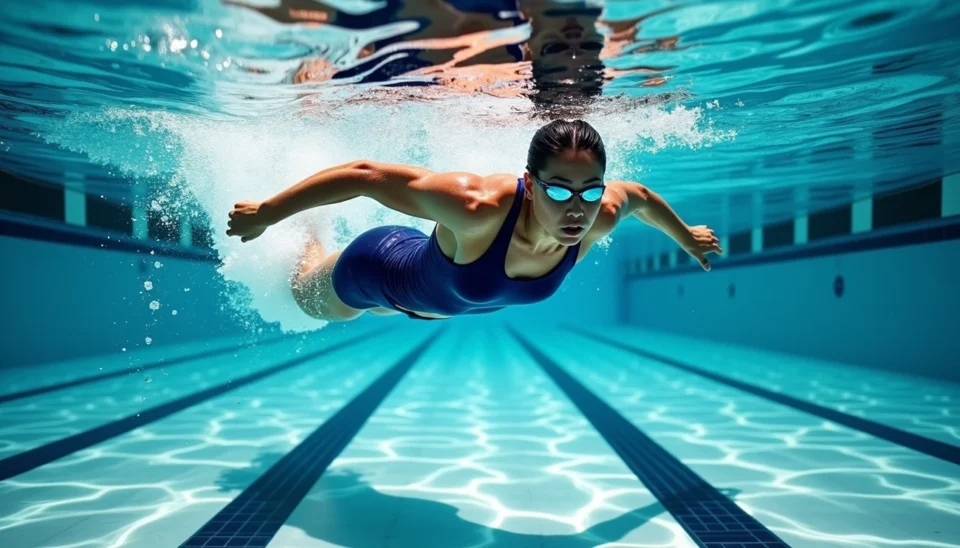
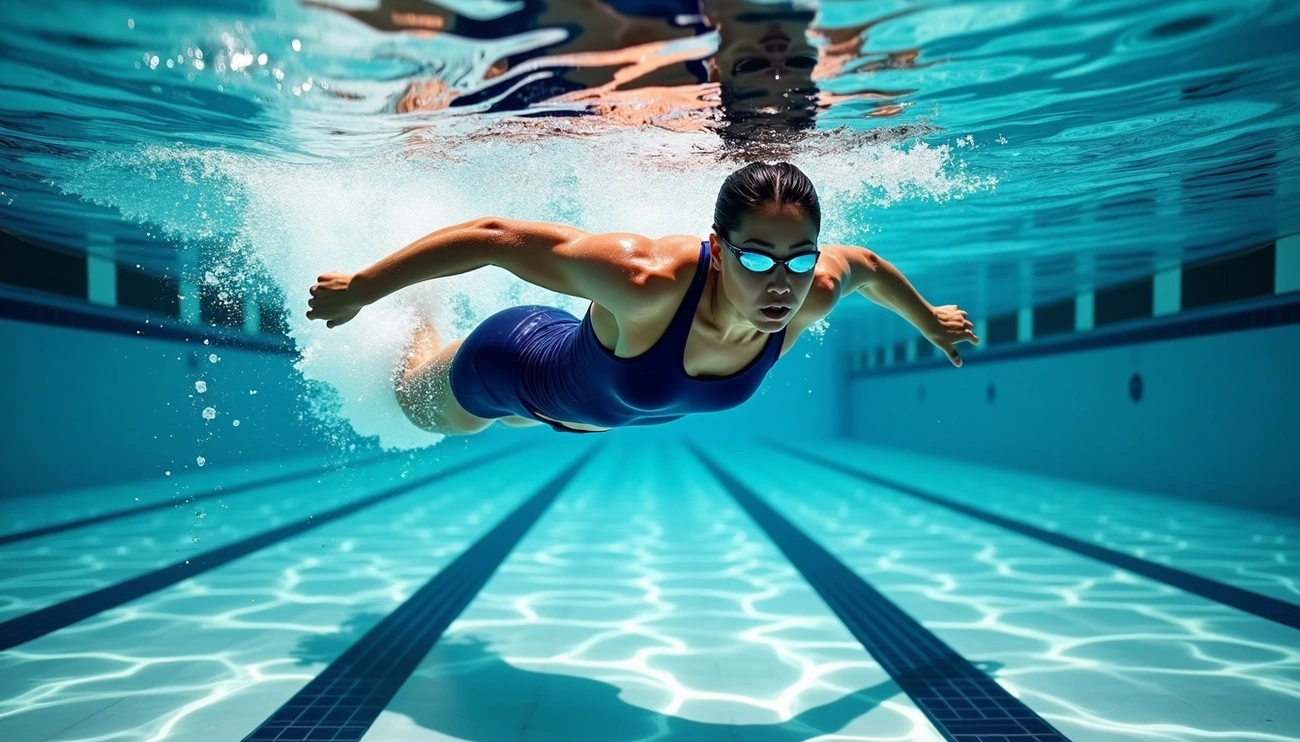
Body position demands equal attention. Your instructor will teach you to “swim like an arrow” – maintaining horizontal alignment that slices through water rather than fighting against it.
How private lessons correct inefficiencies
Video analysis reveals technique flaws invisible to group instructors. Multiple underwater cameras capture 360-degree views of your stroke, showing exactly where energy disappears.
Seeing your stroke flaws eliminates guesswork. Instead of wondering whether you’ve fixed that elbow drop, you watch the correction happen in real-time. This visual confirmation accelerates technique adoption dramatically.
Need help with your swim performance? Schedule a consult and discuss your training needs and options with a swim coach.
Private instruction targets your specific weaknesses – arm crossovers causing zigzag swimming, insufficient body rotation, or inconsistent kick timing. Group classes can’t provide this laser focus on individual flaws.
Triathlon swim lessons for elite performance
Advanced athletes discover that hydrodynamics become increasingly crucial as speed increases. Minor technique adjustments yield major competitive advantages at higher performance levels.
Elite coaching addresses race-specific skills group classes never cover. You’ll practice smooth swim-to-bike transitions, develop pacing strategies for different race distances, and learn techniques that maintain form under fatigue pressure.
Coaches with competitive backgrounds understand the nuances separating good swimmers from elite performers. These technical refinements become automatic responses, keeping your form solid even when lactic acid floods your muscles during race finishes.
Confidence Building in Open Water Conditions
That first splash of cold water hitting your face during a triathlon swim start is a moment every athlete remembers. For many, it’s not the physical challenge that creates the biggest hurdle—it’s the mental battle against open water anxiety.
Even experienced pool swimmers find themselves overwhelmed when transitioning from controlled environments to the unpredictable nature of lakes, oceans, or rivers. The psychological barriers often prove more limiting than physical fitness levels.
Why open water creates fear
Open water swimming presents a sensory shock that catches athletes off guard. The squiggly GPS tracks of age-group triathletes reveal just how disorienting this environment can be. You lose nearly all visual references underwater, creating a disorienting experience that disrupts your normal swimming rhythm.
Cold water shocks your system immediately. Wetsuit compression alters your natural sense of balance and buoyancy. What looked like gentle ripples from shore transforms into disruptive chop that interferes with your breathing pattern and stroke tempo.
Race starts intensify these challenges exponentially. Picture “a crowded elevator or a can of sardines” with dozens of athletes packed together. Arms and legs thrash around you while you struggle to find your rhythm and navigate toward the first buoy.
Race simulation through private coaching
Private lessons create controlled exposure to these challenging scenarios before race day arrives. Experienced coaches use targeted training methods:
- Close-contact swimming drills that acclimate you to being bumped and jostled
- Sighting practice using pool lane markers to simulate navigation between buoys
- Breathing pattern modifications designed for choppy water conditions
- Resistance tools that replicate swimming against currents
Pool training can effectively prepare you for open water realities. As one coach explains, failing to practice these skills is “like putting a treadmill in a closet and running on that while you train for a marathon”. Private instruction bridges this preparation gap through systematic skill building.
Mental tools for anxiety management
Private coaches go beyond physical preparation to develop your psychological resilience. These mental strategies form the foundation of confident open water swimming:
Controlled breathing becomes your anchor during stressful moments. Many swimmers hold their breath underwater instead of exhaling steadily, creating panic sensations. Your coach teaches you to maintain calm, rhythmic breathing patterns even when conditions deteriorate.
Visualization techniques replace catastrophic thinking with positive mental rehearsal. Instead of imagining worst-case scenarios, you learn to create detailed mental movies of successful swims. This mental practice builds confidence before you enter the water.
Mindfulness training keeps you focused on the present moment rather than worrying about unseen depths below.
Emergency protocols provide concrete action steps if panic strikes: stop swimming, transition to treading water, focus on slow deep breaths, and count your inhales and exhales until control returns.
Need help with your swim performance? Schedule a consult and discuss your training needs and options with a swim coach.
These mental tools become automatic responses through guided practice. What once felt intimidating transforms into an invigorating challenge you’re prepared to handle.
Private Swim Lessons in Your Own Pool
Most triathletes drive 20 minutes to a crowded pool when they have a perfectly good training facility sitting in their backyard.
Your home pool offers advantages that public facilities simply can’t match. Home-based swim lessons eliminate the barriers that derail consistent training – no commuting, no crowds, no scheduling conflicts around facility hours.
Benefits of swim lessons at home
Home-based instruction delivers distinct advantages for serious triathletes:
- Healthier training environment with reduced exposure to chloramines and harsh chemicals found in public pools
- Enhanced safety knowledge specific to your pool, teaching escape techniques in familiar surroundings
- True endurance simulation since your pool eliminates turns, providing better understanding of your actual open water capacity
- Technique focus without distractions from other swimmers crowding your lane
- Injury rehabilitation support allowing you to target uninjured muscle groups during recovery
Even modest backyard pools become effective training venues with proper coaching approach. Many triathletes overlook this resource, choosing public facilities instead.
Convenience and comfort for triathletes
The time savings alone justify home-based training. You eliminate commuting, membership fees, locker rooms, and facility scheduling conflicts. Simply walk outside and start training.
Train as long as you want on your schedule. Home sessions let you focus on essential elements without the typical two-hour commitment required at public facilities.
Here’s the game-changer for triathletes: your home pool enables complete race transition practice. Public facilities don’t allow you to hop on your bike immediately after swimming. Home training lets you rehearse the critical T1 transition from swim to bike.
How instructors adapt to home environments
Qualified instructors easily modify their teaching approach for home settings. They customize lessons around your individual needs while maximizing your pool’s unique features.
Instructors use encouraging methods that accelerate progress while addressing water anxiety. You receive their complete attention throughout each session, ensuring maximum value.
Leading triathlon coaches recognize these benefits, installing training pools specifically for technique improvement. Creative instructors transform any backyard pool into an effective training venue through strategic adaptations.
Flexible Scheduling for Multi-Sport Athletes
Successful triathletes master more than swimming, biking, and running—they master their calendars.
Juggling three sports creates scheduling complexity that single-sport athletes never face. Most triathletes balance training with work, family, and other commitments, making rigid class schedules nearly impossible to maintain. The statistics reveal this challenge: flexibility in your training plan becomes essential to both enjoying the sport and competing well.
Why flexibility matters for injury prevention
Consistency drives effective preparation, yet an imbalance between training-induced fatigue and recovery manifests in various ways. The injury data tells a clear story: triathlon athletes face 0.7–1.4 injuries per 1000 training hours and 9–19 during competition.
Here’s what’s interesting: running accounts for approximately 50% of these injuries, cycling for 43%, and swimming for only 7%. This breakdown makes swim training the safest component of your preparation—provided you can actually attend your sessions consistently.
How private lessons work around your training blocks
Private swimming instruction excels at accommodating complex multi-sport schedules. Unlike group classes with fixed times, one-on-one coaching offers scheduling flexibility that works around your existing training blocks. This adaptability provides several key advantages:
- Sessions scheduled during your peak energy levels
- Swim training arranged before or after strength sessions
- Instruction during traditionally “off-hours” when pools are less crowded
- Lesson frequency adjusted during different training phases
As one provider explains: “Scheduling for private sessions are flexible with both time and place… Whether you’re coming to us or we’re coming to you, the only stipulation is finding a time and place that works mutually for athlete and coach”.
Smart scheduling strategies for three-sport success
Effective time management starts with identifying one key workout in each sport weekly. Plan the rest of your training around completing these optimally. When conflicts arise, it’s better to move workouts than stubbornly push through them with reduced quality.
Consider these practical approaches:
- Create variety in your weekly structure—training weeks don’t need identical patterns
- Ensure each discipline regularly gets priority attention
- Include shorter, high-intensity sessions when time becomes limited
- Combine disciplines in single sessions (like swim followed by run) to simulate transitions
The flexibility of private swim coaching eliminates one major scheduling headache, allowing you to focus on optimizing your bike and run training around this solid foundation.
Injury Prevention Through Proper Technique
Swimming accounts for only 7% of triathlon injuries compared to 50% from running and 43% from cycling. Yet poor technique can still sideline your training when you least expect it. To enhance your performance in the water, it’s crucial to explore strategies for better swim performance. Focusing on your stroke mechanics, breathing patterns, and overall conditioning can yield significant improvements. Incorporating drills and targeted exercises into your routine will also help build strength and endurance, making you more competitive in your next race.
Common swim injuries in triathletes
Your shoulders bear the brunt of repetitive swimming motions. Most swim-related injuries cluster around the shoulder complex:
- Swimmer’s shoulder/shoulder bursitis – inflammation of the fluid-filled sac that lubricates rotator cuff tendons
- Shoulder impingement syndrome – occurs when the acromion digs into rotator cuff tendons during overhead movements
- Muscular neck pain – often results from poor head position and breathing to only one side
These problems typically stem from crossing your arm over midline during the catch phase or repetitive overhead shoulder rotation. Breathing only to one side creates asymmetrical loading that alters thoracic spine mechanics.
How private instruction reduces risk
One-on-one coaching creates a safety net through immediate technique correction. Your instructor identifies harmful patterns—improper breathing rhythm, faulty stroke mechanics, excessive muscle tension—before they become injury-causing habits.
Private lessons allow coaches to customize training pace based on your comfort level, preventing the exhaustion that leads to form breakdown. Without other swimmers demanding attention, your instructor maintains constant focus on your movement quality.
Focus on form and recovery
Breathing technique forms the foundation of injury prevention. Many triathletes hold their breath until turning to breathe, creating incomplete exhalation patterns. Your private coach teaches continuous underwater exhalation before each breath.
Muscle balance receives equal attention in quality instruction. “If you do a push-up, make sure to do a pull-up to avoid muscle imbalances”. This approach strengthens rotator cuff muscles and surrounding shoulder stabilizers.
Proper warm-up and cool-down protocols complete the injury prevention picture. Private instructors design customized routines that prepare your muscles for activity and gradually reduce heart rate afterward. This attention to detail protects you from both immediate strain and long-term overuse injuries.
Real-Time Feedback and Video Analysis
Did you know that swimmers who receive immediate video feedback improve their technique 3x faster than those relying on verbal instruction alone? Technology has changed how coaches identify and fix stroke flaws that cost you precious seconds in every race.
Benefits of video feedback
Visual analysis provides crystal-clear assessment of your stroke mechanics. This objective view builds better kinesthetic awareness of your body movements in water.
Swimmers can compare before-and-after recordings to track improvements objectively. Seeing your technique flaws makes them undeniable—watching your progress builds powerful motivation.
Video review serves dual purposes. Watching successful swims builds confidence in your capabilities. Seeing technical improvements boosts self-esteem and encourages continued effort.
How it accelerates improvement
Visual feedback connects what you feel with what you’re actually doing. Athletes often believe they’ve changed their technique simply because it feels different. Video confirmation ensures you’ve truly modified your movements sufficiently.
Immediate visual feedback creates rapid correction cycles. This allows more iterations within a single session, effectively compressing weeks of traditional learning into days.
Cost Efficiency Over Time
Here’s the reality about private lesson costs: most triathletes focus on the wrong numbers when evaluating swimming instruction.
Why private lessons may cost less long-term
Private swimming instructions typically range from $30-$100 per session (30 min) depending on location and instructor credentials. Yet this upfront investment often delivers superior long-term value through accelerated skill development. You’re not just paying for pool time—you’re buying efficiency that compounds over months of training.
Fewer sessions needed for mastery
Most adults achieve noticeable progress within 6-10 private lessons, while self-teaching methods can drag on for months or years. Private lesson students typically learn twice as fast—sometimes even faster—than those in group settings. This shortened timeline means fewer total sessions required for the same results.
The mathematics work in your favor. Faster mastery equals lower total investment, despite higher per-session rates.
Long-Term Benefits of Private Swim Coaching
Private swim coaching delivers benefits that extend far beyond your next race finish time. The skills you develop create a foundation for lifelong health and confidence in water environments.
How private coaching supports lifelong fitness
Swimming ranks among the few truly sustainable sports you can practice at any age. Masters Swimming currently includes over 42,000 members ranging from 18 to over 100 years old. This remarkable age span reveals swimming’s unique position as genuine lifetime exercise.
Your joints will thank you for choosing swimming. This low-impact activity strengthens muscles while protecting joints from stress—especially valuable if you develop arthritis or joint stiffness later in life. Research shows people who take up swimming maintain their exercise routines more consistently than those pursuing other fitness activities.
The technique foundation you build through private instruction pays dividends for decades. Proper form learned early prevents the inefficiencies that plague self-taught swimmers, allowing you to enjoy swimming well into your golden years.
Confidence in all water environments
Semi private lessons create water confidence that transfers everywhere. This self-assurance opens doors to activities you might currently avoid—recreational swimming, water sports, beach vacations without anxiety.
The personalized instruction process systematically replaces fear with positive associations. Water transforms from a source of stress into a place of enjoyment and relaxation. These skills empower you to feel comfortable in any aquatic environment, from hotel pools to ocean swims.
Benefits of swim lessons beyond triathlon
Swimming’s mental health advantages mirror meditation through controlled breathing patterns that reduce stress. Your calorie burn remains impressive—approximately 150 calories every ten minutes of intense swimming.
The social aspects shouldn’t be overlooked either. Swimming creates opportunities for friendships across all age groups, building community connections that enhance quality of life. The life skills acquired through private swimming instruction become valuable assets that improve both physical health and emotional well-being.
Your investment in private swim coaching today creates a ripple effect of benefits that will serve you for years to come.
Quick Reference: Private Swim Lesson Benefits at a Glance
Need a quick overview of what private swim coaching offers? This breakdown shows exactly how each benefit impacts your triathlon training and long-term swimming success.
| Benefit | Primary Focus | Key Features | Specific Benefits | Time/Cost Investment |
| Tailored Swim Instruction | Personalized technique development | – Video analysis with 360° views\ Immediate feedback\ Warm water pools with mirrors | – Energy conservation\ Race-specific techniques\ Individual weakness targeting | $70/30-min session
$120/60-min session |
| Accelerated Learning Curve | Fast-tracked skill acquisition | – Immediate error correction\ Focused practice time\ Customized drills | – Daily improvements\ Self-coaching capabilities\ Faster technique mastery | 6-8 sessions recommended |
| Technique Refinement | Stroke mechanics optimization | – Multiple camera angles\ Real-time video feedback\ Specialized breathing instruction | – Reduced energy waste\ Improved efficiency\ Better body positioning | Varies by skill level |
| Confidence Building | Open water preparation | – Close-contact swimming drills\ Sighting practice\ Breathing pattern adjustments | – Reduced anxiety\ Better race preparation\ Mental resilience | Ongoing development |
| Private Pool Lessons | Home-based training | – Familiar environment\ No distractions\ Transition practice | – Time savings\ Healthier environment\ Complete race simulation | Travel-time elimination |
| Flexible Scheduling | Time management | – Adaptable timing\ Custom training blocks\ Off-hours availability | – Work-life balance\ Peak energy utilization\ Reduced scheduling conflicts | Fits your calendar |
| Injury Prevention | Safety and longevity | – Form monitoring\ Customized pace\ Balance exercises | – Reduced shoulder injuries\ Better muscle balance\ Proper recovery protocols | Long-term savings |
| Real-Time Feedback | Technical analysis | – Underwater cameras\ Digital velocity meters\ AR swim goggles | – Immediate corrections\ Progress tracking\ Visual confirmation | Rapid improvement |
| Cost Efficiency | Long-term value | – Package discounts\ Accelerated learning\ Focused instruction | – Faster skill acquisition\ Fewer total sessions needed\ Better ROI | $85-100 per 60-min session |
| Long-Term Benefits | Lifetime fitness | – Sustainable exercise\ Progressive skill building\ Mental health focus | – Lifelong activity\ Water confidence\ Stress reduction | Lifetime value |
Conclusion
Private triathlon swim lessons represent more than just technique improvement – they’re your pathway to race day confidence and long-term swimming success.
The personalized attention you receive addresses your specific weaknesses while building upon your strengths. Rather than struggling through months of group classes, you’ll develop proper form quickly through immediate corrections and focused practice. This targeted approach saves you time and accelerates your progress toward swimming efficiency.
Energy conservation becomes your secret weapon. Exiting the water with a lower heart rate means stronger bike and run segments. Your overall race performance improves not just because you swim faster, but because you swim smarter.
The initial investment pays dividends over your entire triathlon career. You’ll require fewer sessions to achieve mastery compared to traditional group training methods. More importantly, the confidence and skills you develop extend far beyond race day – you’ll enjoy a lifetime of comfortable, efficient swimming in any water environment.
Whether you’re battling water anxiety as a beginner or seeking those final seconds of improvement as an experienced athlete, private instruction meets you exactly where you are. The combination of expert coaching, flexible scheduling, and personalized attention creates the ideal environment for breakthrough performance.
Your investment in private swim coaching today transforms not just your swimming ability, but your entire relationship with the water. Faster times, greater confidence, and the skills to enjoy swimming for decades to come – that’s the true value of personalized instruction.
Key Takeaways
Private triathlon swim lessons offer a personalized pathway to dramatically improve your swimming performance and overall race results through focused, one-on-one instruction.
• Accelerated skill mastery: Private lessons deliver 2x faster learning with immediate error correction and customized drills, requiring only 5-8 sessions versus months of group training.
• Energy conservation for race success: Proper technique learned through personalized coaching helps you exit the water with a lower heart rate, preserving energy for stronger bike and run segments.
• Superior cost efficiency over time: Despite higher upfront costs ($70/session, 30-minute), private lessons require fewer total sessions for mastery, delivering better long-term ROI than group classes.
• Confidence building for open water: Specialized training simulates race conditions through close-contact drills and sighting practice, transforming anxiety into race-day confidence.
• Real-time video feedback accelerates improvement: Advanced underwater cameras and immediate visual analysis help you see and correct technique flaws instantly, compressing weeks of learning into days.
The investment in private swim coaching transforms not just your swimming ability but your entire triathlon experience, providing lifelong skills that extend far beyond race day performance.
FAQs
Q1. Are private swim lessons worth the investment for triathletes? Yes, private swim lessons are highly beneficial for triathletes. They offer personalized instruction, immediate feedback, and faster skill development. While they may cost more upfront, the accelerated learning and technique refinement often result in better long-term value and improved race performance.
Q2. How do private swim lessons help with open water swimming? Private swim lessons help build confidence for open water swimming by simulating race conditions, teaching sighting techniques, and developing mental strategies to manage anxiety. Instructors can provide specialized drills and exercises to prepare triathletes for the unique challenges of open water environments.
Q3. Can private swim coaching prevent injuries? Absolutely. Private swim coaching focuses on proper technique, which is crucial for injury prevention. Coaches can identify and correct inefficiencies in your stroke that could lead to shoulder, back, or neck injuries over time. This personalized attention helps triathletes develop a safe and efficient swimming style.
Q4. How quickly can I expect to see improvements with private swim lessons? Many triathletes see significant improvements in as few as 5-8 private lessons. The one-on-one attention and immediate feedback allow for rapid skill acquisition and technique refinement. However, the exact timeline can vary depending on your starting point and consistency in practicing between lessons.
Q5. What technology is used in private triathlon swim lessons? Private triathlon swim lessons often incorporate advanced technology such as underwater cameras for 360-degree stroke analysis, digital velocity meters to track performance metrics, and video feedback systems for real-time technique correction. Some facilities also use specialized pools with mirrors on the bottom for improved body positioning awareness.