Top 10 Benefits of Private Triathlon Swim Lessons for Faster Skill mastery
September 15, 2025
What do beginners ask most about sprint triathlons?
September 22, 2025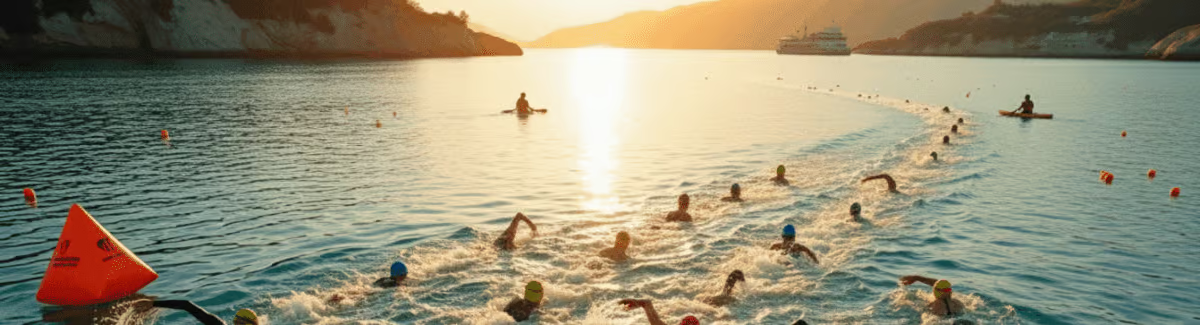
Did you know that triathlon swim distances span over 3,400 meters between the shortest and longest race formats?
While swimming might feel like your biggest challenge in triathlon training, you are certainly not alone. In fact, many athletes find the swim portion more intimidating than the bike and run segments combined. Consequently, your choice between a 400-meter super sprint and a grueling 3.8-kilometer Ironman swim will shape everything from your weekly training hours to your wetsuit selection.
Furthermore, each swimming distance demands its own unique preparation strategy. For instance, a super sprint requires speed and technique refinement, whereas an Ironman swim calls for endurance and energy conservation tactics that can make or break your entire race day.
Triathlon Swim Distances by Race Type
There are five standardized triathlon formats, each presenting distinct swimming challenges. Since your race choice determines everything from training volume to gear requirements, it is essential to understand the breakdown:
Super Sprint: 400m Swim Distance Overview
The super sprint offers the most accessible entry point with a 400-meter swim. Typically, most events utilize 50-meter pools or protected calm water. As a result, this is highly beginner-friendly because there are often no wetsuit requirements and zero navigation challenges. Athletes usually complete this distance in 5–12 minutes.
Sprint Triathlon: 750m Swim Breakdown
The sprint distance features a 750-meter swim in open water environments. However, the “sprint” label can be misleading for newcomers, as the complete race spans 60–90 minutes. In terms of timing, experienced swimmers finish this segment in 10–20 minutes, while elite athletes clock impressive 8–10 minute times.
Olympic Distance: 1.5km Swim Explained
Olympic distance swimming covers 1.5 kilometers, which doubles the traditional sprint distance. Because open water venues dominate these events, you should expect to face lakes or rivers. On average, beginners finish in 30–40 minutes, while advanced athletes complete the distance in 20–25 minutes.
Half Ironman: 1.9km Swim Requirements
The Half Ironman (70.3) demands a 1.9-kilometer swim. Due to the distance, this middle-distance challenge requires substantial open water preparation. Most triathletes complete this swim in 30–50 minutes, making it a serious test of efficient technique.
Full Ironman: 3.8km Swim Challenge
Finally, Ironman swimming presents the ultimate test: 3.8 kilometers. Most competitors spend 1–1.5 hours in the water. To improve performance, smart competitors often utilize drafting techniques for “free speed” gains.
Average Swim Times and Training Hours
Because time matters in triathlon performance, having realistic expectations is crucial. The following table summarizes the commitment required for each distance:
| Race Type | Swim Distance | Average Swim Time | Weekly Training (Total) |
| Super Sprint | 400m | 5–12 Minutes | 3–4 Hours |
| Sprint | 750m | 10–20 Minutes | 3–5 Hours |
| Olympic | 1.5km | 25–40 Minutes | 6–10 Hours |
| Half Ironman | 1.9km | 30–50 Minutes | 7–13 Hours |
| Full Ironman | 3.8km | 1–2 Hours | 12–20 Hours |
Note: As distances increase, your training focus must evolve from speed intervals for shorter races to endurance sets with minimal rest for longer events.
Training Strategies That Match Your Race Distance
It is important to note that your training approach must change when you move from a 10-minute sprint to a 90-minute Ironman. Otherwise, you risk using ineffective methods for your specific goal.
-
Short Course Strategy: These races reward explosive power. Therefore, structure your sessions around high-intensity intervals (50s and 100s) with complete recovery.
-
Olympic and Half Distance: These require a balanced approach. In addition to speed, you must build aerobic capacity through sets with minimal rest to simulate race conditions.
-
Ironman Preparation: Aerobic endurance trumps speed development here. Specifically, you should focus on building your base with sets like 10x100m repeats and mastering energy conservation.
Essential Swim Gear for Triathlon
The right gear can shave minutes off your swim time. Moreover, proper equipment prevents unnecessary energy drain.
-
Wetsuits: These provide buoyancy and thermal protection. For example, beginners struggling with body position might choose a suit with thicker lower-body panels.
-
Goggles: Unlike pool goggles, triathlon versions offer wide-angle vision. Additionally, look for anti-fog coatings and UV protection for open water sighting.
-
Swim Caps: These reduce drag and are often required for safety identification. Depending on the temperature, you might choose latex, silicone, or thermal materials.
Conclusion
In summary, triathlon swimming challenges every athlete differently. Ultimately, your journey from understanding basic distances to selecting the right race format puts you ahead of most beginners. By matching your current abilities to the appropriate distance and maintaining a consistent training schedule of at least three sessions per week, you can conquer the water with confidence. building endurance for triathlon swimming is essential for achieving your personal best during races. By incorporating varied workouts and focusing on technique, you will enhance your stroke efficiency and stamina. This commitment to improving your endurance will not only boost your performance but also increase your enjoyment of the sport.