
Ironman Training: Race or Survive?
April 10, 2026
What Is SWOLF in Swimming and Why Open Water Swimmers Should Actually Care
April 17, 2026
Why This Drill Changes Everything
Elite swimmers waste only 9% of their energy moving forward – the rest simply vanishes into the water. The anchoring drill teaches you to capture more of that lost energy through proper catch mechanics.
Pull your body past a fixed hand position instead of pushing water backward – this approach flips conventional thinking on its head. Most swimmers exhaust themselves fighting the water when they should be working with it.
Create maximum water resistance with early vertical forearm positioning – your hand and forearm work as one anchoring surface. This single adjustment generates up to 80% of your swimming power while reducing effort.
Slow down your practice sessions with deliberate focus – hand paddles and fist drills build the body awareness you need. Speed comes later; technique comes first.
Engage your core rotation and larger muscle groups – stop relying on arm strength alone. This distributes the workload across your entire body, preventing the muscle fatigue that derails Ironman swims.
Build stroke stability for chaotic open water conditions – anchoring mechanics keep you moving forward through waves, currents, and pack swimming chaos.
Remember that 2.4-mile swim before your bike and run? The anchoring drill teaches energy-efficient swimming that preserves your strength for what comes next. You’ll maintain speed through better technique rather than brute force.
Understanding the Anchoring Drill: Your Secret to Swimming Efficiency
Most swimmers waste energy pushing water backward when they should focus on pulling their body forward. The anchoring drill changes this fundamental approach to freestyle swimming.
The anchoring drill trains swimmers to establish a firm catch position and pull their body forward past a fixed hand point in the water. Think of it like climbing a ladder – you don’t push the rung away from you. You grip it firmly and pull your body up past that fixed point. This drill emphasizes creating resistance against the water with your hand and forearm, similar to anchoring against a solid surface, while your body rotates and advances past that stabilized position.
Here’s the counterintuitive part: you focus on body displacement forward rather than pushing water backward.
The drill develops mechanics for maintaining constant resistance throughout your stroke cycle. You achieve this by establishing an early vertical forearm position where your hand enters the water and quickly transitions to vertical alignment, allowing your forearm and hand to function as a single anchoring surface. Your hand remains relatively stationary in its position within the pool while your body moves past it through hip rotation and core engagement.
This technique contradicts the common misconception that swimming power comes from pushing water. Efficient propulsion actually results from pulling your body forward against an anchored hand position.
You can practice this drill by placing your palm flat against a pool wall with your elbow positioned forward of your head, then pressing evenly while your body moves past the anchored hand point. Rotate as your body passes the anchor point to replicate proper stroke mechanics.
The anchoring concept teaches you to engage larger muscle groups through body rotation rather than relying solely on arm strength – a critical adaptation for covering 2.4 miles in Ironman events. Your stroke efficiency directly impacts energy conservation during extended swim portions, making this drill essential for triathlon success.
Why the Anchoring Drill Changes Everything for Ironman Athletes
Catch Phase Power That Actually Works
Have you ever wondered why some swimmers glide through the water while others thrash with twice the effort? The catch phase generates the majority of propulsive power in freestyle swimming, making its optimization critical for Ironman performance. Here’s where most swimmers get it wrong – they think more arm strength equals more speed.
Anchoring drills train your body differently. Your forearm and hand work together as a single unit against water resistance, establishing that crucial high-elbow position that maximizes force application. This drill targets the catch and pull mechanics – the twenty percent of stroke technique responsible for eighty percent of swimming effectiveness. further enhancing your performance, improving technique with fist drill allows swimmers to focus on the efficiency of their strokes. By minimizing drag and optimizing hand entry, this drill accelerates the learning curve for mastering essential aspects of swimming form. As swimmers consistently practice, they develop a strong sense of body awareness and coordination in the water.
Think of it like this: instead of spinning your wheels, you’re finally getting traction. Swimmers develop the neuromuscular pattern to transition from hand entry to full catch position while maintaining continuous water pressure against the palm and forearm. The result? Increased speed with reduced effort expenditure – exactly what you need to conserve energy across 2.4-mile swim segments before tackling the bike and run.
Distance Swimming That Doesn’t Destroy Your Energy
Distance swimming performance depends on stroke economy rather than maximum speed generation. Most triathletes make a fatal mistake here – they try to muscle through long swims instead of working smarter.
The anchoring drill develops true economy by training you to maximize distance per stroke through sustained water pressure. You’ll reduce the total number of strokes required to cover race distances. This approach emphasizes working less through improved technique rather than working more through increased effort.
Swimmers who master anchoring mechanics engage larger muscle groups through core rotation and hip drive rather than relying on isolated arm strength. Your workload distributes across your entire body, delaying fatigue onset. For Ironman athletes, this energy conservation proves essential given the subsequent demands of cycling and running disciplines.
Open Water Confidence When Conditions Turn Rough
Picture this: you’re 800 meters into your Ironman swim when choppy surfaces and crosscurrents start disrupting your stroke rhythm. Open water conditions present unpredictable resistance that can destroy stroke mechanics.
The anchoring drill trains core-driven swimming where your catch timing synchronizes with hip rotation, creating a stable propulsion platform despite external disturbances. This whole-body integration prevents reliance on arms alone for both propulsion and stability maintenance. You’ll sustain consistent forward momentum through variable water conditions.
The drill also develops proprioceptive awareness of hand and forearm positioning without visual feedback – a critical skill when swimming through murky water or maintaining pace during triathlon pack dynamics. Your stroke stays solid when visibility drops and other swimmers crowd your space.
How to Add the Anchoring Drill to Your Swim Workouts
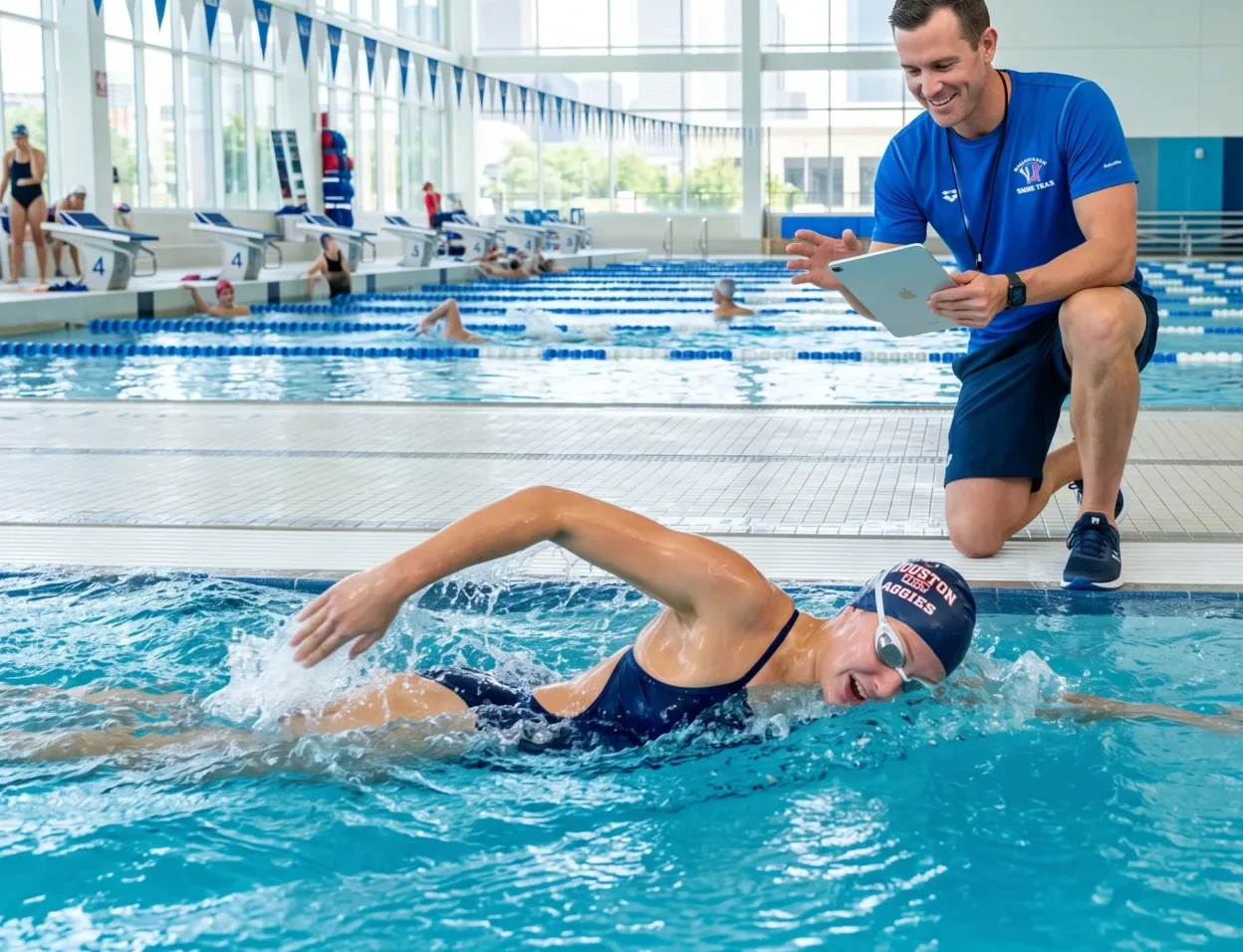
Integration of anchoring drills into swim training begins with dedicated drill sessions that emphasize concentration over distance accumulation. Swimmers practice making the hand stand still in the water, extending the arm fully forward and holding that position as if grasping a ladder rung rather than pushing water backward. This counterintuitive approach requires deliberate mental focus to override natural instincts that favor aggressive stroking patterns.
Swimming at significantly reduced speeds allows athletes to cultivate finer sensitivity to water pressure against the palm and forearm. By stretching each stroke moment and pressing gently against the water until feeling reciprocal pressure, swimmers develop the proprioceptive awareness essential for maintaining anchored positions during race-pace swimming. For this purpose, Ironman athletes benefit from incorporating super-slow drill sets between interval work to reinforce proper mechanics without cardiovascular fatigue.
Hand paddle modifications enhance anchoring development by providing immediate feedback on catch consistency. Swimmers use paddles with finger straps loosened considerably or removed entirely, forcing reliance on proper water pressure to keep paddles centered on hands throughout the stroke. Paddles that shift or detach indicate lost pressure and incomplete anchoring. In similar fashion, fist drills develop core-driven propulsion by requiring swimmers to drive closed fists into the glide position, anchor the fist and forearm into high-elbow catch alignment, then pull forward using the entire arm surface.
FAQs
Q1. What does anchoring mean in swimming technique? Anchoring in swimming refers to a technique where swimmers establish a firm catch position with their hand and forearm, creating a fixed point in the water. Rather than pushing water backward, swimmers pull their body forward past this stabilized hand position through hip rotation and core engagement, similar to pulling yourself past a ladder rung.
Q2. How does the anchoring drill improve swimming efficiency? The anchoring drill improves efficiency by training swimmers to maximize distance per stroke through sustained water pressure. It teaches proper catch phase mechanics where the hand and forearm work together as a single surface, allowing swimmers to engage larger muscle groups and reduce the total number of strokes needed to cover race distances.
Q3. What is the 3-5-7 breathing pattern in swimming? The 3-5-7 breathing pattern is a structured technique where swimmers inhale for 3 strokes, hold their breath for 5 strokes, and exhale for 7 strokes. This pattern helps build lung capacity, develops endurance, and provides greater breathing control in the water.
Q4. How can I practice the anchoring drill effectively? Practice anchoring by swimming at significantly reduced speeds to develop sensitivity to water pressure against your palm and forearm. You can also place your palm flat against a pool wall with your elbow forward, then press evenly while rotating your body past the anchored hand. Using hand paddles with loosened straps provides immediate feedback on maintaining proper water pressure throughout the stroke.
Q5. Why is the anchoring drill particularly important for Ironman triathletes? For Ironman athletes, the anchoring drill is crucial because it promotes energy conservation during the 2.4-mile swim portion. By distributing workload across the entire body rather than relying on arm strength alone, swimmers delay fatigue onset and preserve energy for the subsequent cycling and running disciplines. The drill also enhances stroke stability in unpredictable open water conditions.