Run Smarter: Lactate Testing vs. Training by Feel for Runners
September 15, 2026
BOLT Score: Measure Breathing Efficiency, Not Fitness
September 30, 2026
Does Swimming Help Lose Weight? The Science-Backed Truth for 2026
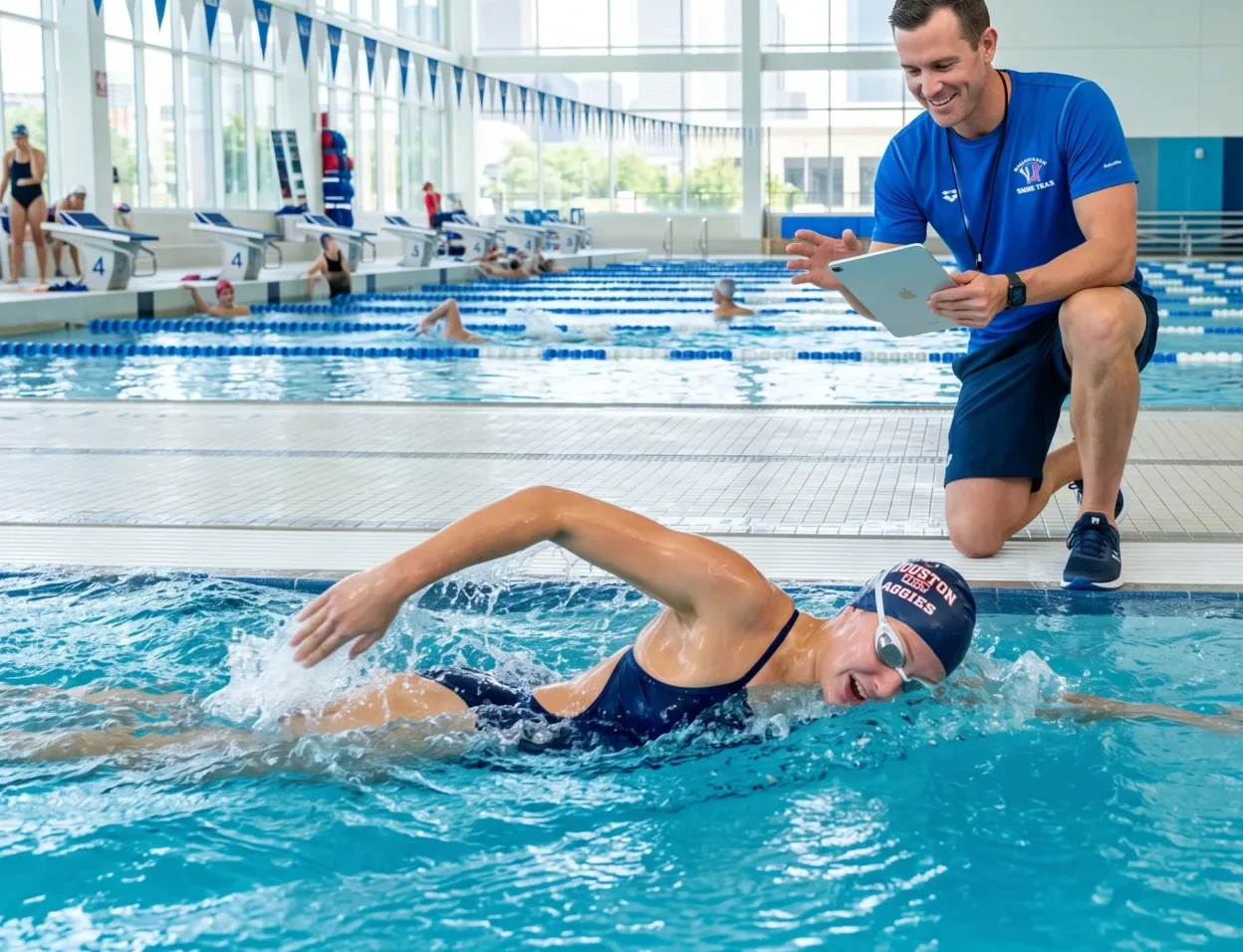
What You Need to Know About Swimming and Fat Loss
Water resistance creates a calorie-burning environment that most swimmers never fully exploit. Here’s what separates successful weight loss swimmers from those who plateau:
• Your body fights 44 times more resistance in water than air – this natural force multiplies every stroke’s calorie-burning potential without requiring gym equipment.
• Three to five pool sessions weekly lasting 30-60 minutes each creates sustainable fat loss of 1-4 pounds monthly without joint punishment.
• Master the butterfly stroke for maximum burn – up to 900 calories per hour – though freestyle and backstroke offer better sustainability for longer workouts.
• Track everything you eat – swimming success depends on maintaining a caloric deficit while consuming adequate protein (2g per kg of body weight) for proper recovery.
• Begin with 15-20 minute sessions and build gradually, alternating steady-pace swimming with high-intensity intervals for optimal fat-burning results.
The pool offers something land-based exercises can’t match: full-body muscle engagement with zero joint impact. Combine this with proper nutrition planning, and you’ll notice measurable changes within 30 days.
Does swimming help lose weight? The numbers don’t lie. A 160-pound swimmer burns approximately 423–715 calories per hour, depending on intensity. Even an easy pool session torches up to 500 calories hourly, while intense workouts can burn as many as 700 calories. Here’s the part that surprises most athletes: 30 minutes in the pool equals 45 minutes of working out on land.
Swimming offers unique advantages that go far beyond simple calorie counting. With consistent water workouts, you should begin seeing weight loss within 30 days. This guide breaks down the science behind swimming and fat loss, compares different strokes, and provides actionable plans to maximize your results.
The Pool Physics That Melt Fat: Why Water Works Better
Water resistance hits you 44 times harder than air resistance. That’s resistance of water is approximately 44 times greater than air the moment you step into the pool. Every stroke becomes a battle against this invisible force, turning your muscles into calorie-burning machines without touching a single weight.
Your Body Fights Physics With Every Stroke
Each movement through water creates drag that your muscles must overcome. This resistance training happens automatically – no gym membership required. Water’s buoyancy supports your joints while simultaneously challenging every muscle fiber. The result? You burn serious calories while protecting your knees, hips, and spine from the pounding they’d take on land.
Every Muscle Group Gets Recruited Simultaneously
Swimming doesn’t pick favorites. Your legs, arms, back, core, and chest all work together with each stroke. Front crawl targets your triceps, deltoids, pectoralis major, latissimus dorsi, and core in one fluid motion. Backstroke builds endurance while improving shoulder mobility through its unique muscle recruitment pattern. Breaststroke develops balanced strength across both sides of your body, while butterfly demands maximum energy output from every major muscle group.
The Metabolic Afterburn Effect
Here’s what happens when you swim regularly: your body builds lean muscle tissue that burns calories 24/7. Muscle tissue consumes more energy at rest than fat tissue. One study tracked swimmers for just six weeks and found significantly stronger core muscles across the group. This muscle development keeps your metabolism elevated long after you’ve left the pool.
Pool vs Pavement: The Calorie Battle
A 155-pound person burns 223 calories during 30 minutes of leisurely swimming compared to 298 calories running at 5 mph. Push the intensity, and swimming jumps to 372 calories in the same timeframe. For heavier athletes weighing 185 pounds, vigorous swimming torches 444 calories versus 355 calories from a 12-minute-mile run. Swimming delivers comparable calorie burn with zero joint impact – making it sustainable for years, not just months.
Calorie Burn Reality: What Your Swimming Sessions Actually Deliver
Your body weight determines how many calories disappear during each pool session. Heavier swimmers burn significantly more energy because moving additional mass through water demands greater effort.
Body Weight Makes the Difference
A 150-pound swimmer torches 400-700 calories per hour depending on intensity. Someone weighing 205 pounds burns 650-900 calories during the same duration. For perspective, a 155-pound swimmer burns around 223 calories per 30 minutes at moderate intensity, jumping to 372 calories with vigorous effort. A 185-pound person expends 226 calories at moderate pace and 444 calories during intense swimming in the same timeframe.
Butterfly: The Calorie-Torching Champion
Butterfly stroke dominates the calorie-burning game, incinerating approximately 450 calories in just 30 minutes. This demanding stroke can burn up to 900 calories per hour for average swimmers, with some individuals reaching nearly 1,000 calories hourly when swimming vigorously. A 155-pound person burns 774 calories per hour doing butterfly, while a 205-pound swimmer can burn up to 1,024 calories.
The catch? Maintaining butterfly for extended periods challenges even experienced swimmers.
Freestyle: Your Sustainable Fat-Burning Option
Freestyle ranks second for calorie destruction, burning around 300 calories per 30-minute session. At moderate pace, you’ll burn approximately 593 calories per hour, increasing to 714 calories with intense effort. A 155-pound person swimming freestyle vigorously can burn 704 calories hourly.
Backstroke: Steady Calorie Burn with Benefits
Backstroke delivers approximately 250 calories during a 30-minute swim. At recreational pace, expect 343 calories per hour, while intense backstroke elevates burn to 679 calories hourly.
Breaststroke: Lower Burn, Higher Heart Benefits
Breaststroke burns the fewest calories among competitive strokes at around 200 calories per 30 minutes. Don’t dismiss this stroke yet – breaststroke provides exceptional cardiovascular benefits, strengthening your heart and lungs. Recreational breaststroke burns 379 calories per hour, while intense effort reaches 736 calories.
Building Your Swimming Weight Loss Strategy That Actually Works
Consistency beats perfection every time when it comes to swimming for weight loss. Here’s something most swimmers get wrong: they think more sessions automatically mean faster results. The frequency that produces real weight loss matches other cardiovascular exercises – aim for four to five days weekly for optimal results.
How Often Should You Really Swim to Lose Weight
Three to five sessions per week represents the sweet spot for sustainable weight loss through swimming. Drop below three sessions weekly? The calorie deficit becomes too small to produce consistent fat loss unless you make significant dietary changes. Push above five sessions? Recovery becomes your limiting factor – overtraining actually reduces session quality and increases injury risk.
Swimming on non-consecutive days gives your muscles the recovery time they need while maintaining routine consistency. Think of it this way: your body adapts during rest, not during the workout itself.
Session Duration That Delivers Results
Start with 15 to 20 minute swims every other day, then gradually build to 30 minute sessions five days weekly as your body adapts. Your session duration should progress to 45-60 minutes over four to six weeks.
Here’s what those numbers mean for weight loss: 30 minutes of moderate-intensity swimming burns around 250 calories. Swim four times weekly at this intensity and you can expect roughly 1 pound lost per month. Ramp up to intense swimming workouts? You’re looking at approximately 800 calories burned per hour, potentially leading to 2-4 pounds lost monthly with four weekly sessions.
Low-Intensity vs High-Intensity Swimming: What Works Better
Low-intensity workouts operate at a 4 or 5 effort level on a 1-to-10 scale, allowing you to maintain proper technique for extended periods. High-intensity workouts alternate all-out swimming with rest intervals, fitting more distance into shorter timeframes.
Sprint interval training follows a specific pattern: 30-second sprints followed by four minutes of rest, repeated four to eight times. Both approaches work – the key is matching intensity to your current fitness level.
Your First Swimming Weight Loss Workout
Ready to get started? A basic interval workout includes 1 lap followed by 15-30 seconds rest, repeated four times. As your endurance builds, progress to 2 laps with 15-30 seconds rest, also repeated four times. Mix different strokes across sets as your strength develops.
Remember: your first workout won’t feel easy, and that’s perfectly normal. Focus on completing the planned duration rather than swimming fast.
Your Diet Decides Everything: Why Pool Time Alone Won’t Cut It
Training alone doesn’t guarantee results. Diet determines whether swimming produces fat loss or maintains your current weight.
The Role of Diet in Swimming for Weight Loss
Your nutritional intake must support recovery without creating surplus. Carbohydrate requirements range between 6-12 g/kg/day depending on training intensity. Protein intake should reach 2 g/kg/day for muscle repair, consumed in 4-5 portions throughout the day for optimal synthesis. Fat should comprise at least 20-25% of daily energy intake.
Here’s what many swimmers miss: a 60kg swimmer burns 800-1,000 calories during an hour-long session, requiring careful tracking to maintain a deficit. You can’t out-swim a poor diet, no matter how many laps you complete. Tracking food intake for two to four weeks provides baseline data for informed adjustments.
Common Swimming Mistakes That Slow Weight Loss
Swimming without dietary awareness produces slower results than expected. You might spend an hour in the pool, then unknowingly eat back those calories at your next meal.
Maintaining comfortable pace instead of interval training limits calorie burn. That easy, steady swim feels good, but it won’t maximize fat loss. Training every day at high intensity delays the adaptations you’re trying to produce. Your body needs time to recover and build the muscle that burns calories at rest.
At least one full rest day and one active recovery day per week allows muscular adaptations to consolidate. Recovery isn’t lazy – it’s strategic.
Pool Accessories to Enhance Your Workout
Swim fins target leg muscles and improve ankle flexibility. They also allow you to maintain proper body position while building strength. Paddles increase water resistance by enlarging your palm surface area, forcing your arms to work harder with each stroke.
Pull buoys, held between upper thighs, improve body position and isolate arm work. This tool helps you focus on stroke technique without worrying about leg kick. Resistance bands and aquatic webbed gloves add intensity without requiring advanced technique.
Don’t worry about having every piece of equipment from day one. Start with fins and a pull buoy, then add accessories as your training progresses.
Conclusion
Swimming proves to be an effective weight loss tool when you combine consistent training with proper nutrition. Aim for three to five sessions weekly, progressively building your duration and intensity. Above all, your diet determines whether those calories burned in the pool translate to actual fat loss.
Start with manageable sessions, track your food intake, and choose strokes that match your fitness level. With this structured approach, you should notice measurable results within 30 days.
FAQs
Q1. Can swimming help reduce belly fat? Yes, swimming can help reduce belly fat as part of an overall weight loss program. Swimming is a full-body exercise that burns significant calories—approximately 400-700 calories per hour depending on your weight and intensity. When combined with a proper diet that creates a calorie deficit, swimming helps reduce overall body fat, including belly fat. The key is consistency, aiming for 3-5 swimming sessions per week along with mindful eating habits.
Q2. How frequently should I swim each week to see weight loss results? For effective weight loss, you should swim 3-5 times per week. Swimming fewer than three sessions weekly creates too small a calorie deficit to produce consistent results without significant dietary changes. More than five sessions can lead to overtraining and reduced workout quality. Start with 15-20 minute sessions every other day, gradually building to 30-45 minute swims. With this frequency and proper nutrition, you should notice measurable results within 30 days.
Q3. Do I need to be an experienced swimmer to lose weight through swimming? While being a skilled swimmer helps maximize calorie burn, you don’t need expert technique to lose weight through swimming. Even beginners can benefit from consistent pool workouts, though experienced swimmers burn calories more efficiently due to better form and sustained intensity. If you’re new to swimming, consider working with a coach to improve your technique, which will enhance your workout effectiveness. The most important factor is persistence—regular swimming sessions combined with proper diet will produce results regardless of your initial skill level.
Q4. Why does swimming make me hungrier than other exercises? Swimming can increase appetite more than other exercises, particularly for less experienced swimmers and when pool temperatures exceed 70 degrees Fahrenheit. The cooler water temperature may trigger hunger responses as your body works to maintain core temperature. However, experienced swimmers typically don’t experience increased hunger after regular workouts. To prevent overeating after swimming, track your food intake carefully and ensure you’re maintaining a calorie deficit despite any increased appetite.
Q5. Which swimming stroke burns the most calories for weight loss? The butterfly stroke burns the most calories, torching approximately 450 calories in just 30 minutes or up to 900 calories per hour for average swimmers. However, butterfly is difficult to maintain for extended periods. Freestyle (front crawl) ranks second, burning around 300 calories per 30 minutes, making it more sustainable for longer workouts. Backstroke burns about 250 calories per 30 minutes, while breaststroke burns the least at around 200 calories but offers excellent cardiovascular benefits.