
Does Swimming Help Lose Weight? The Truth for 2026
September 19, 2026
Triathlon Coaching Houston: FAQ & Local Guide
October 6, 2026
BOLT Score and Athletic Performance: What Your Breathing Test Really Reveals
Key Takeaways
Understanding your BOLT score helps identify breathing inefficiencies that may be limiting your athletic potential, though it won’t predict your performance outcomes.
• BOLT measures CO₂ tolerance, not fitness level – The test reveals how well you handle carbon dioxide buildup, which affects oxygen delivery to muscles through the Bohr effect.
• Elite athletes show no correlation between BOLT scores and performance – Research on 49 elite speedskaters found BOLT explained less than 8% of performance variance, suggesting other factors matter more.
• Target 40 seconds for optimal breathing efficiency – Most athletes start around 20 seconds, but reaching 40 seconds indicates excellent CO₂ tolerance and breathing mechanics.
• Improve through nasal breathing and slow breathing exercises – Practice 6 breaths per minute (4-second inhale, 6-second exhale) and maintain nasal breathing during training to boost your score.
• Focus on breathing patterns, not performance prediction – Use BOLT to identify and correct dysfunctional breathing habits that cause unnecessary breathlessness during exercise.
While BOLT scores won’t make you faster, addressing poor breathing mechanics through targeted training can reduce breathlessness and improve exercise tolerance, supporting your overall athletic development. Many athletes have a BOLT score between 10 seconds and 20 seconds, classified as dysfunctional breathing. Your breathing efficiency matters for performance. A higher BOLT score relates to greater stamina and reduced breathlessness during exertion. But research shows BOLT scores shouldn’t be interpreted concerning exercise performance in elite athletes. The disconnect between this popular breathing test and actual athletic performance raises questions. What does your BOLT breathing test measure, and should you focus on improving it? This piece gets into what is a good BOLT score for your fitness level and explores the average BOLT score ranges using a bolt score chart. We provide evidence-based strategies for how to improve BOLT score when it matters most.
Understanding the BOLT Breathing Test
What the BOLT Score Measures
The BOLT breathing test measures how long you can comfortably hold your breath after a normal exhalation until you feel the first distinct urge to breathe [1]. This duration reflects your carbon dioxide tolerance, not your oxygen levels. The test provides feedback on functional breathing and exercise tolerance [2].
Several factors influence your BOLT score at the same time [2]. Chemosensitivity to carbon dioxide determines how quickly your brain signals you to breathe as CO2 accumulates. Constriction in your airways or lungs impacts breath-hold duration since narrow airways affect how comfortable the hold feels. Diaphragm discomfort during the breath hold plays a role, as does anxiety and other psycho-emotional influences like fear of suffocation.
The Science Behind CO₂ Tolerance
Carbon dioxide accumulates in your lungs and blood while oxygen levels decrease slightly as you hold your breath [2]. CO2 provides the main stimulus to breathe, not oxygen depletion [3]. This explains why breath-hold time reflects how much carbon dioxide you can tolerate before your ventilatory response kicks in [3].
Your CO2 tolerance affects oxygen delivery to tissues through the Bohr effect [1]. Hemoglobin holds onto oxygen instead of releasing it where your muscles need it if you don’t have enough CO2 in your blood [1]. Poor oxygen delivery occurs even if you’re breathing plenty of air. Hyperventilation disrupts CO2 homeostasis and causes undesirable physiological changes such as increased heart rate, paresthesia, dizziness and heightened emotional arousal [1].
CO2 homeostasis improves during paced breathing tasks with training [1]. Research shows that the drop in end-tidal CO2 decreases with training even without anti-hyperventilation instruction, though variability remains high among individuals [1].
How BOLT Is Different from Other Breathing Tests
Transient hypoxia tests and single-breath CO2 tests are widely accepted assessments of peripheral chemosensitivity [2]. But technical challenges make it impractical to conduct them in field settings [2]. Breath-holding tests like BOLT present good agreement with these assessments used traditionally while remaining available [2].
The BOLT test requires no equipment and gives you an objective measure of respiratory function and stress levels [4]. CO2 discard rate tests measure exhale duration after deep breaths and show recovery from physical exertion [4]. BOLT is different because it measures your capacity to tolerate rising CO2 after a normal exhalation and provides insight into breathing patterns and nervous system regulation [5].
What the Research Shows About BOLT Score and Athletic Performance
Study Findings in Elite Athletes
Research with 49 elite speedskaters found no significant correlations between BOLT scores and exercise performance parameters [2]. The study measured peak power, total work, and maximum oxygen uptake during standardized tests. Statistical analysis revealed correlation coefficients ranging from r(47) = -0.172 to 0.013, with p-values between 0.248 and 0.984 [2]. The regression model showed an R² of only 0.08 and RMSE of 9.78 seconds [2], which indicates BOLT scores explained less than 8% of performance variance.
This population showed no significant relationship between BOLT scores and age, body composition, or training experience [2]. The findings suggest caution when you interpret BOLT scores concerning exercise performance in highly-trained populations.
Why High Performers May Not See Direct Correlation
Elite athletes exhibit narrow variability in both chemosensitivity and baroreflex sensitivity compared to general populations [2]. Years of training have already adapted their respiratory systems. A study of marathon runners and untrained people found athletes experienced 50 to 60 percent less breathlessness than untrained people at the same exercise intensity [6]. This adaptation masks BOLT score differences that might appear meaningful in untrained populations.
One study in males over 50 years old did find correlations between breath-hold time and VO2max [2]. The 35-year age gap between study populations may explain these contradictory results.
The Role of Training Status and Adaptation
Nearly half of elite endurance athletes (44.92%) demonstrated dysfunctional breathing patterns despite years of training [7]. Performance adaptations don’t correct breathing mechanics automatically. Athletes develop tolerance to blood gas changes through intense physical training, but this occurs independently of BOLT scores.
When BOLT Scores Matter for Athletes
BOLT scores prove useful to detect dysfunctional breathing patterns rather than predict performance capacity [2]. Athletes who change to mouth breathing under intensity often show lower CO2 tolerance [2]. Addressing these patterns improves breathing efficiency without necessarily changing performance metrics measured in laboratory tests.
How to Take Your BOLT Score and Interpret Results
Step-by-Step Testing Instructions
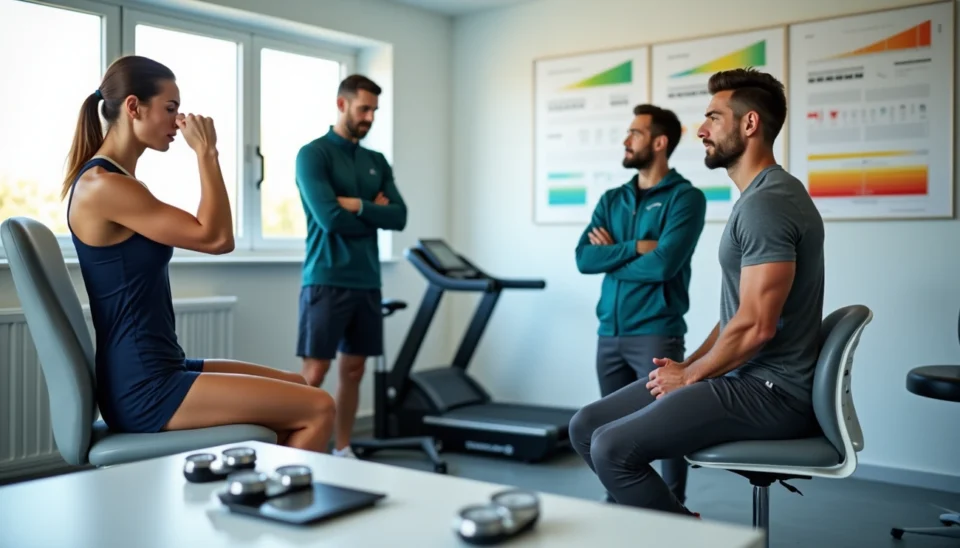
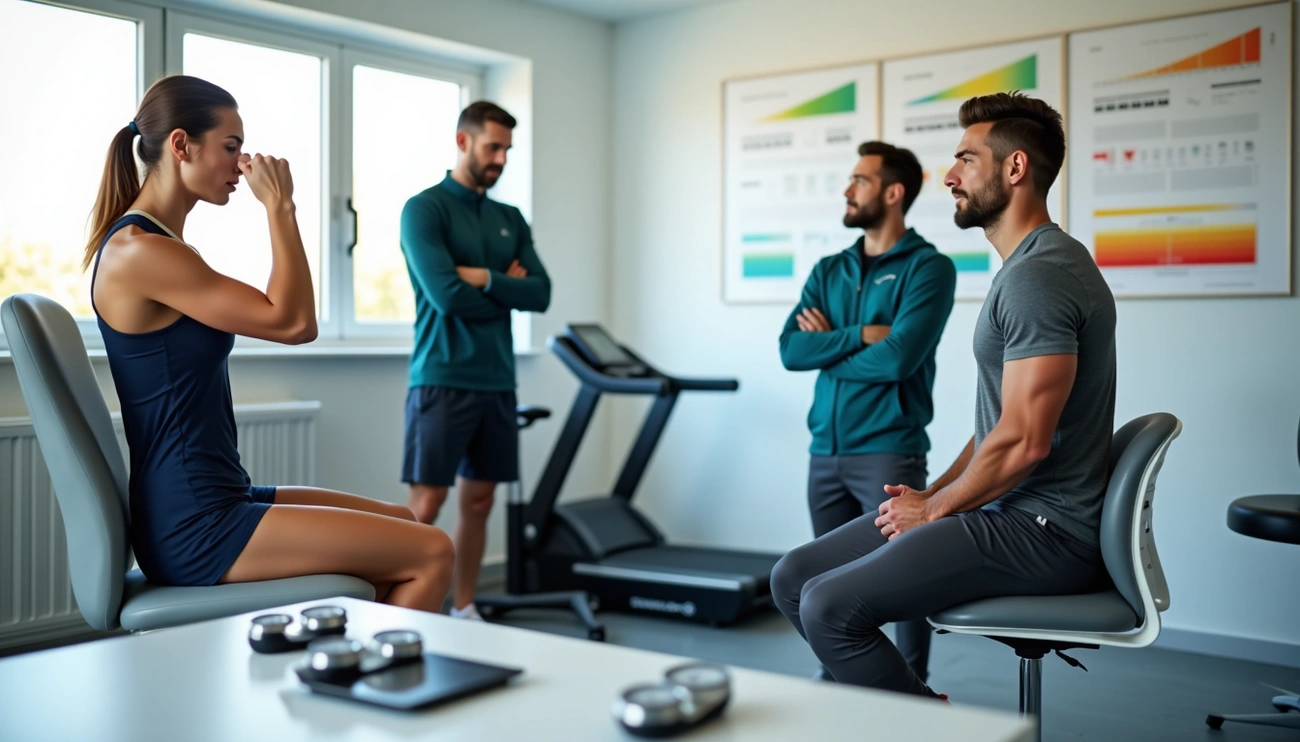
Rest for 10 to 15 minutes before measuring your BOLT score [2][8]. Sit upright with your back straight and breathe through your nose for 2 to 3 minutes [1]. Take a normal, gentle breath in through your nose. Avoid deep or forced inhalations [1]. Exhale through your nose without forcing a full exhale or emptying your lungs [1].
Pinch your nose with your thumb and index finger, then start timing [1]. Hold your breath only until the first natural urge to breathe appears [1]. Stop as soon as you feel sensations like the need to swallow, airway constriction, or involuntary contractions of your breathing muscles in your abdomen or throat [8]. Release your nose and breathe in through your nose without gasping [1]. Your inhalation should remain smooth and controlled [8].
Perform the test first thing in the morning on an empty stomach before caffeine or intense activity to maintain consistency [5]. Repeat the test two more times with rest periods between attempts, then average your three scores [5].
What is a Good BOLT Score for Athletes
Athletes who exercise at moderate intensity start with a BOLT score around 20 seconds [8][9]. The goal should be reaching 40 seconds [8][9]. Scores above 40 seconds appear in endurance athletes, yoga practitioners, or people who practice controlled breathing techniques [1].
Average BOLT Score by Fitness Level
Scores below 10 seconds indicate low CO2 tolerance and poor breathing efficiency [5]. The 10 to 20 second range represents moderate breath control and average respiratory function [5]. Scores between 20 and 30 seconds suggest good breathing efficiency with solid CO2 tolerance [5]. Reaching 30 to 40 seconds places you in the top 5% with optimal recovery and stress management [10].
Understanding Your BOLT Score Chart
Your breathing rate drops to 8 to 10 breaths per minute when your BOLT score reaches 40 seconds [11][12].
How to Improve BOLT Score for Better Breathing Efficiency
Improving your BOLT score requires consistent practice in a variety of breathing domains. Each five-second increase brings noticeable benefits. You’ll have more energy and less breathlessness during physical activity [13].
Switch to Nasal Breathing During Training
Close your mouth and breathe through your nose during daily activities and exercise [10]. Start with light activities like walking or slow jogging, then increase intensity while you maintain nasal breathing [7]. Your pace may slow at first, but this trains your respiratory system to function well under load.
Practice Slow Breathing Exercises
Practice controlled breathing at approximately six breaths per minute [10][14]. Inhale for four seconds and exhale for six seconds through your nose [10]. Reduce to three-second inhales and five-second exhales if air hunger feels too strong [10]. Practice two sessions of five minutes daily to retrain CO2 tolerance [15].
Use Breath-Holding Drills Safely
Take two light, slow breaths through your nose, then hold your breath for five seconds after the second exhale [10]. Repeat for 2.5 to 5 minutes and create gentle air hunger throughout [10]. Stop right away if you experience dizziness or lightheadedness [16].
Address Dysfunctional Breathing Patterns
Dysfunctional breathing involves chronic changes in breathing patterns that cause respiratory complaints [15]. Breathing retraining focuses on four principles: awareness of faulty patterns, relaxing jaw and upper chest muscles, re-educating abdominal breathing, and recognizing normal breathing rates [15].
Track Progress Over Time
Measure your BOLT score regularly and note improvements [7]. Track breathlessness levels during activities and changes in energy and sleep quality [7].
Conclusion
Your BOLT score reveals breathing efficiency rather than athletic potential. It won’t predict your race times, but it identifies dysfunctional patterns that sabotage performance. You should reach 40 seconds through nasal breathing, slow breathing exercises, and controlled breath holds. Each five-second improvement brings noticeable benefits in energy and breathlessness. You need to track your progress consistently. Note that better breathing mechanics support your training without replacing it.
FAQs
Q1. What is considered a good BOLT score for breathing efficiency? A BOLT score between 25-35 seconds indicates significant room for improvement in breathing efficiency. Scores above 35 seconds reflect more optimal breathing patterns, while scores exceeding 45 seconds are associated with exceptional energy levels, motivation, and overall well-being.
Q2. How do you properly measure your BOLT score? To measure your BOLT score, sit upright in a calm environment and breathe normally through your nose. After a normal exhalation, pinch your nose and start timing. Hold your breath only until you feel the first natural urge to breathe—such as throat constriction or involuntary muscle contractions. Release your nose, resume breathing calmly, and record the time in seconds.
Q3. How quickly can you expect to improve your BOLT score? If your BOLT score is below 20 seconds, it indicates your body has adapted to over-breathing patterns that disrupt CO₂ balance and oxygen delivery. With consistent breathing retraining exercises, you can notice real improvements within weeks, with each five-second increase bringing noticeable benefits in energy and reduced breathlessness.
Q4. What does a low BOLT score reveal about your breathing? A BOLT score below 10 seconds indicates low CO₂ tolerance and poor breathing efficiency. Scores in the 10-20 second range suggest dysfunctional breathing patterns, which affect nearly half of all athletes despite regular training. These patterns can be corrected through targeted breathing exercises and nasal breathing practice.
Q5. Does a higher BOLT score guarantee better athletic performance? Research on elite speedskaters found no significant correlation between BOLT scores and exercise performance metrics like peak power or maximum oxygen uptake. While BOLT scores don’t predict athletic performance in highly-trained athletes, they are useful for identifying dysfunctional breathing patterns that can be improved for better breathing efficiency during training.
References
[1] – https://timesofindia.indiatimes.com/life-style/health-fitness/health-news/how-to-check-your-lung-health-at-home-with-the-bolt-breathing-test-tips-from-cmc-vellore-doctor/articleshow/123250108.cms
[2] – https://pmc.ncbi.nlm.nih.gov/articles/PMC11406178/
[3] – https://oxygenadvantage.com/blogs/science/measure-bolt?srsltid=AfmBOooKgk0uniQgOhUOWXeT12M9kglR0irGcuK7FWhgQf7w9O3Sa2Wt
[4] – https://ai.hubermanlab.com/s/mJFhtIQk
[5] – https://www.bodymindbrain.co.uk/bolt-score-test/
[6] – http://oxygenadvantage.co.za/tolerance-to-reduced-oxygen-and-increased-carbon-dioxide/
[7] – https://www.ie.edu/center-for-health-and-well-being/blog/simple-breathing-goals/
[8] – https://oxygenadvantage.co.za/measure-bolt/
[9] – https://www.hitfitnesswarehouse.com/worlds-easiest-way-to-measure-overall-fitness-stress-levels
[10] – https://www.thebreathcoach.co.uk/blog/boltscore
[11] – https://oxygenadvantage.com/blogs/science/measure-bolt?srsltid=AfmBOopscUs9JA7xW2PWRtaqnAkONLGqymXhY9IIRsltRbgN1eCpqYqy
[12] – https://oxygenadvantage.com/blogs/science/measure-bolt?srsltid=AfmBOoqOVjz_pT7gWa7tN7QAJq7pkSdazLE-G1aooaSDwTYessQCp0zI
[13] – https://oxygenadvantage.com/blogs/science/measure-bolt?srsltid=AfmBOop6hBbgrYMbnm1p48Onir-YrN1uixq_r4tLiEFiwvh2XCLTmvx9
[14] – https://pmc.ncbi.nlm.nih.gov/articles/PMC10224217/
[15] – https://www.physio-pedia.com/The_Management_of_Breathing_Pattern_Disorders
[16] – https://www.healthline.com/health/holding-your-breath