
Triathlon Swim Accessories to Prevent Water in Nose
April 5, 2026
Anchoring Drill for Swimmers: Why It Matters to Triathletes
April 12, 2026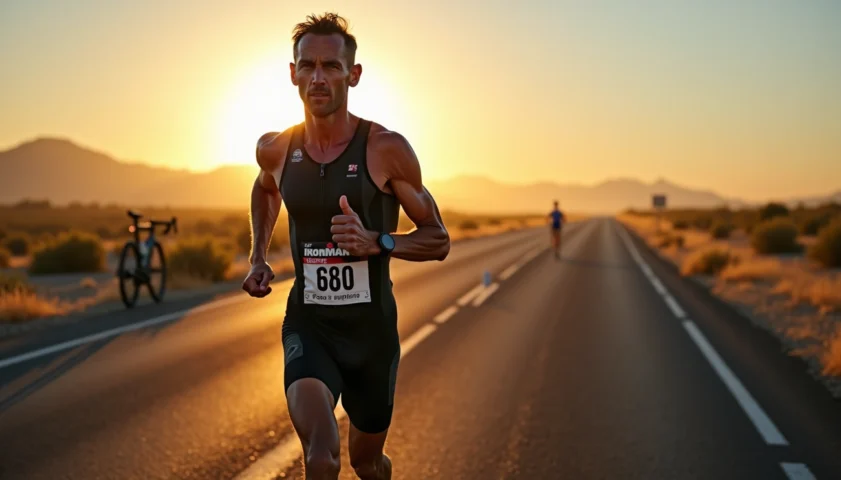
Here’s a staggering reality: 59% of Ironman participants experience at least one gastrointestinal symptom during their race. Your body burns more than 6,000 calories across 140.6 grueling miles. The distance breaks down into a 2.4-mile swim, 112-mile bike ride, and 26.2-mile marathon run.
How long does it take to train for this beast? The sweet spot sits at 9 months, though your timeline depends entirely on current fitness level and experience.
Crossing that finish line will change your life for the better. The question remains: will you race strong or simply survive the distance?
Key Takeaways
Your training timeline determines whether you’ll cross that finish line celebrating or crawling. Experience level shapes everything from preparation duration to weekly hour commitments.
• Training duration scales with experience: Complete beginners need 2-3 years, single-sport athletes require 12-24 months, while experienced triathletes can prepare in 9-12 months.
• Quality beats quantity every time: Successful Ironman preparation averages just 12 hours weekly, peaking at 16 hours – consistency matters more than grinding through excessive volume.
• Mental preparation equals physical training: Practice nutrition strategy, heat management, and race-day adaptability through brick workouts and race simulations.
• Assess readiness beyond fitness: Secure family support, budget $3,400-$52,500 for race and equipment costs, and ensure 10-12 weekly training hours fit your schedule.
• Respect the distance and timeline: Rushing preparation increases injury risk – proper planning transforms race day from painful survival into a celebration-worthy achievement.
The Ironman journey extends far beyond physical endurance. You’ll need strategic preparation across mental, nutritional, and logistical dimensions to successfully complete 140.6 miles of racing. preparing for an ironman competition involves meticulous planning and a commitment to training that can take months or even years. Every aspect, from your cycling gear to your hydration strategy, plays a crucial role in achieving your best performance. Embracing this comprehensive approach can make the difference between just finishing and truly thriving in the race.
What Is an Ironman and How Long Does It Take to Complete
The 140.6-mile challenge breakdown
Time becomes your enemy during an Ironman. The swim must be completed within 2 hours and 20 minutes. After transitioning to the bike, you have 10 hours and 30 minutes total elapsed time to finish the cycling segment. Miss the 17-hour cutoff for the final marathon, and your race ends regardless of how close you are to the finish line.
Ironman Vitoria enforces the strictest cutoff at just 15 hours and 40 minutes total. Races like Arizona and Switzerland allow up to 16 hours and 40 minutes. These cutoffs ensure safety with road closures and adequate lighting. They also preserve the integrity of earning that finisher medal.
Here’s how your effort breaks down: swimming represents approximately 10% of your total race time, cycling accounts for 50%, and the marathon run comprises 38%. Transitions between disciplines add the remaining 2%.
Average finish times by experience level
Age-group athletes cross the line at an average of 12 hours and 49 minutes. Men finish at 12 hours and 38 minutes on average, while women complete the distance at 13 hours and 35 minutes.
Your age significantly impacts performance. The data reveals clear patterns:
| Age Group | Men’s Average Time | Women’s Average Time |
| 25-29 | 12:24:24 | 12:57:38 |
| 30-34 | 12:25:18 | 13:05:49 |
| 35-39 | 12:27:51 | 13:13:08 |
| 40-44 | 12:41:24 | 13:22:02 |
| 45-49 | 12:55:46 | 13:33:51 |
| 50-54 | 13:15:30 | 13:50:32 |
| 55-59 | 13:33:36 | 14:01:59 |
| 60-64 | 13:48:08 | 14:39:48 |
Athletes in their late twenties and early thirties post the fastest times. Performance gradually declines with age, though finishing at any age remains remarkable.
Professional triathletes operate in a different universe entirely. Male professionals average 8 to 9 hours, with female professionals finishing between 9 and 10 hours. The fastest Ironman time recorded stands at 7:21:12, set by Kristian Blummenfelt at Ironman Cozumel in 2021.
Why Ironman distance demands respect
Course difficulty can shatter your race-day expectations. Average finish times at Ironman Vitoria-Gastiez clock in at 10:08 for men, while Ironman Philippines sees averages stretching to 14:36. Hilly or technical courses add an extra hour to your finish time through sustained elevation changes and demanding terrain.
Kona presents a different challenge altogether. Age-groupers at the Ironman World Championships average 11 hours and 31 minutes. This faster time reflects the caliber of qualified athletes and years of racing experience. The 2022 men’s age-group field averaged 12:25:51, while the 2023 women-only event saw an average of 13:10:55.
No two courses present identical challenges. A rolling bike course or technical run adds time to every segment. Small course variations compound across 140.6 miles, making direct performance comparisons between races nearly impossible. You’re not just racing the distance – you’re battling specific terrain, weather conditions, and elevation profiles that define each venue.
How Long Does It Take to Train for an Ironman Based on Your Experience
Your athletic background determines everything about your Ironman preparation timeline. Athletes already familiar with one discipline face shorter preparation windows than complete beginners. The training duration varies from nine months to three years, depending on where you start and what your body can handle.
Complete beginners: The 2-3 year timeline
Starting from scratch requires [at least three years] of endurance training to complete an Ironman safely and perform well. This extended timeline allows your body to adapt to new training stresses without risking injury. Rushing through preparation often results in illness, injury, or mental burnout before race day arrives.
Don’t worry – you’re not alone if this seems overwhelming. The progression works best when you tackle Olympic-distance triathlons first, then move to half-Ironman races, and finally attempt the full distance. This gradual approach conditions your body and prepares your family and work colleagues for the demanding training schedule ahead. Athletes who follow this stepped progression over 2-3 years reach the finish line more successfully than those who jump straight from shorter races.
A 24-month training plan gives you time to ease into three separate disciplines while adopting a new lifestyle. Beginners start with 6-8 hours per week, gradually increasing to 10-12 hours during peak training phases. This allows your body to build the aerobic base required for 140.6 miles of continuous movement.
Single-sport athletes: [12-24 months] of preparation
Athletes coming from running, cycling, or swimming backgrounds need 12-24 months to prepare for the Ironman distance. You already possess endurance fitness in one discipline, but mastering two additional sports takes considerable time. Swimmers must learn cycling mechanics and running form. Runners need to develop swimming technique and bike handling skills. Cyclists face the challenge of running a marathon off the bike.
The first year focuses on building competence across all three disciplines before ramping up volume. Coaches recommend viewing your first Ironman as a two-year process rather than a rushed 12-month plan. Athletes who need to learn swimming from scratch may require up to 18-24 months, especially if they can barely manage three strokes of front crawl initially.
Experienced triathletes: 9-12 month training cycle
Triathletes already comfortable with Olympic and half-Ironman distances need 9-12 months to train for a full Ironman. You’ve already established the foundation, starting at roughly 65% of where you need to be instead of zero. Your training won’t require extensive base building but instead uses a hybrid model that fluctuates between base and build phases while incorporating speed work.
Peak training weeks require 15-18 hours for advanced athletes who already maintain 10-12 hours weekly. The progression to higher training volume doesn’t happen until 8-12 weeks before race day, provided that your normal training week already includes 3-4 hour rides and 90-minute runs.
Short-course to long-course transition
Moving from 70.3 to the full Ironman distance requires at least 9 months of solid training to finish confidently. Athletes already trained for half-Ironman races operate from an elevated fitness baseline, eliminating much of the traditional base-building phase. Focus shifts toward strengthening weaknesses without losing existing fitness.
Structured training begins 24-30 weeks before race day. One challenge involves maintaining focus and motivation across a full year of preparation, which explains why many coaches recommend racing other events throughout the training cycle.
What Does an Ironman Training Plan Actually Consist Of
Weekly training hours and volume progression
Quality trumps quantity when it comes to Ironman training. You can prepare for a successful Ironman with an average training volume of just 12 hours per week and a peak of 16 hours. Many triathletes race faster following a well-constructed 12-hour weekly program than they could with higher-volume approaches.
Your training progression depends on experience level. Beginners start at 6-8 hours per week, gradually increasing to 10-12 hours. Intermediate athletes aim for 8-10 hours weekly, peaking at 12-14 hours, while advanced athletes begin at 10-12 hours and peak at 15-18 hours.
Swimming: Building to 3,000-4,000 yards
Swimming represents only 10 percent of your total Ironman time. Your swim training typically includes three sessions per week, progressively building your capacity to conquer distances up to 4,000 meters in a single session.
Before starting an Ironman swim plan, you should swim continuously for 1,500 meters or yards, with a total workout distance of 3,000 meters or yards. You can reach 90 percent of your fastest possible Ironman swim split by swimming just one hour a day, three times per week. Achieving your absolute fastest swim split would require two hours daily, six days weekly.
Cycling: Long rides and century preparation
Don’t get trapped in the century ride obsession. A dozen century training rides won’t give you much more cycling endurance than two or three. Building solid cycling fitness through threshold and interval training, combined with fairly aggressive long rides in the 2.5-3.5 hour range, easily extends your pedaling power to encompass the full Ironman distance.
Indoor cycling develops higher fitness levels with substantially less time commitment than riding exclusively outside. Some professionals ride outdoors only once weekly, completing five or six indoor workouts featuring interval and threshold efforts lasting just 45 minutes each on average.
Running: The marathon off the bike difference
Running off the bike creates an entirely different challenge than open running races. One long run, one high-intensity run, and a moderate steady base run each week will suffice for Ironman preparation. Your excellent cycling fitness carries you through the run.
You may add one- or two-mile transition runs after bike workouts to prepare for the specific challenge of running off the bike.
Strength and mobility work
Strength training doesn’t require hours of gym time. Strength sessions should last 20 to 45 minutes if you’re training 9 to 20 hours weekly. Structure includes mobility first (especially hip openers), then stability work, and finally external load at the end.
Core work proves so important that even five to 10 minutes daily makes a difference. Deadlifts and squats form the foundation, with single leg work like pistol squats and single leg Romanian deadlifts targeting race-specific strength.
Brick workouts and race simulation
Brick workouts train your body to transition from cycling to running. The most effective approach involves starting the run with about the same load already in your legs as you’ll experience in your race. Brick runs ideally last 20-60 minutes. Advanced athletes run off the bike three to five times weekly.
Race simulation workouts scheduled 6-8 weeks before your Ironman include a one-hour swim, five-hour bike, and one-hour run. These sessions test equipment, nutrition strategy, and pacing under race-like conditions without requiring extended recovery time.
Race Day Reality: What Separates Strong Finishers From Survivors
Physical fitness alone won’t carry you across that Ironman finish line. Don’t worry – you’re not alone if training feels like the easy part compared to race day execution.
Mental preparation, nutrition mastery, and strategic recovery separate athletes who race strong from those barely hanging on at mile 20.
Mental resilience when everything goes wrong
Mental training demands the same diligent practice as your physical sessions. When race day chaos hits, apply the ADAPT system: Accept the situation, Diagnose what’s happening, Analyze your surroundings and resources, Plan your response, and Take action . Acceptance clears emotional fog and enables rational decision-making .
Stay focused on the mile you’re currently racing rather than stressing about factors beyond your control . Remember this truth: feelings aren’t facts and emotions pass . When negative thoughts creep in, ask yourself whether they’re rooted in reality or fiction .
Fueling strategy that actually works
Ironman athletes should consume 60 to 120 grams of carbohydrate per hour during the race, with higher intake on the bike and reduced amounts during the run . Practice with the exact carbohydrate amounts, types, and formats you plan to use – your gut needs training just like your legs .
Start fueling before hunger strikes. Recovering from energy depletion during an Ironman proves nearly impossible . Your nutrition strategy requires individual refinement through experience, practice, and yes – learning from mistakes .
Heat management and pacing discipline
Heat tricks your body into working harder for the same effort. Your heart rate jumps five to 10 beats higher at identical paces . Blood rushes to your skin surface for cooling, stealing oxygen from working muscles . Stick to planned heart rate zones even when pace slows – this discipline separates smart racers from those who blow up.
Athletes need at least 350mg of sodium per hour in hot conditions. Heavy sweaters require double or triple that amount .
Managing training setbacks
Consistency presents the biggest challenge for every athlete . Even with just 15 minutes available, choose activity over inactivity. Missing one session doesn’t justify cramming multiple workouts into the next day – this approach typically backfires through underperformance and fatigue .
Recovery weeks that actually work
Recovery weeks slash training volume by approximately 30% compared to the previous week . Your body adapts to training stress during these periods. Muscles heal and strengthen . A periodized training plan delivers better fitness improvements than continuous volume building without strategic down weeks .
Are You Actually Ready: Key Factors to Consider Before Signing Up
Don’t worry – you’re not alone in wondering whether you’re truly prepared for this challenge. Many athletes sign up for an Ironman before honestly assessing their readiness. The excitement of crossing that finish line can cloud judgment about the real commitment ahead.
Time commitment and family support
Training requires 10-12 hours weekly for working athletes with families . Many successful Ironman finishers wake between 4 and 5 a.m., completing workouts before family obligations begin . One athlete with quadruplets uses a basement bike trainer and treadmill with a baby monitor, training until babies wake .
Getting family buy-in proves crucial. Training impacts everyone through time away, sleep deprivation, and mood changes . Your partner becomes a single parent during long weekend sessions. Your children miss bedtime stories when you collapse from exhaustion.
Financial investment: Race fees and equipment
Ironman registration starts at $875, with processing fees pushing totals near $978 . That’s just the beginning. The complete financial picture ranges from $3,420 minimum to over $52,500 for those purchasing premium equipment and services .
Travel and accommodation add $560-$1,200, while essential gear like bikes, wetsuits, and shoes contribute $4,594-$5,284 . Are you prepared to explain a $20,000 bike purchase to your spouse?
Current fitness baseline assessment
You need a history of training 4-6 days weekly for at least 12 consecutive weeks before starting an Ironman plan . Assess current injuries and stress levels honestly. Adding Ironman training compounds existing physical and mental strain .
Can you currently run 10 miles without stopping? Swim 1,500 meters continuously? Ride your bike for three hours straight? If these benchmarks feel intimidating, you’re not ready yet.
Work and life obligations
Time management determines success more than total hours available . Professional triathletes balance medical school and podium finishes by making every minute intentional and productive .
Your training schedule won’t accommodate missed sessions due to work emergencies or family crises. Consistency matters more than perfection, but you need realistic expectations about competing priorities.
Support systems and coaching options
Coaching costs range from $150-$1,000 monthly for personalized plans . Triathlon clubs offer group training and coach access at lower costs, typically $50-$150 monthly .
The question isn’t whether you need help – it’s what type of guidance fits your budget and learning style. Going it alone increases your chances of injury and burnout.
Conclusion
The Ironman distance demands respect, preparation, and patience. Your training timeline depends entirely on your current fitness level, ranging from nine months for experienced triathletes to three years for complete beginners. Rushing the process increases injury risk and decreases your chances of reaching that finish line.
Undoubtedly, physical training represents just one piece of the puzzle. Mental resilience, nutrition strategy, and recovery protocols separate athletes who race strong from those who barely survive. Before signing up, secure family support, assess your financial commitment, and honestly evaluate your time availability.
Choose your timeline wisely. In the long run, proper preparation transforms crossing that finish line from painful survival into an achievement worth celebrating.
FAQs
Q1. How long does it realistically take to train for an Ironman if I’m starting from scratch? Complete beginners should plan for at least 2-3 years of progressive endurance training to safely prepare for an Ironman. This extended timeline allows your body to adapt gradually, starting with shorter Olympic-distance triathlons, progressing to half-Ironman races, and finally attempting the full 140.6-mile distance. Rushing this progression significantly increases your risk of injury, illness, or burnout before race day.
Q2. Can I train for an Ironman while working a full-time job? Yes, many successful Ironman finishers balance full-time work with training by committing 10-12 hours weekly during base phases and up to 15-18 hours during peak training. Most working athletes train early mornings (4-5 a.m.) before family and work obligations begin, focusing on quality over quantity. The key is securing family support, managing your time efficiently, and being realistic about your available hours.
Q3. How many hours per week should I expect to train for an Ironman? Training volume depends on your experience level. Beginners typically start at 6-8 hours weekly and build to 10-12 hours. Intermediate athletes train 8-10 hours weekly, peaking at 12-14 hours. Advanced athletes begin at 10-12 hours and peak at 15-18 hours. Interestingly, you can successfully complete an Ironman with an average of just 12 hours per week if your training is well-structured and consistent.
Q4. What’s the difference between finishing an Ironman and racing it competitively? Finishing an Ironman requires adequate physical preparation across all three disciplines, while racing competitively demands mental resilience, refined nutrition strategy, heat management skills, and disciplined pacing. The difference lies in practicing race-specific scenarios, mastering your fueling plan (60-120 grams of carbohydrates per hour), and developing the mental tools to adapt when things go wrong during the race.
Q5. How much does it cost to participate in an Ironman race? Ironman registration fees start at approximately $875-$978 including processing fees. However, the total financial commitment ranges from $3,420 minimum to over $52,500 depending on equipment choices. Essential costs include travel and accommodation ($560-$1,200), gear like bikes, wetsuits, and shoes ($4,594-$5,284), and optional coaching services ($150-$1,000 monthly). Budget accordingly and consider starting with more affordable equipment as a beginner.