
Ironman Triathlon Training: How to Tell If You’re Injured or Just Sore
May 8, 2026
Improve Swimming Efficiency with SWOLF: A Complete Guide for Triathletes
May 15, 2026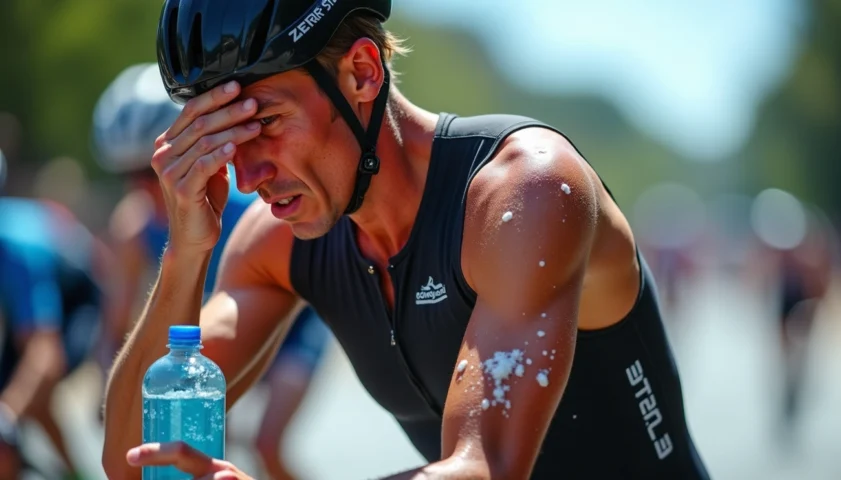
Losing a liter or two of fluid per hour during an Ironman race is completely normal. Yet here’s what might shock you: most elite triathletes still get their hydration strategy completely wrong.
A mere 2% drop in body weight from fluid loss can crush your performance. Elite marathon runners routinely lose up to 4.6% of their body mass during races. The numbers get even more startling – Ironman competitors commonly experience 4-8% body mass loss, and a 12% reduction obliterates performance by a devastating 44%.
You might think the solution is simple: drink more water.
The reality? Triathlon hydration science reveals a far more complex challenge. Dehydration symptoms extend beyond simple fatigue – nausea, dry lips, throat problems, headaches, and mental fog all sabotage your race. But here’s the dangerous part: drinking too much water without proper electrolyte balance can trigger hyponatremia, a potentially fatal condition that affects even elite athletes.
Most triathletes face a hidden balancing act between fluid intake and electrolyte replacement. Elite athletes often miss this critical sweet spot, making costly mistakes that derail months of training. We’ll examine exactly what top performers get wrong about hydration, reveal how much water endurance athletes actually need daily, and show you why personalized sodium strategies become life-or-death critical during long races in hot conditions.
Physiological Mechanisms Behind Hydration and Performance
What happens inside your body when dehydration strikes during a triathlon? The hidden mechanisms reveal why that balancing act becomes so critical to your performance.
Plasma Volume Reduction and Cardiovascular Drift
Your heart starts working overtime the moment you begin sweating. Plasma volume plummets by up to 19% after high-intensity exercise compared to just 11% during steady aerobic activity. This triggers cardiovascular drift – your heart rate climbs steadily even though you’re maintaining the exact same pace.
Think of your cardiovascular system as a high-performance engine suddenly running low on oil. Blood volume drops, stroke volume diminishes, and your heart compensates by beating faster to pump adequate blood to working muscles and skin for cooling. Even elite athletes with years of training can’t escape this physiological reality. The compensation becomes increasingly ineffective during long events like an Ironman, especially when temperatures soar.
Electrolyte Loss and Neuromuscular Fatigue
Sweat carries more than just water – it drains your body of sodium, potassium, and chloride. These electrolytes maintain the electrical gradients across muscle cell membranes that power every movement. Lose too many, and your neuromuscular function starts breaking down.
During intense exercise, intracellular potassium drops by 6-40% while extracellular levels spike. This disruption causes membrane depolarization and reduces muscle fiber excitability – the scientific explanation for why your legs feel like concrete blocks during the final miles. Sodium imbalances further disrupt nerve impulse transmission. Research shows that consuming sodium-rich fluids raises the cramping threshold, though both electrolyte imbalances and neuromuscular fatigue contribute to those painful muscle seizures.
Gastrointestinal Distress from Dehydration
About 70% of elite endurance athletes experience GI symptoms, with 32% specifically affected during Ironman competitions. The culprit? Blood flow to your gut can decrease by up to 80% as your body prioritizes working muscles.
This creates a cascade of problems: intestinal ischemia, increased gut permeability, and impaired nutrient absorption. Nausea, vomiting, and diarrhea become unwelcome race companions that crush both performance and recovery. Severe dehydration slows gastric emptying, trapping you in a vicious cycle where drinking more fluids becomes increasingly difficult – particularly brutal during the run portion when your stomach rebels against everything.
Scientific Evidence from Ironman and Endurance Events
Decades of field research from actual Ironman competitions reveal patterns that laboratory studies simply can’t capture. Real-world race data tells a different story than controlled testing environments.
Meta-analysis: 0.5 SMD Dehydration Post-Race
A comprehensive meta-analysis of hydration status after Ironman triathlons showed a moderate state of dehydration compared to baseline values with a standardized mean difference of 0.494. Here’s the surprising part: this level of fluid deficit generally falls short of clinical dehydration thresholds. Athletes displayed measurable dehydration, yet their values typically remained within normal physiological ranges.
Your body appears to instinctively achieve sufficient fluid replacement during competitions, even if not perfectly optimal.
Urine Specific Gravity and Plasma Osmolality Trends
Urine specific gravity (USG) serves as a practical hydration marker for field testing. The National Athletic Trainers’ Association recommends athletes begin exercise with USG at or below 1.020 g·mL-1. Research consistently shows significant increases in USG post-race, with studies reporting average increases from 1.018 to 1.023 following competition.
Plasma osmolality measurements demonstrate remarkable accuracy in detecting dehydration states. Serum osmolality shows the highest AUC (0.91) at 2% body mass loss, making it a gold standard for hydration assessment.
Body Mass Loss: 2-5% in Most Finishers
The data reveals consistent patterns across endurance events. Ironman participants routinely experience losses averaging 2.3% to 4.9% of total body mass. A Guadeloupe half Ironman conducted in hot, humid conditions showed athletes losing an average of 4.8% body weight despite consuming approximately 3.5L of fluid during the race.
What’s truly fascinating? Plasma volume often increases despite body mass reduction. One study found that despite a 4.9% body weight loss, plasma volume increased by 1.0%. This seemingly contradictory finding explains why elite triathletes maintain performance despite substantial fluid losses—your body prioritizes plasma volume to support cardiovascular function over total body water balance.
Research indicates that optimal hydration strategies should target moderate fluid replacement rather than complete sweat loss compensation. Focus on maintaining critical plasma volume, not preventing all weight loss.
Risks of Overhydration and Hyponatremia in Triathletes
Here’s a sobering reality most triathletes never consider: drinking too much water can kill you. Exercise-associated hyponatremia (EAH) strikes when blood sodium concentration falls below 135 mmol/L during or up to 24 hours after exercise.
Don’t think this only happens to beginners making rookie mistakes.
Sodium Dilution and Cell Swelling
Overhydration creates a dangerous cascade inside your body. Excessive fluid dilutes blood sodium levels, pulling water from your bloodstream directly into your cells. Your brain becomes the most vulnerable target – cellular swelling occurs inside your rigid skull with nowhere to expand.
Your body fights back initially, trying to maintain sodium balance. But massive fluid intake overwhelms these protective mechanisms, triggering dilutional hyponatremia. The shocking truth? About 10% of Ironman finishers develop this potentially fatal condition.
Symptoms: Headache, Confusion, Seizures
Watch for these progressive warning signs:
- Mild symptoms (135-130 mmol/L): nausea, lethargy, headache, weakness
- Moderate symptoms (129-125 mmol/L): vomiting, confusion, irritability
- Severe symptoms (<125 mmol/L): seizures, respiratory distress, coma
Vomiting frequently signals hyponatremia rather than simple heat exhaustion. Since 1981, at least 14 athletes have died from EAH. These weren’t weak or unprepared athletes – they were following conventional hydration advice.
Why ‘Drink as Much as You Can’ is Dangerous
That old-school mantra “drink as much as possible” creates deadly risk. Female athletes and slower finishers face the highest danger. Even sports drinks can trigger hyponatremia when consumed excessively – their sodium content can’t match massive fluid intake.
The lesson? Smart triathlon hydration demands precise balance, not maximum consumption.
Optimizing Fluid and Electrolyte Intake for Endurance Events
Finding your personal hydration sweet spot requires more than guesswork. Elite athletes who nail their fluid and electrolyte strategy follow specific, research-backed guidelines that separate race winners from those who fade.
Sodium Guidelines: 460–1150mg/L in Fluids
Your hydration fluids need sodium concentrations between 460-1150mg/L to match what science shows works. This range covers the typical sodium loss of 200-2000mg per liter of sweat. Here’s the challenge: individual sweat sodium concentration varies dramatically—anywhere from 300mg to over 2000mg per liter.
Activities lasting 2-3 hours demand increasingly critical sodium replacement. Heavy sweaters potentially require up to 1000mg/hour. Don’t worry – you’re not alone if this seems complicated. Most triathletes underestimate their individual sodium needs.
Carbohydrate-Electrolyte vs Water-Only Drinks
Plain water fails during endurance events. Carbohydrate-electrolyte (CE) drinks consistently outperform water-only options in race settings. Studies show CE drinks maintain higher blood glucose levels and carbohydrate utilization throughout competitions.
Drinking plain water during events exceeding 90 minutes increases hyponatremia risk. Look for drinks containing 6-8% carbohydrates for optimal energy replacement.
Best Electrolyte Drink for Triathletes: What to Look For
Effective electrolyte drinks should contain:
- Sodium (primary electrolyte): 200-400mg per hour as baseline
- Additional electrolytes: potassium, calcium, magnesium
- Appropriate carbohydrate concentration: 30-60g/hour for Olympic distance, 60-90g/hour for longer courses
“Salty sweaters” require higher-sodium formulations like Precision Hydration 1500 or The Right Stuff. Time matters in getting this right – your race depends on matching your drink to your sweat profile.
Post-Race Rehydration: 150% of Weight Lost
After competition, consume 150% of fluid weight lost within six hours to restore hydration. This overcompensation accounts for continued fluid losses during recovery.
For optimal absorption, include sodium in recovery drinks—this stimulates thirst and enhances fluid retention. Your body continues losing fluids even after you cross the finish line.
Conclusion
Most triathletes spend months perfecting their swim stroke, bike position, and running form. Yet they stumble on something far simpler – and far more critical.
Your hydration strategy isn’t about drinking more or drinking less. It’s about drinking smarter. The research reveals a truth that challenges everything you’ve been told: elite athletes who lose 2-5% of their body weight during races often maintain peak performance, while others who drink excessively face life-threatening complications.
The outdated “chug water constantly” mindset has sent too many athletes to medical tents. Female competitors and slower finishers face the highest risk, yet most remain unaware of hyponatremia’s deadly potential. Your body doesn’t need maximum hydration – it needs strategic hydration.
Here’s what actually works: sodium concentrations between 460-1150mg/L in your race drinks, carbohydrate-electrolyte solutions instead of plain water, and personalized intake based on your unique sweat profile. Post-race recovery demands 150% fluid replacement within six hours – no shortcuts, no guesswork.
Don’t worry about hitting some arbitrary hydration target during your next race. Focus on maintaining plasma volume while respecting your individual physiology. The science shows that finding your personal sweet spot between adequate fluid replacement and electrolyte balance separates finishers from champions.
Your next breakthrough isn’t waiting in a training plan or expensive gear upgrade. It’s hiding in a hydration strategy that matches your body’s actual needs – not what someone else thinks they should be.
Key Takeaways
Elite triathletes often misunderstand hydration science, leading to performance-limiting mistakes that can be avoided with evidence-based strategies.
• Moderate dehydration is normal and acceptable – Body mass loss of 2-5% during races is typical and doesn’t impair performance if plasma volume is maintained.
• Overhydration is more dangerous than mild dehydration – Drinking too much water causes hyponatremia, affecting 10% of Ironman finishers with potentially fatal consequences.
• Sodium concentration matters more than volume – Use drinks with 460-1150mg/L sodium rather than plain water to prevent cramping and maintain electrolyte balance.
• Personalize your hydration strategy – Individual sweat rates vary from 300-2000mg sodium per liter, requiring customized fluid and electrolyte replacement plans.
• Recovery requires overcompensation – Consume 150% of weight lost within six hours post-race to fully restore hydration status and optimize recovery.
The key to triathlete hydration isn’t drinking maximum amounts—it’s finding your personal balance between adequate fluid replacement and electrolyte maintenance based on your unique sweat profile and race conditions.
FAQs
Q1. How much fluid should a triathlete drink during a race? There’s no one-size-fits-all answer. Triathletes should aim to maintain their plasma volume rather than prevent all weight loss. A body mass loss of 2-5% during races is typical and doesn’t necessarily impair performance. The key is to find a personal balance based on individual sweat rates and race conditions.
Q2. What are the risks of overhydration for triathletes? Overhydration can lead to exercise-associated hyponatremia (EAH), a potentially fatal condition where blood sodium levels drop too low. Symptoms can range from mild (nausea, headache) to severe (seizures, coma). About 10% of Ironman finishers develop hyponatremia, making it a significant risk for endurance athletes.
Q3. What should triathletes look for in an electrolyte drink? An effective electrolyte drink for triathletes should contain sodium (200-400mg per hour as baseline), additional electrolytes like potassium and magnesium, and appropriate carbohydrate concentration (30-60g/hour for Olympic distance, 60-90g/hour for longer courses). The ideal sodium concentration in fluids is between 460-1150mg/L.
Q4. How does dehydration affect triathlon performance? Dehydration can lead to reduced plasma volume, causing cardiovascular drift where heart rate increases to maintain blood flow. It also impairs neuromuscular function due to electrolyte loss and can cause gastrointestinal distress. However, mild to moderate dehydration (2-5% body mass loss) is common and doesn’t necessarily impair performance if managed correctly.
Q5. What’s the best post-race rehydration strategy for triathletes? After a race, triathletes should consume 150% of the fluid weight lost within six hours to restore hydration. This overcompensation accounts for continued fluid losses during recovery. Including sodium in recovery drinks stimulates thirst and enhances fluid retention, optimizing the rehydration process.