
15 Essential Triathlon Gear List Items: Expert Race Day Guide 2025
July 9, 2025
How to Master Swim Training for Triathlon: A Step-by-Step Guide
July 10, 2025
Only 23% of age-group triathletes complete a half ironman on their first attempt without proper training structure. Are you ready to join the minority who cross that finish line with confidence?
A half ironman demands respect: 1.9km swim, 90km bike ride, and 21.1km run. Elite athletes crush this distance in under 4 hours, but you have up to 8.5 hours to complete your journey. Don’t worry – you’re not alone in feeling intimidated by these numbers.
Here’s what many beginners don’t realize: 16 weeks provides enough time to build serious fitness. You need basic endurance to start – swimming 15 minutes continuously, cycling 2 hours weekly, and running comfortably for 1.5 hours. Training requires 6-10 hours weekly, which sounds overwhelming but fits into most schedules with smart planning.
Why exactly 16 weeks? This timeframe gives you four months to systematically build endurance, perfect your technique, and prepare mentally for race day. Most athletes see measurable progress every 3-4 weeks, which keeps motivation high throughout the journey.
Time matters in half ironman success. Each training session builds the foundation for race day performance, and this article shows you exactly how to prepare for your first 70.3 triathlon.
Ready to start building your path to the finish line?
Before You Begin: Fitness, Gear, and Goals
Have you ever started a training plan only to realize you’re missing crucial pieces? Proper preparation prevents this common mistake. Your half ironman journey requires honest assessment of your current fitness, smart equipment choices, and realistic goal setting.
Minimum fitness requirements
Most coaches agree on baseline fitness standards before starting half ironman training. You should swim comfortably for at least an hour, cycle three times weekly with long rides around 20 miles, and run three times weekly with long runs reaching five miles. Not quite there yet? Don’t worry – extend your preparation timeline to build this foundation safely.
Training for a 70.3 demands 8-10 hours weekly minimum. Some athletes need 10 weeks of dedicated preparation, while others require 20 weeks for thorough conditioning. This commitment develops both physical fitness and technical skills needed for the challenging distance.
Swimming poses unique challenges for many triathletes. You’ll need comfort with the 1.9 km (1.2 mile) distance in open water. The bike leg requires stamina for 90 km (56 miles) at steady pace. Running presents the greatest challenge – completing a half marathon after swimming and cycling.
Essential gear for training and race day
Smart equipment choices matter more than expensive gear. Start with these essentials:
Swim: Wetsuit (for cold-water events), goggles (plus a spare pair), swim cap, and anti-chafe lubricantBike: Properly fitted bike, helmet, cycling shoes, water bottles, spare tubes, and tire repair kitRun: Running shoes, race number belt, socks, and a cap or visorGeneral: Tri-specific clothing designed to wear throughout the entire race, sunscreen, and nutrition/hydration supplies
Many athletes eventually invest in tri-specific bikes for increased speed and comfort during long rides. Tri-specific clothing with padding provides comfort on the bike without soaking up excessive water during the swim.
Setting realistic goals for your first 70.3
Focus on completion rather than competition for your first 70.3. Most coaches advise first-time athletes to prioritize finishing over achieving specific times. The official cutoff time is eight hours, with average age-group athletes completing the course around six hours.
Once you’ve finished your first event, you can refine your racing strategy for time-specific goals. Use the SMART framework: Specific, Measurable, Achievable, Relevant, and Time-bound. This structured approach transforms vague aspirations into concrete, actionable plans.
Break your larger outcome goal (completing the race) into smaller process goals like “swim three times weekly” or “complete all scheduled long rides”. These smaller milestones provide motivation throughout your training journey while building the fitness necessary for race day success.
Remember – your first half ironman is about proving to yourself that you can finish. Everything else comes later. As you prepare for race day strategies for half ironman, focus on managing your energy and pacing yourself throughout the event. Nutrition plays a critical role, so experiment with what works best for you during training sessions. Remember that mental preparation is just as important as physical training, so visualize your success and stay positive.
How the 16-Week Half Ironman Training Plan Works
Smart training structure separates successful half ironman finishers from those who struggle on race day. Your 16-week plan follows a proven progression that builds fitness systematically while keeping injury risk low.
Weekly structure overview
The plan divides into three distinct phases: an 8-week base phase, followed by a 6-week build phase, and a 6-week peak phase. Each phase serves a specific purpose in your fitness development.
Most weeks include 9 workouts spread across all three disciplines. You’ll complete three swims, three bike rides, and three runs each week. Some weeks swap standalone sessions for brick workouts – those challenging back-to-back combinations that simulate race conditions. These multi-sport sessions prepare your body for the unique demands of transitioning between disciplines.
Your training follows a smart pattern: three weeks of progressive loading followed by one recovery week with reduced volume. Many plans include optional tune-up races – a sprint triathlon around week 12 and an Olympic distance around week 16. These races provide valuable practice without derailing your main goal. Incorporating beginner triathlon training tips can help you refine your technique and build confidence in each discipline. Focus on mastering swimming, cycling, and running form to maximize your efficiency and prevent injuries. Additionally, consider nutrition strategies tailored for endurance events to enhance your overall performance on race day. Incorporating strength training techniques for triathletes into your routine can help build the muscular endurance you need for long-distance events. Focus on exercises that enhance core stability and overall power, which will translate to better performance in all three disciplines. By dedicating time to strength work, you not only improve your race times but also reduce the risk of injury throughout your training.
Balancing swim, bike, and run
Time allocation across disciplines can make or break your half ironman preparation. Here’s the reality: cycling demands the most training time because it represents the longest race segment.
For a typical 10-hour training week, expect this distribution: 3 hours swimming, 5 hours biking, and 2 hours running. However, your personal strengths and weaknesses should guide these numbers.
Struggle with cycling? Dedicate 6 hours to the bike while reducing swim time to 2 hours. Swimming feels like your weakness? Increase pool time to 4 hours while cutting back on cycling. The bike leg covers 56 miles of your race distance, but don’t neglect running – focus on frequency with shorter runs to minimize injury risk.
Rest and recovery days
Here’s what many beginners get wrong: rest days aren’t wasted training opportunities. Your body adapts and strengthens during recovery, not during workouts.
Every training week includes at least one complete rest day. These days allow your muscles, hormones, and psychological systems to recover from training stress. Skip adequate recovery, and you’ll face overtraining symptoms – elevated resting heart rate, mood disturbances, and sleep problems.
Recovery weeks occur every fourth week with 20-30% volume reduction. During these weeks, prioritize sleep and complete rest to maximize adaptation. Your body needs time to absorb the training stress and emerge stronger.
Remember: the 16-week plan works because it balances progressive overload with strategic recovery. This approach ensures you arrive at race day prepared without the burnout that destroys so many training plans.
Breaking Down the Training Phases
Each phase of your 16-week journey serves a specific purpose in building your half ironman fitness. Think of these phases as stepping stones – each one prepares your body for the next challenge while preventing the burnout that destroys so many training plans.
Weeks 1–4: Base building
Your foundation starts here. Base building focuses on consistency and low-intensity training that teaches your body fundamental endurance skills. During these initial weeks, you’ll develop aerobic capacity with moderate-intensity workouts while gradually increasing duration.
Base training teaches your body to become more efficient at using oxygen and fats for energy, which becomes crucial during those final miles of your race. Most workouts during this phase should be completed at around 2 mmol lactate level rather than the higher 4 mmol level, which many beginners mistakenly target.
Frequency beats duration every time during base building. Your body adapts remarkably quickly – you’ll notice improvements in efficiency like maintaining the same pace at a lower heart rate. This adaptation sets the stage for everything that follows.
Weeks 5–10: Volume and intensity
Your training shifts into build mode, where both volume and intensity increase. This six-week period introduces challenging high-intensity workouts to maximize aerobic capacity and enhance your ability to sustain faster speeds.
You’ll begin incorporating threshold-intensity training and lactate intervals across all three disciplines. These workouts push your limits while continuing to build endurance with progressively longer weekend sessions. As you enhance your training regimen, consider incorporating lactate testing for athletes at home to track your progress and optimize your performance. This approach allows for tailored adjustments to your training strategy, ensuring you are always working at the right intensity. By understanding your lactate thresholds, you can make informed decisions that will elevate your endurance and overall athletic capability.
The build phase often includes your first brick workouts—critical sessions that combine disciplines (typically bike-to-run) to prepare your body for race-day transitions. Concerned about your training progress? Schedule a web consultation to discuss your training needs and get personalized advice from experts who understand the challenges of half ironman preparation.
Weeks 11–14: Peak training
Your workout volume and intensity reach their highest levels during weeks 11-14. This phase focuses on race-specific conditioning to simulate the demands you’ll face on race day.
Long rides might reach 2-2.5 hours, while runs peak at around 1:10. These endurance sessions combine with high-intensity intervals to maintain speed. Your body learns to perform when already fatigued – exactly what race day demands.
The peak phase emphasizes race simulation through extended brick workouts, practicing your race-day nutrition strategy, and refining pacing. Every session prepares you for the specific challenges of swimming, biking, and running in sequence.
Weeks 15–16: Taper and race prep
Tapering involves a systematic reduction in training load during your final two weeks. You’ll cut training volume by approximately 25% while maintaining some intensity to stay sharp.
Your last long run should occur 16-17 days before the race, with your final long bike 10-11 days prior. Swimming continues at normal volumes and intensity until about 3-4 days before race day.
Many athletes report feeling terrible 5-6 days into a taper—this is normal and actually indicates the taper is working. Resist the temptation to “test” your fitness with extra hard workouts, as discipline during this phase is absolutely crucial for optimal performance.
Workouts That Matter Most
Remember that moment when you realize not all training sessions are created equal? Some workouts deliver massive returns while others just fill time. These key sessions separate half ironman finishers from those who struggle on race day.
Long rides and runs
Long endurance sessions build the aerobic engine that carries you through 70.3 miles. Your cycling sessions should progress to 3-4.5 hours during base and strength phases. Structure your weekly bike training around three pillars: a steady ride below race pace (up to 2 hours), a challenging hill session (1.5 hours), and a long endurance ride building to 4 hours.
Running presents a different challenge. Include at least one run immediately after cycling each week. Your longest runs should gradually extend to approximately 2 hours, maintaining an easy to moderate effort throughout. These extended sessions create the endurance foundation without overwhelming your recovery systems.
Many athletes make the mistake of going too hard during long sessions. The goal isn’t to suffer—it’s to teach your body to sustain effort efficiently.
Brick sessions explained
Brick workouts—combining two disciplines back-to-back—are where half ironman preparation gets real. Your legs feel like concrete after cycling, then you ask them to run. Sound familiar?
Master these three fundamental brick types:
- Cycle-emphasis brick: Complete a 3-4.5 hour ride followed by a 15-40 minute run. Run at goal race pace for half the duration, using the remainder as cooldown.
- Run-emphasis brick: A 1-2 hour moderate bike effort followed by a 60-90 minute quality run. This session prioritizes endurance running off the bike.
- Race simulation brick: A 2-3 hour ride (including 30-90 minutes at race-specific tempo) followed by a 30-60 minute run approaching race pace.
Brick sessions teach your body the art of transition while building race-specific fitness and mental toughness. That wobbly-legged feeling becomes manageable with practice.
Swim drills and open water practice
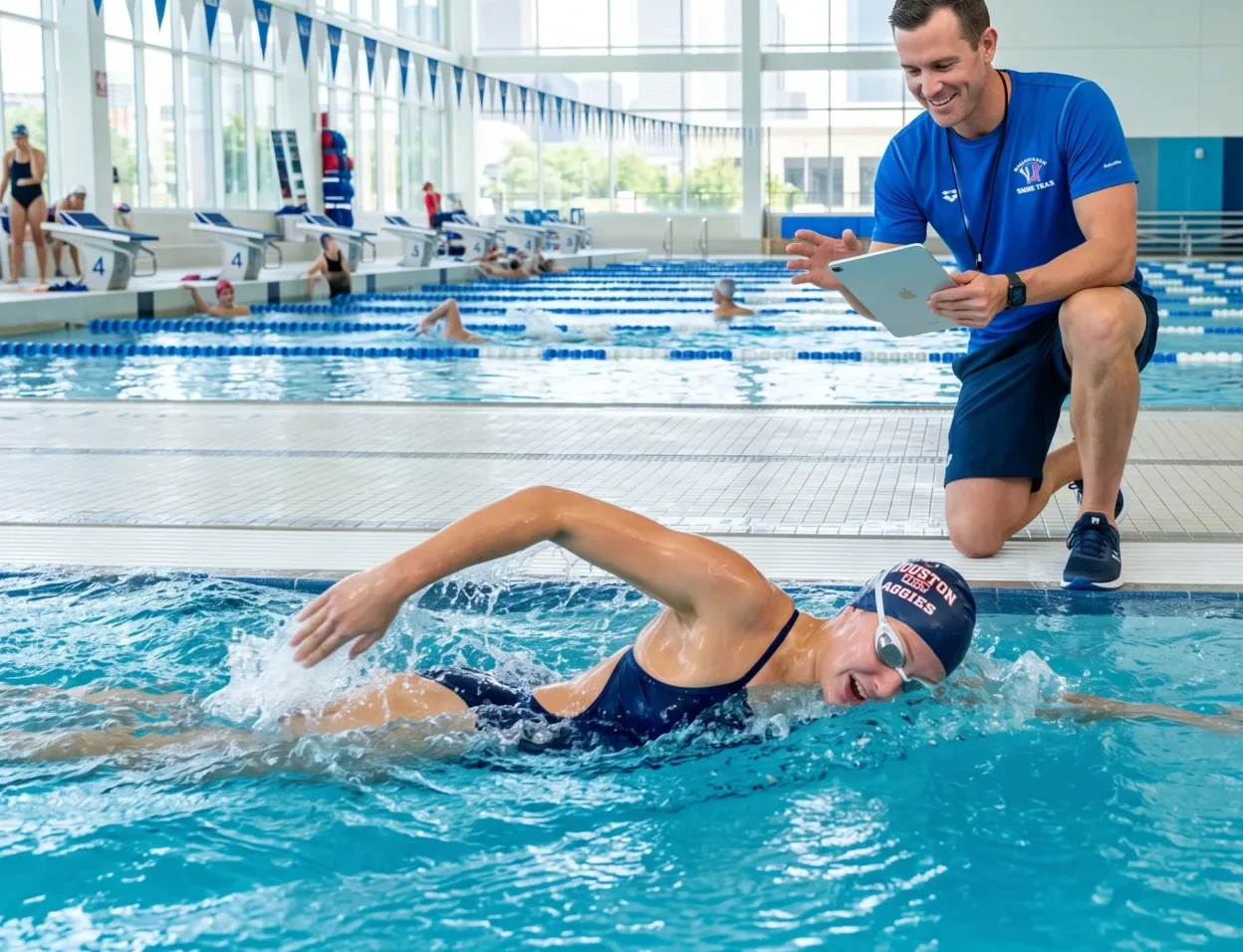
Swimming technique separates efficient athletes from those who exhaust themselves in the first 400 meters. Focus on these essential skill builders:
- Single-arm drill: Isolates stroke mechanics while maintaining balanced form
- Sidekick: Develops balance, leg strength, and proper breathing rhythm
- Tarzan/water polo drill: Strengthens neck muscles for sighting buoys during the swim
Open water skills matter more than pool times. Practice sighting (looking up every 6-10 strokes), drafting (saving 3-7% energy), and pack swimming. Consistency counts—drill these techniques at least 10 times over three weeks for muscle memory.
Include swim workouts targeting endurance, surge capability, and sustained rhythm. These specialized sessions prepare you for the unique demands of the 1.2-mile half ironman swim leg.
Your technique improvements here translate directly to race day performance. Every stroke counts when you’re covering 1.2 miles in open water.
Final Prep and Race Execution
Here’s what nobody tells you about race week: even perfectly trained athletes start second-guessing everything. Your body feels different, your mind races with “what-ifs,” and suddenly that 16-week plan seems insufficient.
Tapering tips for beginners
Tapering feels wrong to most athletes. You reduce training volume by 40-60% starting 7-10 days before race day. Your brain screams “you’re getting out of shape!” but your body celebrates the chance to finally recover and adapt.
Schedule your last long run 16-17 days before the race, with your final long bike ride 10-11 days prior. Keep swimming at normal volume until 3-4 days before race day. This allows your body to transition from “stress mode” to “perform mode”.
Expect to feel sluggish around day 5-6 of your taper—this actually means the taper is working. Complete a short workout in each discipline just before race day to keep your systems activated.
Race day checklist
Never underestimate the power of preparation. Missing one essential item can derail months of training:
Swim: Wetsuit, goggles (plus spare), swim cap, anti-fog solution
Bike: Helmet, cycling shoes, repair kit with spare tube, nutrition supplies
Run: Running shoes, race belt, hat/visor, sunscreen
Miscellaneous: Timing chip, body lubricant, sunglasses
Arrive early to secure an optimal transition spot near the bike in/out. Remember this cardinal rule: nothing new on race day.
Pacing and fueling during the race
Most beginners go out too hard in the swim. Treat it as a warmup at 6-7/10 effort. Save your energy for the bike, where you should target 80-85% of your power threshold. Keep your normalized power close to average power.
Nutrition becomes crucial over 70.3 miles. Target 60-90g carbohydrates hourly, 500-700mg sodium hourly, and 13-5-17oz fluid per hour. During the run, reduce carb intake to 50-60g hourly while maintaining electrolyte balance.
Schedule a web consultation to discuss your training needs if you’re uncertain about your tapering or race day strategy.
Your 16-week journey culminates in this moment. Trust your training, stick to your plan, and remember why you started. That finish line represents more than just completing a race—it’s proof of your commitment to becoming something greater.
Conclusion
Your first half ironman finish line is closer than you think. This 16-week training plan builds the endurance foundation you need while protecting you from injury and burnout. Each phase serves a specific purpose in preparing your body for race day demands. As you progress through your training, consider incorporating a 20week ironman training schedule to further enhance your stamina and strength. This comprehensive approach allows you to build on the solid base established during your initial preparation, ensuring that you’re ready for the unique challenges of a full Ironman race. Remember to listen to your body and adjust your training intensity as needed to prevent overexertion.
Consistency beats perfection every time. Base building develops your aerobic engine. The build phase pushes your limits safely. Peak training sharpens your race-specific fitness. Tapering delivers you to the start line fresh and ready.
Remember that every challenge during these 16 weeks prepares you for something bigger. Each brick workout teaches your body to transition between disciplines. Long rides build the mental toughness needed when the going gets tough. Open water swims prepare you for the chaos of race morning.
Recovery deserves equal respect with your hardest workouts. Your body adapts and strengthens during rest, not during training. This principle separates successful finishers from those who burn out before race day.
Trust the process when race day arrives. Stick to your nutrition strategy. Pace yourself according to your training zones. Remember why you started this journey 16 weeks ago.
Crossing that finish line represents more than physical achievement. It proves you can commit to a goal and see it through. Your first half ironman becomes the foundation for everything that follows.
The finish line is waiting – now go crush your first 70.3!
Key Takeaways
Master your first half ironman with this comprehensive 16-week training approach that transforms beginners into confident 70.3 finishers through structured preparation and smart execution. to ensure success, consider following some beginner tips for ironman training that focus on building endurance and strength gradually. It’s essential to prioritize nutrition and recovery strategies, as these play a critical role in performance. Engaging with a supportive community can also provide motivation and helpful insights along the journey.
• Build your base first: Start with 8-10 hours weekly training, focusing on consistency over intensity during weeks 1-4 to develop aerobic capacity safely.
• Master brick workouts: Practice bike-to-run transitions regularly as they’re crucial for race day success and help your body adapt to discipline changes.
• Taper strategically: Reduce training volume by 40-60% in the final 7-10 days while maintaining some intensity to arrive fresh and strong.
• Focus on completion, not competition: Set realistic goals for your first 70.3, prioritizing finishing over specific times with the 8.5-hour cutoff providing ample opportunity.
• Fuel consistently: Target 60-90g carbohydrates and 500-700mg sodium hourly during the race, with nothing new attempted on race day.
The key to half ironman success lies in progressive training that respects recovery periods. Your body adapts during rest, not just during workouts, making strategic recovery weeks as important as peak training phases. Trust your 16-week preparation and enjoy the journey to your first 70.3 finish line.
FAQs
Q1. How long does it take to train for a half Ironman? A typical training plan for a half Ironman (70.3) triathlon spans 16 weeks, or approximately four months. This duration allows beginners to progressively build fitness, master techniques, and mentally prepare for race day while seeing consistent progress.
Q2. What’s the minimum fitness level required to start half Ironman training? Before beginning a half Ironman training plan, you should be comfortable swimming for at least an hour, cycling three times weekly with long rides of about 20 miles, and running three times weekly with long runs of about five miles. Additionally, you should be able to dedicate 8-10 hours per week to training.
Q3. How should I structure my weekly training for a half Ironman? A typical week in a half Ironman training plan includes 9 workouts spread across all three disciplines: three swims, three bike rides, and three runs. The plan also incorporates brick workouts (combining disciplines) and at least one complete rest day each week for recovery.
Q4. What are the most important workouts in half Ironman training? Key workouts include long rides (building up to 3-4.5 hours), long runs (gradually increasing to about 2 hours), and brick sessions that combine disciplines. Additionally, swim drills and open water practice are crucial for developing technique and race-specific skills.
Q5. How should I approach race day nutrition and pacing? For nutrition, aim to consume 60-90g of carbohydrates and 500-700mg of sodium hourly during the race. Pacing-wise, treat the swim as a warm-up at 6-7/10 effort, aim for 80-85% of your power threshold on the bike, and reduce carb intake to 50-60g hourly on the run while maintaining electrolyte balance. Remember, nothing new should be attempted on race day.