How to Master Swim Training for Triathlon: A Step-by-Step Guide
July 10, 2025
How to Master Triathlon Swim Technique: From Pool to Open Water Success
July 12, 2025
Did you know that nutrition is often referred to as the fourth discipline of triathlon?
That’s right – alongside swimming, cycling, and running, your triathlon nutrition plan can make or break your performance. For races lasting over 90 minutes, proper fueling becomes absolutely critical. Carbohydrate supplementation during endurance races has been scientifically proven to improve performance.
Creating the perfect nutrition strategy isn’t one-size-fits-all. Your carbohydrate needs can dramatically shift from 5 grams per kilogram of bodyweight during light training to more than 8 grams when your training jumps from one hour to two or more hours daily. During longer races, your body requires between 70-90 grams of carbohydrates per hour to maintain performance.
The cycling leg stands as a pivotal phase for nutrition during a full-distance triathlon. Without proper fueling, you’ll hit the wall when your body needs energy most.
Many triathletes learn this lesson the hard way. You’ve trained for months, perfected your transitions, and feel ready to race. Then halfway through the bike leg, your energy plummets. Your legs feel heavy. The run becomes a survival march rather than a strong finish.
This guide will show you how to build a triathlon nutrition plan that works for both training and race day. You’ll discover strategies that ensure you’re properly fueled for peak performance at every distance. Ready to master the fourth discipline?
Understanding the Basics of Triathlon Nutrition
Mastering triathlon performance requires more than just physical prowess in swimming, biking, and running. While these three disciplines form the foundation of the sport, nutrition stands as the critical fourth component that ties everything together.
Why nutrition is the fourth discipline
Here’s the harsh reality: countless races have been lost in the nutrition department. Even minor nutritional mistakes can significantly impact your performance. You can nail every workout, perfect your transitions, and arrive at the starting line in peak physical condition. But if you get your fueling wrong, none of it matters.
Elite athletes understand this truth. Professional triathletes like Jan Frodeno and Lionel Sanders have invested heavily in testing and developing sophisticated race-day fueling strategies. Frodeno collaborated with nutrition companies to optimize his carbohydrate intake, ultimately increasing his carbohydrate levels by 25% for the Ironman European Championship. Sanders declared one season “the year of nutrition,” focusing on formulating detailed plans based on extensive testing.
The science backs up this focus on nutrition. Studies show that a planned scientific nutritional strategy helps athletes complete endurance events faster compared to self-chosen approaches. Consuming carbohydrate-electrolyte drinks can improve a 40km cycling performance by 32-42 seconds.
Nutrition plays multiple crucial roles in triathlon:
- Maintaining muscle glycogen stores for sustained energy
- Supporting recovery between training sessions
- Preventing dehydration and electrolyte imbalances
- Enhancing immune function and reducing illness risk
- Optimizing cognitive performance during races
Proper nutrition becomes as trainable and important as your swim stroke, pedaling technique, or running form. Consider it a skill that requires practice, refinement, and personalization rather than an afterthought.
Key differences between training and race-day fueling
One fundamental mistake many triathletes make is applying the same nutritional approach to both training and racing. Your nutrition needs differ dramatically between these scenarios.
Daily training nutrition focuses on supporting overall health, recovery, and adaptation. Your carbohydrate needs fluctuate based on training volume—from 5-6g per kg of bodyweight on light days to 8-12g per kg during intense training blocks. You should aim for 1.4-1.6g of protein per kg of bodyweight daily to support muscle recovery and immune function.
Race-day nutrition centers around maximizing performance for a specific event. The golden rule that experienced triathletes follow religiously: nothing new on race day. Whatever nutrition strategy you employ during competition should be thoroughly tested in training.
Race fueling varies significantly based on distance:
- For shorter events like sprint triathlons, pre-race nutrition becomes more important than in-race fueling
- For Olympic distance, consider both practical fuel carrying and ease of consumption
- For long-course events (70.3 and full Ironman), aim for 40-90g carbohydrate per hour from multiple sources
Race nutrition timing differs from training. On race day, you should begin fueling within the first 10-15 minutes on the bike since you’ll be in a calorie deficit from the swim. On the run, liquid nutrition and gels become more important as digestion becomes more challenging with higher heart rates.
Your training nutrition should evolve throughout the season. Many athletes now practice “carbohydrate periodization,” intentionally varying carbohydrate intake based on training goals. Sometimes training with lower carbohydrate availability may promote certain adaptations, whereas race-specific workouts should mimic race-day fueling.
Training serves as your laboratory for race-day nutrition. Your long rides and runs provide perfect opportunities to determine whether you perform better on 40-50g of carbohydrate per hour or closer to 75-90g. You’ll also discover which forms—gels, liquids, or solids—your digestive system handles best under race conditions.
Recognizing these fundamental differences between everyday nutrition and race-day fueling creates a triathlon nutrition plan that serves both your long-term development as an athlete and your peak performance on race day.
Building Your Triathlon Training Nutrition Plan
Your daily eating habits fuel your training sessions, aid recovery, and ultimately determine your race-day readiness. Creating a solid nutritional foundation proves crucial for triathlon success.
Daily diet for triathlon training
Forget the one-size-fits-all nutrition approaches. Triathletes need personalized nutrition that fluctuates with training demands. The fundamental principle is simple: match your caloric and nutrient intake to your training load.
Many nutrition experts have moved away from fixed percentage-based diets like the 60/20/20 (carbs/protein/fat) or 40/30/30 models. According to exercise physiologist Asker Jeukendrup, “Percentages are meaningless, because it is the absolute amount of carbohydrate and protein that matters. How much you need depends on your goals and the amount of training you do”.
Focus on food quality rather than just quantities. Fill half your plate with colorful fruits and vegetables, then divide the remaining space between quality proteins and complex carbohydrates. This approach ensures you’re getting essential micronutrients alongside your macros.
Endurance athletes should maintain a moderate carbohydrate intake as their baseline, then increase carbs on heavier training days. Not every day will be perfect, but consistency leads to better results over time.
Macronutrient breakdown: carbs, protein, fats
Carbohydrates serve as your primary training fuel. Your daily requirements scale directly with training volume:
- 1 hour/day: 5g per kg of body weight
- 2 hours/day: 6g per kg of body weight
- 3 hours/day: 7g per kg of body weight
- 4 hours/day: 8g per kg of body weight
- 5 hours/day: 9g per kg of body weight
- >5 hours/day: 10g per kg of body weight
Studies show that athletes who fail to increase their carbohydrate intake to match increased training volume underperform. Unlike protein and fat, carbs aren’t used structurally in the body—they’re strictly for fuel.
Protein needs also vary with training intensity, albeit less dramatically. Recreational endurance athletes should aim for 1.2-1.5g of protein per kg of body weight daily, whereas serious competitors need 1.6-2.0g/kg. During intense training blocks, protein intake as high as 3g/kg has benefited elite cyclists.
Fat requirements remain relatively stable. Fat should account for approximately 1-1.5g per kg of body weight daily. Dietary fat needs are less sensitive to fluctuations in training volume. According to Jeukendrup, “you can trust that your fat needs will be met if you get the right amount of carbs and protein and simply let fat account for the remainder of your daily energy needs”.
Timing meals around workouts
Meal timing significantly affects training quality and recovery. Proper fueling before, during, and after workouts creates a continuous cycle of preparation and regeneration.
Eat a balanced meal 1-3 hours before your session. For workouts less than two hours, a liquid-based nutrition source like a sports drink might suffice. For sessions exceeding three hours, consume 200-300g of carbohydrates 1-4 hours beforehand.
What you eat after training matters equally, if not more. The 30-60 minutes immediately following exercise represents a critical window when muscles more readily accept nutrients. For optimal recovery, consume 1-1.2g of carbohydrates per kg of body weight and 10-25g of protein within this timeframe. Avoid high-fat foods immediately post-workout as they inhibit carbohydrate absorption.
Distribute your calories evenly rather than following the common pattern of “small breakfast and huge dinner”. Sports nutritionist Nancy Clark recommends making your first meal of the day substantial—comprising a third to half of your daily calories. This approach provides steady energy throughout the day and prevents evening fatigue that often leads to poor food choices.
Train early morning? Consider a light “first” breakfast (like toast with peanut butter) followed by a more substantial “second” breakfast post-workout that includes adequate protein, carbs, and healthy fats. This double-breakfast approach has become common among triathletes who swim before work.
Fueling Strategies for Swim, Bike, and Run
Each triathlon discipline presents unique fueling challenges. Swimming offers no eating opportunities. Cycling provides your main fueling window. Running tests your digestive limits. Master these discipline-specific strategies to fuel your way to the finish line.
Swim: light pre-fuel and post-fuel
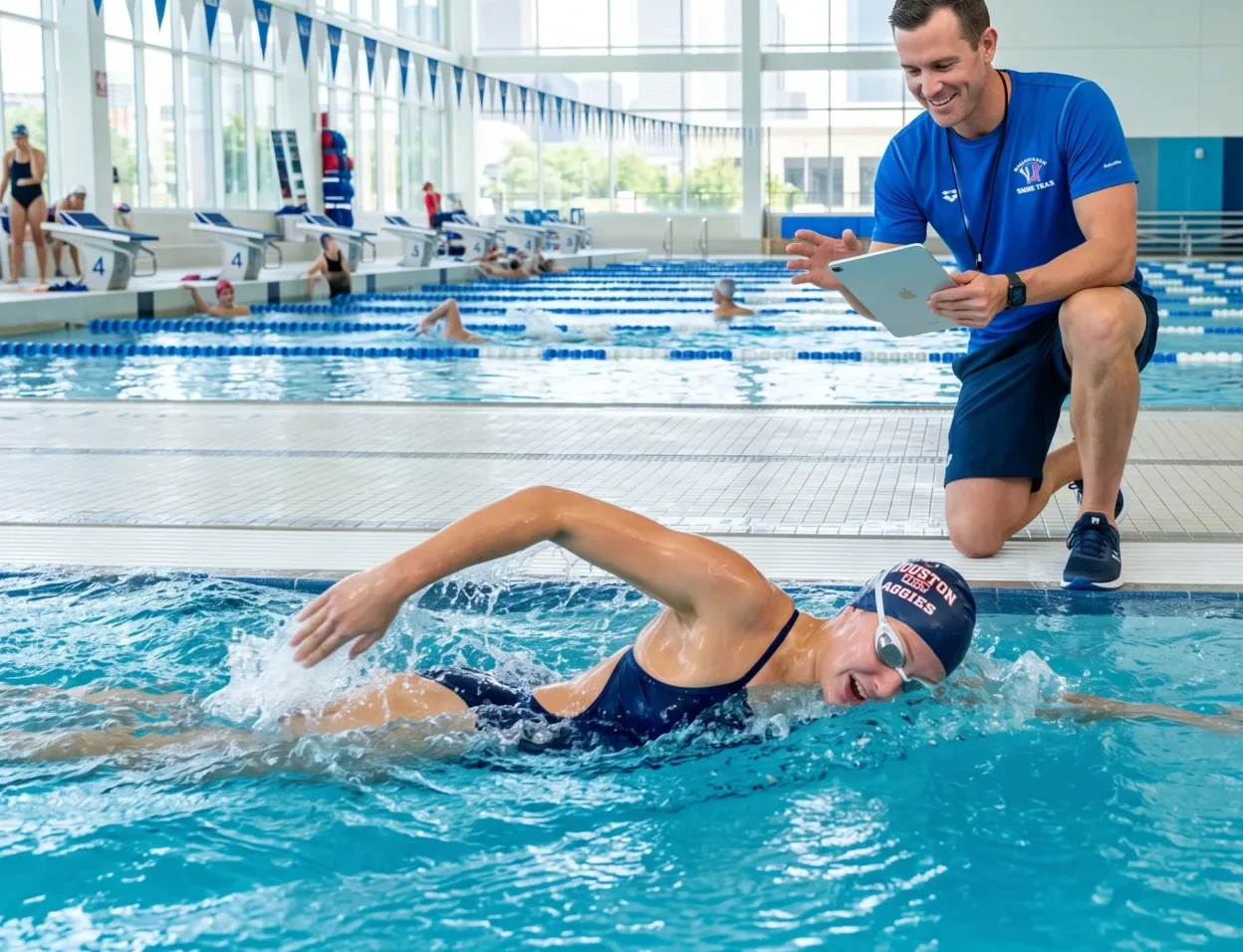
Swimming presents a distinct nutritional challenge—you simply cannot eat during this leg. Many athletes struggle with early morning swims that often occur before your body’s glycogen stores have been replenished.
Have you ever felt sluggish during those pre-dawn pool sessions? Your body needs fuel, but timing matters. Consume a light “mini first breakfast” 30-45 minutes before swimming—perhaps toast with honey or half a banana. This provides just enough fuel without causing stomach discomfort. Aim for approximately 30-45 grams of carbohydrates if possible. Even consuming just 15 grams offers benefits.
For longer training sessions, you can strategically place nutrition at the pool’s edge. Keep a sports drink or gel at the wall for quick consumption during rest intervals. After your swim, consume a complete breakfast that includes both carbohydrates and protein—aim for at least 0.5 grams of carbohydrate per pound of bodyweight and 10-20 grams of protein.
Bike: main fueling window
The cycling leg represents your golden opportunity for substantial nutrition intake. This segment allows you to consume solid foods, sports drinks, and gels with less digestive distress than during running. Most triathletes agree the bike portion should be your primary fueling phase.
Start taking in carbohydrates about 15 minutes into your ride—don’t wait until you feel hungry or tired. Your body needs time to absorb and utilize these nutrients. For optimal performance:
- Aim for 60-90 grams of carbohydrates per hour during the bike segment for longer races
- Use products containing multiple carbohydrate sources (glucose/maltodextrin plus fructose) to maximize absorption
- Front-load your nutrition by taking more like 100g per hour during the first 2-3 hours of longer races
For sprint and Olympic distances, you might need less, ranging from 30-60g of carbohydrates hourly. Remember to practice your exact race nutrition during training rides that simulate race intensity.
Run: simplified and gut-friendly options
Running creates a more challenging environment for digestion. The mechanical jostling combined with accumulated fatigue and dehydration increases your risk of gastrointestinal issues. Your fueling strategy needs adjustment.
The 60-90g carbohydrate range that works well for cycling becomes unrealistic while running. Instead, aim for around 50g carbohydrates per hour as a reasonable goal. For hydration, consume approximately 300-400ml of fluid per hour—roughly two cups at aid stations.
Focus exclusively on easily digestible options:
- Energy gels (paired with water)
- Sports drinks
- Cola (later in the race)
Many athletes find that slowing down or walking briefly through aid stations helps reset their digestive system if problems arise. This counterintuitive approach often makes you faster overall by preventing major GI distress.
Experience digestive issues despite careful planning? Consider that your pace might be too aggressive. Sometimes walking for just five minutes allows your system to recalibrate. Be prepared to adjust your nutrition strategy mid-race based on how your body responds—adaptability often determines race-day success.
Hydration and Electrolyte Management
Proper fluid and electrolyte balance can make the difference between finishing strong and hitting the wall during your triathlon. Managing hydration isn’t just about drinking water—it’s about achieving the right balance of fluids and essential minerals.
How to calculate sweat rate
Have you ever wondered why some athletes seem to handle heat better than others? The answer often lies in understanding their individual sweat rate. Sweat rates vary dramatically between athletes—ranging from 0.3-2.4 liters per hour—depending on factors like exercise intensity, fitness level, and environmental conditions.
Calculating your sweat rate at home is simpler than you might think:
- Weigh yourself (without clothes) before your workout
- Complete a 60-120 minute training session at race intensity
- Record your fluid intake during the session
- Weigh yourself again post-workout (without clothes)
- Calculate using this formula: (Starting weight – Ending weight + Fluids consumed) ÷ Time in hours
Document the workout conditions, including temperature and intensity. Your sweat rate during a cool morning run will differ significantly from that during a midday bike session in summer heat. Test in various scenarios to get the complete picture.
Once you’ve determined your sweat rate, aim to replace approximately 60-70% of fluid losses during exercise. Don’t try to replace 100% of losses—this increases your risk of hyponatremia, a dangerous condition where sodium levels become diluted.
Sodium needs and signs of imbalance
Electrolytes—especially sodium—play a crucial role in triathlon performance. Sodium helps maintain hydration by encouraging you to drink and improving fluid retention. For most triathletes, consuming 300-600mg of sodium per hour proves sufficient, although heavy sweaters might need 800-1,200mg per hour or more.
Notice white residue on your clothing after workouts? You’re likely a “salty sweater” requiring higher sodium intake. Consider getting a sweat sodium test through companies like Precision Hydration or Levelen to determine your exact needs.
Watch for these warning signs of electrolyte imbalance:
- Hyponatremia (low sodium): Nausea, headache, confusion, muscle weakness, swelling in extremities
- Dehydration: Dizziness, dry mouth, dark urine, increased heart rate, decreased performance
Women appear more susceptible to hyponatremia than men and often present with different symptoms—typically nausea, vomiting, and abdominal pain—whereas men more commonly experience muscle cramps.
Hydration tips for different weather conditions
Environmental conditions dramatically affect your hydration requirements. You’ll need different strategies based on the weather.
Hot conditions demand aggressive hydration:
- Increase fluid intake to 750ml-1 liter per hour when sweating heavily
- Front-load your hydration by starting well-hydrated
- Consume fluids containing electrolytes rather than plain water
- Consider sodium “preloading” before races in extreme heat
Cold weather presents its own hydration challenges. You still sweat significantly in cold temperatures—studies show evaporation rates up to 23.7 oz per hour. Cold conditions can:
- Blunt your thirst response, leading to inadequate fluid intake
- Trigger “cold water diuresis,” increasing urine output
- Create false perceptions about sweat loss due to faster evaporation
Cold weather requires increasing sodium concentration in your fluids to offset these effects. Establish a consistent drinking schedule rather than relying on thirst cues.
Remember—practice your hydration strategy during training. Your race day hydration plan should be thoroughly tested beforehand to ensure it works for your unique physiology.
Creating Your Race Day Nutrition Plan
Race day nutrition separates the finishers from the DNFs. All your training and preparation culminate in a strategic approach to fueling that can elevate your performance when it matters most.
Pre-race meal timing and composition
Your pre-race meal serves as the final opportunity to top up glycogen stores before the starting gun. Aim to consume this meal 2-3 hours before race start to allow adequate digestion time. For athletes competing in longer events like 70.3 or full Ironman distances, this timing becomes even more critical.
The ideal pre-race breakfast should contain 400-600 calories predominantly from easily digestible carbohydrates. Suitable options include oatmeal, white rice, pita bread, or low-fiber cereal. Limit fat and fiber intake as these slow digestion and may cause gastrointestinal distress.
Research suggests the most crucial meal isn’t dinner the night before, but breakfast the day before your race. This provides a full 24-hour window for nutrient absorption, setting you up for success.
Fueling during sprint, Olympic, and Ironman distances
Each race distance demands a tailored nutrition approach:
Sprint Distance (under 90 minutes): Your body’s natural glycogen stores typically suffice. A carbohydrate mouth rinse or small sips of sports drink can boost performance even without swallowing. Start hydrating immediately upon exiting the swim.
Olympic Distance (1.5-3 hours): Target approximately 60g of carbohydrates hourly. A practical approach includes one 500ml sports drink bottle containing 200 calories plus 400-600mg sodium. Begin fueling within 15 minutes of starting the bike segment.
Half/Full Ironman: Increase intake to 60-90g carbohydrates hourly on the bike. On the run, reduce to 50-70g hourly as digestion becomes more challenging. Front-loading nutrition during the bike portion proves vital as it represents your primary fueling window.
Adjusting for nerves and digestion
Race day nerves often impact digestion and appetite. Consider liquid nutrition if your stomach feels unsettled. A carbohydrate-rich smoothie provides necessary fuel without digestive strain.
Never try anything new on race day. Stick exclusively with foods and drinks you’ve tested thoroughly during training. Maintain your normal caffeine routine if it works for you—the performance boost can help delay fatigue.
For those with pre-race jitters, taking small bites and eating slowly helps manage anxiety. The best race nutrition plan combines science with personal experience—what works specifically for your body under racing conditions.
Testing and Adjusting Your Nutrition Plan
Your nutrition plan looks perfect on paper. You’ve calculated your carbohydrate needs, mapped out your hydration strategy, and selected your race-day fuels. Then reality hits during your first long training session – your stomach rebels, your energy crashes, and you realize you’re back to square one.
Don’t worry – you’re not alone. Research shows athletes who neglect nutrition practice are twice as likely to experience race-day GI distress compared to those who prepare thoroughly.
Training your gut for higher intake
Your digestive system adapts much like your muscles do with consistent training. This process takes time and patience. For optimal results, begin gut training 6-10 weeks before your target race.
Start with a comfortable carbohydrate intake – perhaps 30g per hour – and gradually increase by 10g weekly until reaching your race-day target. Think of it as building your gut’s capacity progressively, just like you build your aerobic base.
Dedicate one weekly session specifically to gut training, focusing on:
- Combining glucose and fructose in a 2:1 ratio when aiming above 60g/hour
- Building gradually toward 90-120g carbohydrates hourly for longer events
- Testing various forms of nutrition (gels, solids, liquids) during training
Your gut’s capacity improves with consistent exposure. Forcing too much too soon leads to setbacks rather than progress.
Simulating race conditions in training
Conduct monthly mini-race simulations that mirror your target event. Weekend endurance rides featuring race-pace efforts provide perfect opportunities to test your nutrition strategy. Similarly, incorporate your race-day fueling into key weekly runs that include race-pace segments.
Create conditions matching your expected race environment. Train indoors with extra layers to simulate heat or practice precise timing between fueling intervals. Your simulation should test both the products and timing you’ll use during competition.
Tracking what works and what doesn’t
Documentation forms the cornerstone of nutrition refinement. After each training session, record what you consumed, when you consumed it, and how your body responded. Note environmental factors like temperature and intensity levels, as these significantly affect your nutritional needs.
Many athletes find digital tools valuable for this purpose – apps like MyFitnessPal help track both intake and expenditure. Review this data regularly to identify patterns and make necessary adjustments. This systematic approach eliminates guesswork from your triathlon nutrition plan, replacing it with evidence-based decisions tailored specifically to your physiology.
Conclusion
Nutrition truly stands as the make-or-break fourth discipline of triathlon. The evidence is clear: athletes who master their fueling strategy outperform those who treat nutrition as an afterthought. Adopting effective triathlon food tips for endurance athletes can significantly enhance performance and recovery. By focusing on balanced meals and strategic snacking, athletes can ensure they maintain energy levels throughout training and competition. Additionally, experimenting with different fueling options during workouts can help identify what best supports individual needs on race day.
Your triathlon nutrition plan must evolve from daily training through race day. Match your carbohydrate intake to training volume. Use the bike leg as your primary fueling window. Switch to easily digestible options during the run to prevent GI distress.
Your body has unique needs that deserve attention. Calculate your personal sweat rate. Test various fueling strategies during training. Document what works specifically for your physiology. Athletes who practice their nutrition strategy face half the risk of race-day stomach issues compared to unprepared competitors.
Remember that your gut requires training just like your muscles. Start this process 6-10 weeks before your target race. Gradually increase carbohydrate intake until reaching your race-day goals. Test everything during training sessions that simulate race conditions.
The perfect triathlon nutrition plan combines science with personal experience. When you fuel properly, you unlock your full potential across swimming, cycling, and running. Treat nutrition with the same dedication you give to perfecting your stroke technique or building bike power. triathlon nutrition essentials for athletes include a balance of carbohydrates, proteins, and healthy fats to support endurance and recovery. Staying hydrated is equally important, as it impacts your performance during each segment of the race. Additionally, experimenting with different pre- and post-race meals can help you discover what works best for your body.
Are you ready to master the fourth discipline and cross the finish line stronger than ever?
Key Takeaways
Master these essential triathlon nutrition strategies to fuel your way to peak performance across all distances and training phases.
• Treat nutrition as your fourth discipline – Poor fueling can derail even the best training, with proper nutrition strategies proven to improve race times by 32-42 seconds in cycling alone.
• Match carb intake to training volume – Scale from 5g per kg bodyweight on light days to 8-12g per kg during intense blocks, with protein at 1.4-1.6g per kg daily.
• Use the bike leg as your primary fueling window – Target 60-90g carbohydrates per hour during cycling, then reduce to 50g per hour while running due to digestive challenges.
• Calculate your personal sweat rate and replace 60-70% of fluid losses – Individual rates vary from 0.3-2.4 liters per hour, requiring 300-600mg sodium hourly for most athletes.
• Practice your race nutrition for 6-10 weeks beforehand – Athletes who test their fueling strategy face half the risk of race-day GI distress compared to unprepared competitors.
Your gut requires training just like your muscles. Start with comfortable intake levels and gradually build toward race-day targets, documenting what works through systematic testing. Remember: nothing new on race day – your nutrition plan should be as well-rehearsed as your swim stroke.
FAQs
Q1. What should a triathlete’s daily diet consist of? A triathlete’s diet should include a balance of carbohydrates, proteins, and fats, with plenty of fruits and vegetables. Carbohydrate intake should be adjusted based on training volume, ranging from 5-12g per kg of body weight. Aim for 1.4-1.6g of protein per kg of body weight daily to support muscle recovery and immune function.
Q2. How much should I eat during a triathlon race? Your nutrition intake during a race depends on the distance. For Olympic distance, aim for about 60g of carbohydrates per hour. For longer races like half or full Ironman, increase to 60-90g of carbohydrates per hour on the bike, and reduce to 50-70g per hour on the run. Start fueling within 15 minutes of beginning the bike segment.
Q3. How can I calculate my sweat rate for proper hydration? To calculate your sweat rate, weigh yourself before and after a 60-120 minute training session at race intensity. Record your fluid intake during the session. Use this formula: (Starting weight – Ending weight + Fluids consumed) ÷ Time in hours. Aim to replace 60-70% of fluid losses during exercise.
Q4. What’s the best pre-race meal for a triathlon? Consume a pre-race meal 2-3 hours before the start. It should contain 400-600 calories, primarily from easily digestible carbohydrates. Good options include oatmeal, white rice, pita bread, or low-fiber cereal. Limit fat and fiber intake to avoid gastrointestinal distress. In addition to the meal timing, optimal prerace nutrition strategies also emphasize hydration, so be sure to drink water or electrolyte beverages leading up to the event. Additionally, testing different foods in training will help identify what works best for your body, enabling you to find the ideal combination for race day. Remember, every athlete’s needs are unique, so personalizing your approach is key.
Q5. How should I prepare my nutrition strategy for race day? Start practicing your race nutrition plan 6-10 weeks before your target event. Gradually increase carbohydrate intake during training to reach your race-day goals. Conduct monthly mini-race simulations that mirror your target event, testing both the products and timing you’ll use during competition. Keep a detailed log of what works and what doesn’t to refine your strategy.