
How to Master Elite Swimming Workouts: A Champion’s Fueling Guide
August 19, 2025
How to Master Traditional Periodization for Your Ironman Training Plan
August 23, 2025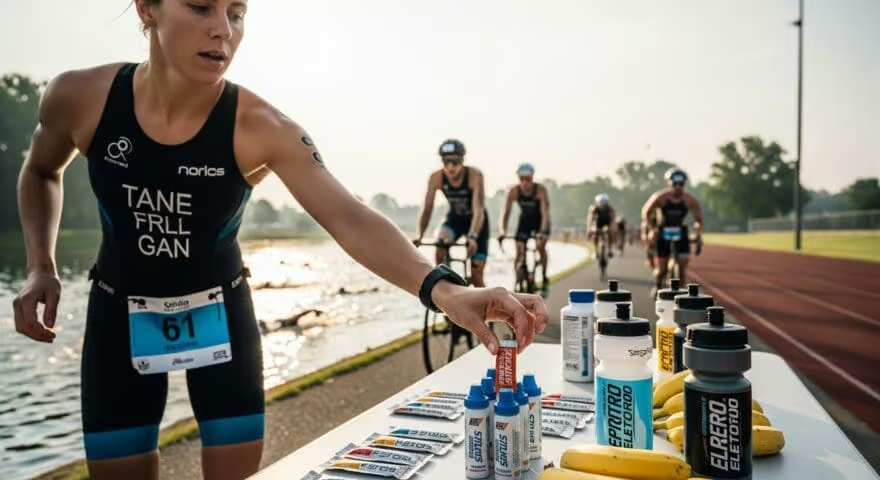
A staggering 36% of Ironman athletes experience gastrointestinal distress during their race. These aren’t just minor stomach issues – they’re performance-crushing problems that can turn months of training into a painful shuffle to the finish line. avoiding gastrointestinal distress during triathlons is essential for maintaining optimal performance. Athletes often experiment with different nutrition strategies and hydration techniques in search of the perfect formula. With the right approach, it’s possible to enjoy the race while keeping stomach issues at bay.
Your triathlon nutrition plan represents the fourth discipline of the sport. Many athletes master the swim, bike, and run only to watch their race crumble due to fueling mistakes. During heavy training blocks, your body demands 8-12g of carbohydrates per kg of bodyweight to maintain glycogen stores. Race day requirements jump even higher – athletes tackling efforts over 2.5 hours need 80-120g of carbohydrate per hour.
Have you ever wondered why some athletes seem to get stronger as races progress while others fade dramatically? The answer often lies in their nutrition strategy.
Your body operates like a finely-tuned race car that requires precise fueling at exactly the right moments. Poor nutrition choices create a cascade of problems: dehydration and carbohydrate depletion become the primary culprits behind triathlon fatigue. Without proper planning and practice, even the most dedicated training can’t save you from hitting the wall.
This guide reveals exactly how to fuel your way from start to finish. You’ll discover triathlon nutrition fundamentals, discipline-specific fueling strategies, and race day execution tactics that separate finishers from champions.
Understanding the Role of Nutrition in Ironman Success
Why nutrition is the ‘fourth discipline’
Coaches who’ve worked with hundreds of athletes know this truth: nailing race day fueling goes a long way in defining your day. Your body lacks sufficient glycogen stores to complete an Ironman distance without strategic nutrition. Even months of perfect training can’t overcome poor fueling choices.
Think about the last time you watched an Ironman race. Those athletes who seemed to get stronger during the final miles? They understood something crucial about energy management.
Top professionals recognize nutrition as non-negotiable. Jan Frodeno puts it simply: “It’s all about getting enough energy. I believe this is why I’m finally able to put together on race day what I feel should be possible, judging by my training”. Professional coach observations consistently show that “even tiny mistakes in nutrition can have a big influence in performance”.
Don’t worry if nutrition feels overwhelming – you’re not alone. Many dedicated athletes master swim technique, bike power, and running form, only to struggle with the fourth discipline.
How poor fueling leads to performance breakdown
Poor nutrition creates a domino effect that’s nearly impossible to reverse mid-race. Most athletes drastically underestimate their sodium needs, which typically range from 800-4,000 milligrams per hour. About 55% of daily training athletes experience low energy availability (LEA).
The consequences cascade quickly. Within four days of LEA, your thyroid stops functioning properly, fatigue sets in, and familiar training intensities become impossible. Your metabolism slows dramatically, recovery suffers, and hormonal disruption follows – dropping testosterone in men and irregular cycles in women.
Watch for these immediate performance warning signs:
- Decreased strength and power output
- Premature fatigue from depleted glycogen
- Poor coordination and concentration
- Gastrointestinal distress
- Compromised immunity and increased illness risk
Remember that heart rate during your final run miles tells the real story. Fueling mistakes become painfully obvious through a declining heart rate – clear evidence your body is shutting down.
The difference between food and fuel
Here’s a distinction that changes everything: Fueling means calories consumed during and after training, while nutrition refers to your daily meals and snacks. This clarity helps separate everyday eating from performance strategy.
Daily nutrition builds your foundation of health. Race day fueling maximizes performance. Workouts under 75 minutes rarely need extra calories, but longer efforts absolutely require caloric support.
Your daily eating should emphasize nutrient-rich foods that support recovery and healthy living – think of this as your platform of health. Meanwhile, your race day strategy delivers precise amounts of carbohydrates, electrolytes, and fluids to maintain performance throughout competition.
Many triathletes sabotage themselves by prioritizing weight goals over adequate fueling. This leads to Relative Energy Deficit in Sports (RED-S), which crushes performance, compromises immunity, and prevents proper recovery. Your body can only begin recovery processes when you provide the nutrients it needs to adapt, rebuild, and prepare.
Understanding these distinctions allows you to develop a complete approach – one that supports both daily health and peak race performance.
Daily Nutrition for Triathlon Training
Most triathletes obsess over race day fueling while completely ignoring the foundation that makes everything possible. Your daily eating habits determine whether you’ll absorb those race day gels effectively or struggle with chronic fatigue during training.
Building a solid nutritional foundation through everyday eating sets the stage for training success and race day performance.
Macronutrient needs: carbs, protein, and fat
Carbohydrates fuel your endurance training efforts. Training volume directly drives your carbohydrate requirements—daily needs can jump from 5g per kilogram of bodyweight to 8+ grams when training increases from one hour to two or more hours per day. For a 160-pound athlete, this means increasing from 350g to 580g daily.
That’s a massive jump. Many athletes underestimate this requirement and wonder why they feel sluggish during back-to-back training days.
Protein supports muscle recovery and immune function. Target 1.4-1.6g of protein per kilogram of bodyweight daily. Post-workout timing matters—consume 20-30g of protein within 20-30 minutes after finishing workouts to replenish glycogen stores and kickstart recovery. Higher-intensity sessions make this timing even more critical.
Fat intake should constitute 20-30% of your total calories. Don’t fear fats—they provide anti-inflammatory benefits that counteract high training volume effects. Your fat intake should increase proportionally with overall caloric needs as training intensifies.
Micronutrients that support endurance
Several key micronutrients directly impact your performance capacity:
Energy metabolism support: B vitamins (thiamin, riboflavin, niacin, B6, pantothenic acid) plus iron, magnesium, copper, and zinc facilitate converting carbohydrates into usable energy for muscle work.
Oxygen transport: Iron, copper, B6, B12, and folate support red blood cell formation and oxygen delivery to working muscles.
Immune and muscle function: Vitamin D influences immune function, muscle performance, and bone health—especially important for athletes training indoors or in less sunny climates.
Metabolic efficiency: Zinc assists in removing carbon dioxide from working muscles and recycling lactate back to glucose.
Low micronutrient intakes create subclinical deficiencies that show up as decreased performance and impaired physiological function. Eat a variety of colorful fruits and vegetables to cover your bases.
Sample daily meal structure for triathletes
Smart meal timing keeps energy levels stable throughout demanding training days. Start with a substantial breakfast comprising 1/3 to 1/2 of your daily calories. This prevents the common “crescendo” eating pattern where athletes barely eat breakfast then overeat at dinner.
Post-workout nutrition deserves immediate attention. Within 45 minutes after training, consume 15-25g protein plus 1-1.2g carbohydrate per kg bodyweight. Quality protein sources include eggs, yogurt, cottage cheese, and protein shakes. Ideal carbohydrate options include sweet potatoes, quinoa, fruits, and vegetables.
Space main meals roughly 4 hours apart with balanced snacks between. Hydrate with at least 16 ounces of water at meals and 8 ounces during snacks. Adjust your caloric intake based on training phases—from 2,500-3,000 calories during lighter periods to 3,500-4,500 calories during peak training blocks.
Remember that hydration works alongside nutrition. Your daily fluid needs vary based on body size, sweat rate, activity level, weather conditions, and altitude.
Fueling Strategies for Swim, Bike, and Run
Each triathlon discipline presents unique nutritional challenges. Your approach must adapt to the specific demands and opportunities each leg provides.
Swim: light pre-fuel and post-session recovery
That 5 AM alarm signals more than just an early workout – it reveals your first nutritional challenge. Overnight sleep depletes your liver glycogen stores, leaving your body running on empty before you even touch the water. Swimming at dawn requires 30-45g of easily digestible carbohydrates, though even 15g helps jumpstart your system. Consider 8oz of juice (30g carbs) or toast with jam (45g carbs) as reliable options.
Can’t handle food before diving in? Don’t worry – you’re not alone. Many swimmers struggle with early morning eating. Pack a sports drink poolside and sip throughout longer sessions. Despite minimal sweating in water, you lose fluids at roughly half your normal rate. Target approximately 30g carbohydrates per hour during 60-90 minute sessions.
Post-swim nutrition sets the stage for your next workout. Consume 0.5g carbohydrate per pound of bodyweight plus 10-20g protein to kickstart recovery.
Bike: main fueling window and calorie targets
Welcome to your nutritional lifeline. The bike leg offers your best opportunity to stay ahead of the energy curve since your upper body remains stable and digestion functions more effectively. Start fueling within the first 10-15 minutes – you’re already running a caloric deficit from swimming.
Longer rides demand serious fuel. Target 60-90g carbohydrates hourly for efforts exceeding 90 minutes. Ironman-distance rides may require 90-120g hourly using glucose-fructose combinations. Your body absorbs only 60g/hour of glucose alone, but adding fructose pushes absorption up to 90g/hour.
Hydration timing matters as much as quantity. Sip 4-8oz (120-240ml) every 15-20 minutes consistently. A reliable hydration indicator? You should need to urinate once every 2.5 hours – twice during a full Ironman.
Run: simplified fueling and hydration tips
Running throws a wrench into your digestive system. The constant jostling redirects blood flow from your gut to working muscles, creating absorption challenges. Simplify your approach and dial back carbohydrate targets.
Stick to the lower carbohydrate range – about 30-60g per hour works best. Choose easily digestible options like gels, sports drinks, or chews over solid foods. Taper off solids one hour before transitioning to the run if racing.
Master the aid station technique: sip, don’t gulp. Take small, frequent sips rather than large volumes at once. Walking briefly through aid stations often makes you faster overall by preventing dehydration – counterintuitive but effective.
Practice makes perfect with triathlon nutrition. Your gut needs training just like your muscles to handle race-day demands. This preparation becomes critical in longer races where nutrition often determines whether you finish strong or struggle through to the end.
Ironman Race Day Nutrition Plan
Race morning arrives with butterflies in your stomach and months of training behind you. Your alarm screams at 3:30 AM, and suddenly every nutrition decision you make in the next few hours will determine whether you cross the finish line strong or crawl to a disappointing end.
Success on race day demands precise execution. No room for improvisation or last-minute changes – only the strategies you’ve practiced hundreds of times during training.
Pre-race breakfast and timing
Eat your pre-race meal 3-4 hours before the start to allow proper digestion . This brutally early timing ensures your stomach empties before swimming begins. Target 100-200g of carbohydrates with minimal fat and fiber . Smart options include:
- 1 cup applesauce with Rice Krispy cereal (166 calories, 46g carbs)
- White bread with jam (low fiber minimizes GI distress)
- Sports drink with a gel 10-15 minutes before the swim start (additional 20-30g carbs)
Fueling during each leg of the race
Start fueling within the first 10-15 minutes on the bike – you’re already in calorie deficit from swimming . The bike leg offers your best fueling opportunity, so maximize it with 60-90g carbohydrates hourly from rapidly oxidized carb sources .
Running changes everything. Scale back to the lower carbohydrate range (30-60g/hr) and choose liquids and gels over solids . Your digestive system faces increased stress during the run, making simple fuels essential for absorption.
Hydration and electrolyte targets
Drink 4-8 oz (120-240ml) every 15-20 minutes consistently on the bike . Here’s your hydration reality check: urinating once every 2.5 hours indicates proper fluid balance – meaning twice during a full Ironman .
Sodium demands spike dramatically during competition. Aim for 500-1000mg sodium per hour, especially in hot conditions . Athletes lose between 800-4000mg sodium hourly, making electrolyte replacement critical for sustained performance .
Adjusting for heat and GI issues
Extreme heat changes your fueling game completely. Obtain calories primarily through liquids as solid foods become harder to digest . Consider reducing total hourly carbohydrate intake slightly and use aid stations as systematic walking breaks for proper hydration .
Practice creates race day success. Athletes who fail to practice nutrition intake face twice the likelihood of experiencing GI disturbances on race day . Your gut needs training just like your muscles – don’t skip this crucial preparation.
Fuel and hydrate early and often throughout your race. Waiting too long creates a deficit you can’t recover from, leading to dehydration and gastrointestinal problems that derail your performance .
Common Nutrition Mistakes to Avoid
Don’t worry – you’re not alone if you’ve made nutrition errors during training or racing. Even experienced triathletes sabotage their performance through preventable mistakes that seem obvious in hindsight.
Skipping breakfast or under-fueling early
Picture this: you wake up after eight hours of sleep with your liver glycogen stores nearly empty, like starting a road trip with your gas tank on fumes. Research shows that eating before race-specific workouts improves performance. Your body has been fasting all night, depleting energy stores while you slept.
Some athletes skip breakfast thinking it’ll help with weight loss – a strategy that often backfires with energy crashes later. Here’s the surprising part: if you consume enough carbohydrates during the race itself, skipping breakfast won’t necessarily hurt your performance. The key is understanding when you actually need that fuel.
Trying new products on race day
This golden rule gets broken more often than you’d think. Many athletes learn this lesson the hard way – sudden nausea from an untested gel flavor or GI distress from an unfamiliar pre-race meal. Race day brings enough unknowns without adding nutritional wildcards to the mix.
What works in training gives you the highest probability of race day success. Your gut needs familiarity, not surprises.
Overhydrating without electrolytes
Water alone won’t save you during an Ironman. Exercise-associated hypernatremia poses real dangers when athletes drink excessive water without proper electrolyte balance. This condition ranges from uncomfortable bloating to life-threatening confusion.
The fix is straightforward: consume at least 500mg sodium per liter of fluid during your race. Your body needs both water and electrolytes working together.
Ignoring gut training during workouts
Your digestive system requires training just like your legs and lungs. Gut training teaches your body to process larger carbohydrate quantities while exercising. Athletes who practice race-day nutrition during training sessions reduce gut discomfort by up to 47%.
Those who regularly consume 60-90g carbohydrates hourly during training develop superior tolerance for aggressive race day fueling. Think of it as building digestive fitness alongside physical fitness.
Conclusion
The difference between crossing the finish line strong and crawling to a disappointing end often comes down to one thing: your nutrition execution.
Don’t worry if this seems overwhelming at first. Every successful Ironman athlete started exactly where you are now – learning the fundamentals, making mistakes during training, and gradually building confidence in their fueling strategy. The athletes who excel aren’t necessarily the most talented; they’re the ones who treat nutrition with the same respect as their physical training.
Your digestive system needs training just like your legs need miles and your lungs need intervals. Start practicing your race day nutrition during long training sessions. Test different products, timing strategies, and combinations until you find what works for your body. Remember, what works for your training partner might not work for you.
The beauty of mastering triathlon nutrition lies in its simplicity once you understand the basics. Fuel early and often on the bike. Keep it simple on the run. Train your gut during workouts. Never try anything new on race day.
You now have the knowledge to fuel your way to success. The question isn’t whether you can finish your Ironman – it’s whether you’ll finish strong enough to immediately start planning your next one.
Time to put this plan into action. Your next training session is the perfect opportunity to start practicing these strategies.
Key Takeaways
Master these essential nutrition strategies to transform your Ironman performance from survival to success.
• Treat nutrition as the “fourth discipline” – Poor fueling can derail months of training, while proper nutrition often determines race day success
• Train your gut during workouts – Practice consuming 60-90g carbohydrates hourly in training to reduce race day GI distress by up to 47%
• Start fueling early on the bike – Begin consuming calories within 10-15 minutes of cycling since you’re already in deficit from swimming
• Never try new products on race day – Stick to tested nutrition strategies; unfamiliar foods can cause unexpected nausea and performance breakdown
• Balance hydration with electrolytes – Aim for 500-1000mg sodium per hour to prevent dangerous overhydration while maintaining performance
The difference between finishing strong and hitting the wall often comes down to executing a well-practiced nutrition plan. Your body functions like a high-performance engine that needs the right fuel at precisely the right time throughout the entire race.
FAQs
Q1. How much carbohydrate should I consume during an Ironman race? For an Ironman distance event, aim to consume 60-90g of carbohydrates per hour on the bike, and 30-60g per hour during the run. This helps maintain energy levels and prevents fatigue.
Q2. What should I eat for breakfast before an Ironman? Eat a pre-race meal 3-4 hours before the start, consisting of 100-200g of easily digestible carbohydrates. Good options include applesauce with cereal or white bread with jam. Avoid high-fiber or fatty foods to minimize digestive issues.
Q3. How can I prevent gastrointestinal issues during a triathlon? Train your gut by practicing your race day nutrition strategy during long workouts. This helps your body adapt to processing larger quantities of carbohydrates during exercise and can reduce gut discomfort by up to 47%.
Q4. What’s the best way to stay hydrated during an Ironman? Drink 4-8 oz (120-240ml) of fluid every 15-20 minutes on the bike. Aim for 500-1000mg of sodium per hour, especially in hot conditions. A good indicator of proper hydration is urinating once every 2.5 hours during the race.
Q5. Should I try new nutrition products on race day? Never try new products on race day. Stick to nutrition strategies and products you’ve tested extensively in training. Unfamiliar foods or supplements can cause unexpected digestive issues and negatively impact your performance.