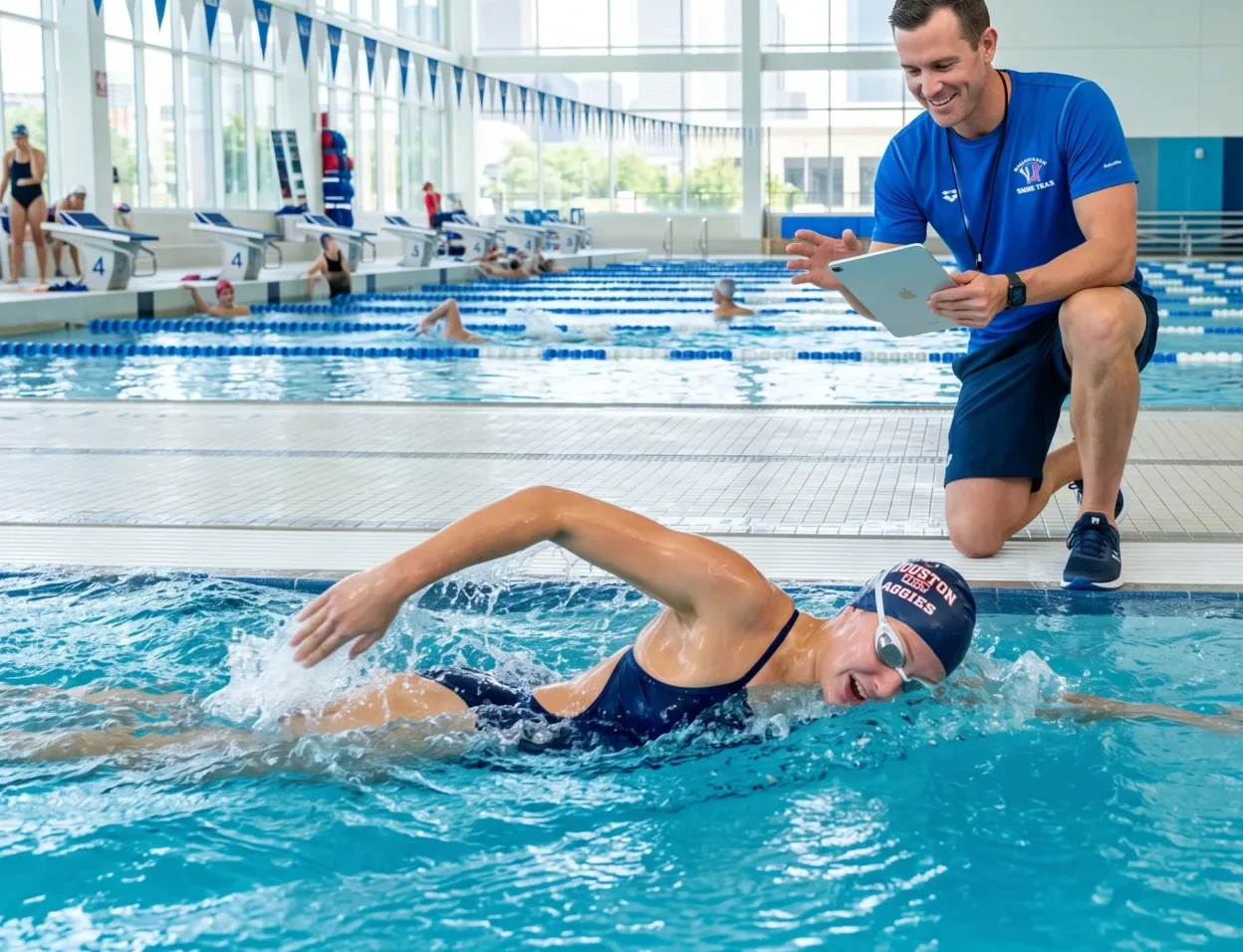

Hydration Guide for Houston Triathletes: Beating the Heat
July 9, 2026
Do You Need a Tri Coach? Training ROI Explained
July 23, 2026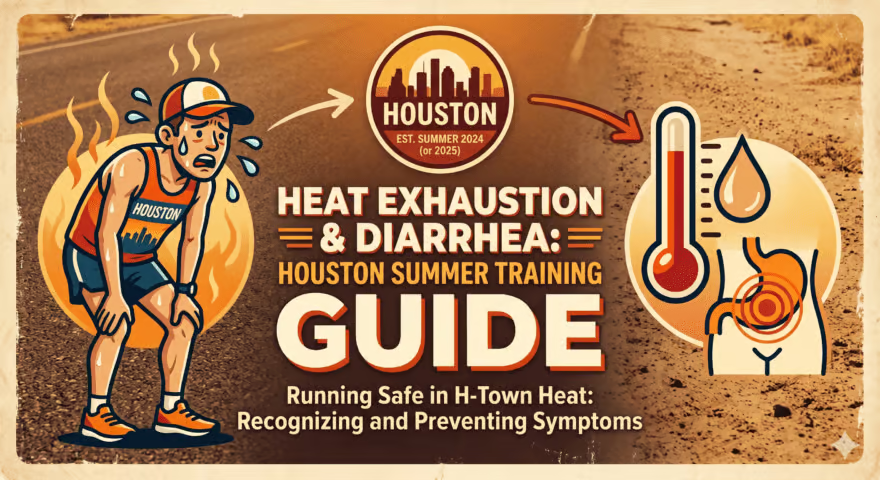
Have you ever wondered why your stomach revolts during Houston summer runs? Here’s a startling fact: up to 85 percent of endurance athletes report gut symptoms during exercise in hot conditions. When your core temperature hits 102 degrees Fahrenheit, bacteria start leaking from your intestines into your bloodstream.
Houston’s brutal summer conditions create the perfect storm for digestive disaster. Understanding these heat-gut connections protects you from serious training setbacks.
Key Insights for Houston Summer Runners:
• Your gut starts failing at 102°F core temperature – blood diverts away from intestines, breaking down protective barriers and allowing harmful bacteria to enter your bloodstream
• Houston’s 75% humidity sabotages your cooling system – sweat can’t evaporate effectively, forcing your body to work harder and increasing gut distress risk compared to dry climates
• Peak danger hours span 11 a.m. to 3 p.m. – schedule runs between 4:30-7:00 a.m. or 7:00-8:30 p.m. when heat index values drop below dangerous triple-digit levels
• Heat adaptation requires patience – your cardiovascular and digestive systems need 7-14 days of gradual exposure (90 minutes daily at 60-70% max heart rate) to build tolerance safely
• Heat sabotages nutrition absorption by 20% – consume 30-60g carbs per hour after 45 minutes with steady hydration (4-6 oz every 15 minutes) to maintain energy levels
• Early warning signs demand immediate action – nausea, dizziness, or confusion signal approaching core temperature levels that cause severe intestinal damage
Smart timing, gradual adaptation, and proper fueling keep your digestive system intact while building the heat tolerance you need for Houston’s punishing summer months.
This guide reveals how heat destroys gut function, why Houston’s climate poses unique challenges, warning signals that demand attention, and proven strategies to protect your intestines while training in extreme conditions.
Does Heat Exhaustion Cause Diarrhea? Understanding the Connection
How heat affects your digestive system
Ever wonder why that sports drink sits like a rock in your stomach during hot summer runs? Your gut transforms into a different organ when temperatures soar. Heat exhaustion unleashes a cascade of digestive disruptions that most runners never see coming. Nausea, vomiting, and diarrhea rank among the recognized warning signs of heat exhaustion. These symptoms don’t just signal trouble – they actively sabotage your recovery by making rehydration nearly impossible.
Your body makes a brutal choice when overheating strikes. Blood flow gets redirected away from your gut toward your skin and extremities to facilitate cooling. This survival mechanism carries a steep price. Splanchnic blood flow drops by 20% when core temperature hits 100.4°F compared to normal body temperature, plummeting further as heat stress intensifies. During exercise, blood flow in the superior mesenteric artery can decrease by 43%, while portal vein flow drops by 50%.
Picture your intestinal cells starving. Reduced blood supply strips away the oxygen and nutrients they desperately need to maintain their protective barrier. The gut wall begins breaking down, allowing its contents to leak where they shouldn’t go. Gastric emptying also slows dramatically in heat. Runners emptied only 59% of ingested water when exercising in 95°F conditions compared to 79% at 77°F. Your stomach simply refuses to process fluids efficiently when overheated.
Why diarrhea occurs during heat stress
Dehydration sets the stage for gut chaos. Lose more fluid through sweat than you replace, and electrolyte imbalances follow immediately. Sodium, potassium, chloride, calcium, and magnesium levels fall out of balance, directly affecting how much water your intestinal cells absorb. This imbalance increases water loss through stool production, creating the loose stools or diarrhea characteristic of heat-related illness.
Your stress response compounds the problem. Prolonged heat exposure triggers cortisol and other stress hormones that alter digestion and absorption patterns. These hormonal changes can directly cause loose stools or full episodes of diarrhea during heat exhaustion.
The intestinal damage becomes progressively severe. Reduced blood flow and oxygen deprivation create mucosal lesions in your small intestine. Researchers have documented this ischemic enteropathy in marathon runners who collapsed in heat, often presenting with both diarrhea and gastrointestinal bleeding. A staggering 81% of exhausted runners requiring medical attention at an 89.4 km ultramarathon showed endotoxemia that correlated significantly with nausea, vomiting, and diarrhea. Your gut plays a central role in heat-related collapse.
Bacterial endotoxins leak from your damaged gut lining into your bloodstream, triggering systemic inflammation. This endotoxemia represents one of the most dangerous aspects of exercise-heat stress. Your immune system may not manage the pathogenic load.
The role of core body temperature
Core body temperature serves as the primary predictor of gut damage during heat stress. Research identifies 102.2°F as the critical threshold where intestinal permeability consistently increases. A strong positive correlation exists between rising core temperature and increased gut leakage. Core temperatures exceeding 102.2°F always associate with augmented intestinal permeability.
When core temperature climbs to 102.2°F and above after two hours of exercise in hot conditions, you can expect the onset of gut damage and pathogen movement from intestines into bloodstream. About 5% of people developing heat stroke reported diarrhea as an early symptom. The high internal temperatures cause both structural and functional damage to your digestive system.
Individual heat tolerance varies considerably. Some runners maintain gut integrity at higher temperatures, while others experience symptoms earlier. Duration and intensity matter equally. The longer you maintain elevated core temperature, the more pronounced the intestinal damage becomes. Your cardiovascular strain during exercise-heat stress exacerbates gut permeability beyond what passive heating alone would cause.
Elevated core temperature reduces stomach and intestinal motility, slowing the entire digestive process. Combined with decreased blood flow and increased permeability, these temperature-driven changes explain why gastrointestinal symptoms plague runners during summer training.
What Happens to Your Gut During Hot Weather Running
Blood flow redistribution explained
Your body makes a brutal choice when you run in Houston heat. Exercise intensity determines how severely heat affects your digestive system. Strenuous physical activity at around 60-70% of maximum oxygen consumption triggers significant splanchnic blood flow reductions.
Here’s what happens: Your sympathetic nervous system orchestrates this redistribution through norepinephrine release from nerve endings. Upon binding to α-adrenoreceptors, this neurotransmitter induces splanchnic vasoconstriction, increasing total splanchnic vascular resistance.
Blood flow shifts away from your gut and toward working muscles, skin, heart, and lungs. During maximal exercise, splanchnic blood flow may drop by up to 80% to provide sufficient circulation to active tissues. This redistribution isn’t optional. Your body prioritizes muscle function and cooling over digestion when faced with competing demands.
The decline in splanchnic blood flow occurs specifically at around 70-80% of maximum oxygen consumption during exercise. Running mode appears to exacerbate these markers of gastrointestinal disturbance compared to cycling. Exercise stress lasting two hours or more at 60% VO2max represents the threshold where significant gastrointestinal perturbations manifest, regardless of your fitness status.
Your intestines suffer from local ischemia during this blood flow restriction. Reduced adenosine triphosphate synthesis in mitochondrial respiration follows, damaging cells that depend on adequate oxygen supply. Splanchnic hypoperfusion damages specialized antimicrobial protein-secreting Paneth cells, mucus-producing goblet cells, and tight junction proteins like claudin and occludin that prevent pathogenic organisms from infiltrating your systemic circulation.
The leaky gut phenomenon
Think of your intestinal wall as a selective security checkpoint. Intestinal permeability increases substantially when prolonged exertion in heat diverts blood flow to your body’s periphery. Your gut wall cells break open as less blood surrounds them, depriving cells of nutrients they need to stay tightly sealed.
High-intensity exercise increases intestinal permeability and tight junction damage, potentially mediated by oxidative stress. Toxins and microbes then move from your gut into your bloodstream. Endotoxins such as lipopolysaccharide and proinflammatory cytokines pass through epithelial cells due to increased permeability, an effect known as leaky gut.
Researchers found a 3-fold increase in gut permeability in active men after just one 20-minute treadmill run. Think about that. Twenty minutes of exercise created measurable damage to the intestinal barrier.
This phenomenon explains the impaired absorption of intestinal nutrients observed after strenuous exercise. Increases in sympathetic system stimuli lead to subsequent alterations in intestinal motility and absorption capacity. Whether malabsorption stems from local ischemia, down-regulated intestinal transporter activity, or both remains unclear.
Exercise-induced gastrointestinal syndrome (EIGS)
Scientists have a name for what happens to your gut during intense exercise. The array of normal physiological responses to exercise that disturb gastrointestinal integrity and function has been termed exercise-induced gastrointestinal syndrome, with an estimated 70% prevalence among endurance athletes.
Up to 85 percent of endurance athletes such as marathon runners report experiencing gut symptoms, depending on type, duration, and environmental conditions. Don’t worry – you’re not alone if you’ve faced these challenges during summer training.
EIGS results from two distinct pathways working against your digestive system. The circulatory-gastrointestinal pathway redistributes blood flow to working muscles and peripheral circulation, reducing total splanchnic perfusion. The neuroendocrine-gastrointestinal pathway relates to increased sympathetic activation and consequent reduction in gastrointestinal functional capacity.
Both pathways lead to gastrointestinal symptoms with acute or chronic health complications. EIGS can cause debilitating signs and symptoms as pathogenic agents like bacteria or bacterial endotoxins leak from your gut into blood circulation. This situation may lead to serious clinical implications such as sepsis if your immune system can’t cope with these pathogens in the blood.
Running athletes experience intestinal ischemia and related symptoms 2-fold more compared to other endurance sports like cycling or swimming. Elite athletes suffer these symptoms 1.5-3 times more than amateurs. As your core body temperature increases, the extent of gut damage, bacterial endotoxin, systemic inflammatory responses, and gut symptoms also rise.
Houston’s Climate and Your Digestive Health
Why Houston summers are particularly challenging
Houston creates a perfect storm for runner’s gut distress. Temperatures routinely climb into the upper 90s, with heat index values reaching triple digits. Even at 7 a.m., you face 80 degrees with 85 percent humidity. The city maintains an average relative humidity of about 75 percent year-round, making it one of the most punishing environments for distance running in the United States.
Your heart works overtime just to keep your body cool when running Houston’s summer heat. Maintaining fall or winter pace becomes unrealistic. The combination of scorching temperatures and oppressive humidity means you end up drenched in sweat regardless of hydration status.
Local runners have learned to work around these brutal conditions. Some prefer early morning runs before heat takes hold, starting as early as 4:30 a.m.. Others opt for evening sessions between 7 and 8:30 p.m., when the sun begins to descend and dew point typically reaches its daily low. A few brave souls run between 4 and 5 p.m., having acclimated over years of consistent afternoon training.
Humidity’s impact on thermoregulation
Humidity sabotages your body’s primary cooling system. When you run, muscular contraction generates heat that must escape through sweat evaporation. High humidity blocks this essential process.
Research demonstrates that sweat rates increased from about 1.4 liters per hour in 40 percent relative humidity to nearly 1.8 liters per hour in 80 percent relative humidity during moderate-intensity cycling. You produce more sweat yet cool down less efficiently.
Your body’s temperature regulation during running at 70 percent VO2max becomes progressively compromised as relative humidity increases, reaching statistically significant impairment when humidity exceeds 60 percent. This finding reveals that your prescriptive zone, the range where body temperature remains independent of climatic conditions, progressively narrows as humidity climbs.
Elevated skin temperature emerges as a critical factor in hot, humid environments. High skin temperature narrows the core-to-skin temperature gradient and the skin-to-ambient temperature gradient, resulting in greater heat storage accumulation. This accumulated heat storage directly reduces muscle power output.
Heat acclimation requires 7 to 14 days for full benefits, though some physiological adaptations appear within 3 to 5 days. Your body gradually increases its sweat response to maintain homeostasis and avoid heat injuries. Humidity further strains these systems by inhibiting sweat evaporation, which aids body cooling.
Heat index considerations for runners
Heat index combines temperature with humidity to calculate the total heat load while running. A 90-degree day with 70 percent humidity feels like 105 degrees, preventing sweat evaporation and increasing overheating risk. This “feels like” temperature provides a more accurate assessment than air temperature alone.
Heat index calculations assume shade conditions. Actual heat stress increases substantially when running in direct sunlight. General guidelines suggest beginning caution at a heat index of 80 degrees. When heat index reaches 90 or higher, athletes face significant risk for heat-related illness.
Consider these examples: air temperature at 80°F with 35 percent relative humidity produces a heat index matching the actual temperature at 80°F. Jump humidity to 70 percent, and the heat index climbs to 83°F. At 90 percent humidity, similar to Houston conditions, the heat index hits 86°F.
Limit training on exceptionally hot days, especially during midday hours. Schedule workouts during morning or evening when temperatures drop. Monitor how heat index affects your individual response, then adjust training intensity and duration accordingly.
Heat Exhaustion Symptoms: Diarrhea and Other Warning Signs
Remember that moment when your body started sending signals you couldn’t ignore? Your muscles cramped unexpectedly during what should have been an easy run. Heat cramps often serve as your first warning that something isn’t right. These painful muscle spasms target the very muscles working hardest during your run. They feel like a slow, relentless tightening you can’t shake off. Heat cramps may start during your workout or strike just after you stop – your body’s way of telling you heat exhaustion could develop if you don’t take action.
Early Warning Signals to Watch For
Heavy sweating marks the most obvious early sign. Your skin becomes cool, moist, and clammy despite running in blazing heat. You might notice goosebumps on your arms even while sweating profusely in 90-degree weather. Your pulse speeds up but feels weak and thready when you check it.
Fatigue hits earlier than usual during your run. Dizziness makes each step feel unsteady. Headaches develop alongside an overwhelming thirst that no amount of water seems to satisfy. Some runners describe feeling anxious or sensing that something just isn’t right with their body.
Your core temperature climbs between 101 and 104 degrees Fahrenheit during heat exhaustion. This elevation sits below the dangerous 104-degree heat stroke threshold but still represents serious heat stress. Decreased urine output signals advancing dehydration. Irritability surfaces – a subtle but telling sign that heat stress is affecting your brain function.
Gastrointestinal Symptoms Beyond Diarrhea
Nausea ranks among the most common gut symptoms during heat exhaustion. That queasy feeling often builds into vomiting, which creates a vicious cycle by preventing effective rehydration. Studies show that 18.5% of heat stroke patients experienced at least one gastrointestinal symptom during their hospital stay.
Diarrhea appears as a recognized symptom across medical literature. About 5% of heat stroke cases report diarrhea as an early warning sign. The loose, watery stools stem from electrolyte imbalances and intestinal damage we discussed earlier. Some runners experience flatulence and abdominal bloating. Severe cases may involve bloody stools – a clear indicator of significant gut tract damage.
Marathon runner Derek Clayton experienced one of the most extreme cases of exercise-heat gut distress on record. After his 2:08:33 marathon performance, he urinated blood clots, vomited black mucus, and had black diarrhea for 48 hours. While his case represents an extreme outcome, it illustrates the severity of gut damage possible during intense heat stress.
When Symptoms Signal Serious Trouble
Stop running immediately if symptoms persist longer than one hour despite rest and cooling measures. Vomiting presents particular danger because it prevents oral rehydration when you need fluids most. Confusion signals progression toward heat stroke territory. Loss of consciousness demands emergency medical response.
Core body temperature reaching 104 degrees Fahrenheit rectally requires immediate cooling and urgent medical attention. At this point, heat exhaustion has crossed into heat stroke. Seizures or convulsions require immediate medical assistance. Persistent confusion distinguishes heat stroke from heat exhaustion, where you remain mentally aware despite feeling temporarily disoriented.
Patients with gastrointestinal symptoms during heat illness face longer hospital stays. Those experiencing multiple GI symptoms simultaneously show significantly higher mortality rates. Older runners with neurological symptoms face compounded risk factors that demand extra caution.
How Core Body Temperature Triggers Gut Issues
The 102°F threshold explained
Your body operates like a finely tuned machine until it hits a critical breaking point. Two hours of steady running at 60% of maximum oxygen consumption in hot conditions consistently pushes core body temperature to 39°C (102.2°F) and above, triggering measurable gut damage. This specific temperature represents a critical tipping point. Below 39°C, gastrointestinal biomarkers show minimal pre- to post-exercise changes. Cross this threshold, and everything changes.
Once you breach 102.2°F, intestinal fatty acid binding protein, soluble CD14, and inflammatory markers like IL-6 and IL-8 rise significantly. Think of this temperature as your gut’s red line. The correlation between peak core temperature and gut damage proves remarkably strong – research demonstrates a correlation coefficient of 0.757 between mean peak core temperature and the total rise in core temperature during exertional-heat stress trials.
Your running environment directly influences how quickly you reach this danger zone. Studies show a moderate positive relationship (correlation 0.559) between mean peak core temperature and the environmental conditions during exercise. Running in Houston’s 95°F heat with crushing humidity accelerates your approach to the 102.2°F threshold compared to temperate conditions.
Heat exhaustion typically manifests when core temperature reaches 101 to 104°F. This range overlaps substantially with the gut damage threshold, explaining why gastrointestinal symptoms and heat exhaustion often appear together. Your body temperature climbs as it struggles to dissipate the extra heat generated during exercise.
Individual variation in heat tolerance
Not all runners face the same risk at identical temperatures. Research comparing highly heat-tolerant athletes with less heat-tolerant runners revealed substantial differences in physiological responses. Heat-tolerant athletes reached only 39.3°C core temperature during prolonged exercise in heat, while their less fortunate counterparts climbed to 40.0°C under identical conditions.
These temperature differences create distinct stress responses throughout your body. Heat-tolerant runners showed lower rises in heart rate, plasma norepinephrine, and cortisol. Their growth hormone response proved more pronounced, suggesting different hormonal regulation patterns. Your stress hormone profile during heat exposure may predict how well you’ll tolerate summer training.
Sweating rate alone doesn’t explain these differences. Both highly heat-tolerant and less heat-tolerant athletes produced similar sweat volumes (0.44 vs 0.40 ml per kilogram per minute). The distinction lies in how efficiently your cardiovascular and thermoregulatory systems manage heat stress rather than simple sweat production.
Duration and intensity factors
Time matters when it comes to gut damage. Studies consistently show that exercise lasting less than two hours with peak core temperatures at or below 39°C presents with minimal gut biomarker changes. Shorter runs in heat may not trigger the intestinal damage that longer efforts produce.
Exercise intensity amplifies the damage. Running at 70-80% of maximum oxygen consumption creates greater thermoregulatory and cardiovascular strain compared to easier efforts. This increased strain exacerbates the primary pathways causing exercise-induced gastrointestinal syndrome beyond what ambient heat alone would produce. Running mode disturbs gastrointestinal markers more severely than cycling at equivalent intensities.
Thermal area – the accumulated heat exposure over time – influences outcomes substantially. Exertional heat stress with comparable peak core temperatures (42-42.5°C) produced less gut barrier integrity loss than classical heat stroke models, potentially due to 50% lower thermal area. The longer you maintain elevated core temperature, the more pronounced your intestinal damage becomes.
Smart Training Schedule Adjustments for Houston Heat
Have you noticed how your usual training schedule becomes nearly impossible once Houston summer arrives? Smart training adjustments protect your gut while building the heat tolerance you need.
Morning runs between 4:30 and 7:00 a.m. offer Houston’s coolest conditions during summer months. Sunrise represents the daily temperature low point, giving you the best opportunity to complete quality workouts before heat becomes oppressive. Evening sessions between 7:00 and 8:30 p.m. provide your secondary option, though temperatures rarely drop as low as early morning.
Timing Your Houston Runs
Schedule your longest or most demanding workouts on the coolest days of the week. Race at a specific time? Run at that hour at least weekly to prepare for those exact conditions. This race-specific timing helps you determine hydration needs and pacing adjustments you’ll face on event day.
Midday training carries the highest risk. Heat index values often reach dangerous levels between 11 a.m. and 3 p.m.
Heat Acclimation That Actually Works
Your body requires 7 to 14 days of heat exposure to develop full thermoregulatory adaptations. During this period, aim for approximately 90 minutes of daily heat exposure, which can be divided into two 60-minute sessions. Aerobically fit runners can achieve heat acclimation up to 50% faster than less-conditioned athletes and retain benefits longer.
Start your initial exercise-heat exposures at about 60 to 70% of maximal heart rate. The first three to five days prove most critical for cardiovascular and thermoregulatory adaptations. Heat illness risk decreases substantially by the fourth day of exposure, allowing you to progressively increase exercise intensity closer to performance levels. Heart rate reductions develop most rapidly within 4 to 5 days and complete essentially by day 7.
Balancing Indoor and Outdoor Training
Reserve your easy runs for outdoor heat exposure to maximize acclimation benefits. Speed workouts present different challenges. Transform interval sessions into hill repeats, which provide speed benefits without pace pressure. Alternatively, use fartlek workouts based on effort rather than specific paces.
The treadmill offers advantages for tempo runs and long runs, allowing you to maintain goal paces and practice race nutrition without heat interference.
Intensity Adjustments for Extreme Heat
Avoid continuous tempo runs of 6 to 10 miles from mid-June through August. Structure long runs by time rather than distance, ranging from 90 minutes to 2.5 or 3 hours. Shorter intervals prove more manageable than prolonged repeats like mile repeats, which require extended periods of elevated heart rate.
Walk during recovery intervals rather than jogging to allow adequate heart rate recovery. When the heat index exceeds 90 degrees, consider moving your session indoors or reducing intensity without delay.
Nutrition Strategies to Protect Your Gut
Proper fueling can make the difference between finishing your Houston summer run strong or spending the rest of your day dealing with digestive distress.
Pre-run fueling recommendations
Time your main pre-run meal 1 to 3 hours before heading out. Short runs under 60 minutes need 25 to 30 grams of carbohydrates beforehand. Longer efforts require 50 to 90 grams or more – divide your body weight in pounds by two to find your minimum carb needs.
Cool foods become your secret weapon during Houston summers. Frozen bananas, grapes, mango, or pineapple provide natural carbs while actually lowering your body temperature before you start. Popsicles with at least 30 grams of carbs per serving work brilliantly. Half a cup of sorbet delivers quick-digesting fuel without that heavy feeling.
Hydration and electrolyte management
Start hydrating 2 to 4 hours before your run with 0.07 to 0.14 ounces of fluid per pound of body weight. During your run, sip 4 to 6 ounces every 15 minutes.
Heavy sweaters need extra attention. For efforts exceeding one hour in heat, supplement with electrolytes delivering 300 to 600 milligrams of sodium per hour. Your sports drink should contain at least 200 milligrams of sodium per 8 ounces.
Here’s something many runners don’t realize: dehydration crushes your ability to absorb calories and nutrients. Performance drops at just 2% fluid loss. Hot days require 21 ounces of fluid for every 100 calories consumed. Force calories without proper hydration and you’re asking for gastric distress and cramping.
FODMAP considerations for sensitive stomachs
FODMAPs pull water into your gut and increase gas production. These fermentable carbohydrates spell trouble for many runners. A low-FODMAP diet reduces gastrointestinal symptoms with roughly 70% success rate.
Runners who switched to low-FODMAP pre-exercise meals reported significant reductions in gut problems. Swap high-FODMAP foods like wheat breads, cow’s milk, apples, and watermelon for alternatives like oats, rice, soy protein milk, hard cheeses, oranges, and pineapples. Even 24 hours of following a low-FODMAP diet reduced gut symptoms during exercise in hot environments.
Carbohydrate intake during hot runs
Heat sabotages your carb-burning efficiency by roughly 20%, even when you stay hydrated. Keep carbohydrate concentration at no more than 4% in drinks – approximately 1.2 grams per fluid ounce. Target 30 to 60 grams of carbohydrates per hour after the first 45 to 60 minutes. Start on the lower end since digestion becomes compromised in heat.
Amino acids and gut protection
Essential amino acids preserve intestinal barrier integrity during heat stress. Regular consumption of amino acid beverages during strenuous exercise helps prevent gut damage without worsening gastrointestinal symptoms. These amino acids maintain tight junction proteins at required permeability levels, blocking harmful substances from entering your bloodstream.
Prevention Tips for Houston Runners
Don’t worry – you can train safely through Houston’s brutal summer months. Smart prevention strategies protect your gut while building the heat tolerance you need for race day success.
Heat acclimation best practices
Can’t get outside for heat training? Sauna sessions provide an accessible alternative when outdoor conditions prove too extreme. Post-exercise sauna bathing for 10 to 15 thirty-minute sessions over 2 to 3 weeks increased plasma volume 7 to 18% and extended time to exhaustion by 32%. Your body adapts remarkably well to this controlled heat stress.
Hot water immersion works similarly. Alternate days of 30 to 60 minutes in 40 to 44°C water with regular training over 2 to 3 weeks. Think of it as a more comfortable way to stress your thermoregulatory system. Maintain these adaptations through 1 to 2 heat sessions weekly after your initial acclimation block.
Cooling strategies before and during runs
Pre-cooling creates a larger heat storage capacity before you start running. Cold water immersion via tub or shower rapidly cools core temperature, though covering your torso, neck, and head with wet cold towels for 8 to 30 minutes proves more practical. Ice slurries consumed before running extend time to exhaustion while improving thermal comfort.
During runs, ice bandanas around your neck reduce heat strain more effectively than cooling the same surface area of your trunk. Water dousing significantly improved 10K performance in 30°C conditions. Palm cooling with ice cubes held until melted can improve time trial performance by 6%. These simple strategies can make the difference between a successful workout and heat-related distress.
Monitoring your body’s signals
Wearable devices monitoring heart rate and core temperature can issue real-time health alerts as risk-based early warnings. Workers receiving heat alerts via smartphone paid attention to physical conditions and proactively rested before becoming uncomfortable.
Stop running immediately if you experience dizziness, nausea, confusion, weakness, or hot dry skin. Your body provides clear signals when heat stress becomes dangerous. Listen to these warnings rather than pushing through them.
Recovery protocols after hot weather training
Recovery matters just as much as the training itself. Drink 150% of fluid weight lost during exercise, spacing intake over several hours rather than consuming large volumes immediately. Sleep 7 to 9 hours in a cool bedroom with fan ventilation to promote evaporative cooling. Cold showers or ice baths bring core temperature down safely after particularly intense sessions.
Your recovery sets the stage for tomorrow’s training session. Respect the process and give your body the cool-down time it needs.
Conclusion
Heat exhaustion does cause diarrhea through blood flow redistribution, gut barrier breakdown, and elevated core temperatures above 102°F. Houston’s extreme humidity makes these risks particularly severe for summer runners. The good news? You can protect your gut through strategic timing, gradual heat acclimation, proper hydration, and smart nutrition choices.
Start your adaptation process now rather than waiting for race season. Schedule long runs during cooler morning hours, reduce intensity on brutal days, and pay attention to your body’s warning signals. Your digestive system will adapt to heat stress over time, but only if you respect the process and train intelligently within Houston’s challenging climate.
FAQs
Q1. Can running in hot weather cause diarrhea? Yes, running in hot weather can cause diarrhea. When your core body temperature reaches around 102°F during exercise in heat, it can trigger a condition called exercise-induced gastrointestinal syndrome. This causes reduced blood flow to your gut, leading to intestinal damage and symptoms like nausea, vomiting, and diarrhea.
Q2. What are the early warning signs of heat exhaustion while running? Early warning signs include heavy sweating, cool and clammy skin, goosebumps even in the heat, dizziness, headache, nausea, muscle cramps, and a rapid but weak pulse. You may also experience unusual fatigue, weakness, or feeling faint. If you notice these symptoms, stop running immediately, move to a cooler area, and hydrate.
Q3. How long does it take to adapt to running in hot weather? Your body requires 7 to 14 days of consistent heat exposure to develop full heat adaptation. The most significant cardiovascular and thermoregulatory changes occur within the first 3 to 5 days. During this period, aim for about 90 minutes of daily heat exposure at 60-70% of your maximum heart rate to safely build tolerance.
Q4. Why is humidity more challenging than dry heat for runners? High humidity prevents sweat from evaporating effectively, which is your body’s primary cooling mechanism. When humidity exceeds 60%, your body’s ability to regulate temperature becomes significantly impaired. This means you produce more sweat but cool down less efficiently, leading to greater heat stress and increased risk of heat-related illness.
Q5. What’s the best time of day to run during hot summer months? Early morning between 4:30 and 7:00 a.m. offers the coolest conditions, as sunrise represents the daily temperature low point. Evening runs between 7:00 and 8:30 p.m. provide a secondary option when temperatures begin to drop. Avoid running during peak heat hours between 11 a.m. and 3 p.m. when heat index values are highest.