
Master Summer Triathlon Training in Dallas and Houston Heat
June 11, 2026
Why AI Running Plans Fail: What Runners Need to Know
June 25, 2026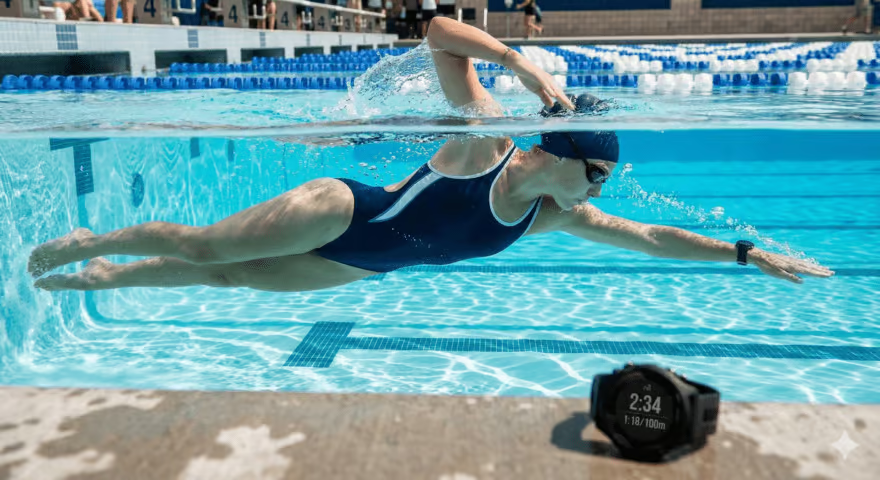
Key Takeaways
SWOLF swimming combines stroke count and time to create a single efficiency score that helps you swim smarter, not harder. This metric teaches triathletes to preserve energy for the bike and run segments while maintaining competitive swim times.
• SWOLF = Time (seconds) + Stroke Count: Lower numbers mean better efficiency. Elite swimmers achieve 25-30 in 25m pools while most triathletes start in the 40-50 range
• Master technique before chasing speed: Build proper stroke mechanics and core strength first. Artificially reducing stroke count through excessive gliding actually hurts your performance
• Track your personal progress, not others: Body type dramatically affects SWOLF scores. A 6’2″ swimmer will naturally score lower than someone who’s 5’6″ with identical technique
• Balance both components equally: Don’t sacrifice stroke rate for stroke length or vice versa. Your optimal efficiency comes from finding the sweet spot between both elements
• Practice targeted efficiency drills: Catch-up freestyle, sculling, and fist drills develop the water feel and stroke efficiency that genuinely lower your SWOLF score
SWOLF shifts your swimming focus from pure speed to smart efficiency. You’ll learn to move through water with purpose, saving precious energy for those final miles on the run course.
What is SWOLF in Swimming?
Understanding the SWOLF meaning
Time matters in competitive swimming, and stroke counting plays an equally significant role. SWOLF swimming combines these two metrics—stroke count and time—to create a clear efficiency measure that changes how you approach your swim training.
The term blends “swimming” and “golf,” indicating that like golf scoring, lower SWOLF numbers demonstrate better performance. The calculation is straightforward: time to swim one lap in seconds plus the number of strokes taken for that distance equals the SWOLF score of 27. Swimming 25 yards in 15 seconds while taking 12 strokes produces exactly this score.
Traditional swim metrics miss a crucial piece of the puzzle. Time per distance measures speed but ignores technique efficiency. Stroke count alone overlooks the primary goal of competitive swimming: covering distance quickly. SWOLF bridges this gap by demanding improvement in both components simultaneously. This dual focus stops swimmers from gaming the system through excessive gliding, which reduces stroke count but increases lap time without real efficiency gains.
The two components: stroke count and time
Stroke count represents the total number of arm strokes required to complete one lap. Each stroke should propel your body effectively through the water. Time measures lap duration in seconds, reflecting your overall speed. These variables create natural tension—reducing one typically increases the other.
Consider this comparison: completing 25 yards in 18 seconds with 20 strokes gives you a SWOLF score of 38. Swimming the same distance in 15 seconds with 11 strokes produces a score of 26, demonstrating superior efficiency. The lower score wins.
How SWOLF helps triathletes swim smarter
SWOLF offers triathletes a powerful tool for energy conservation during the swim portion. This matters because your race continues through cycling and running segments. Distance swimmers benefit substantially since opportunities exist to maintain near-peak output while preserving energy reserves.
The metric guides you toward your optimal balance of stroke rate and stroke length. You can identify the sweet spot where technique and velocity intersect. SWOLF tracking during high-intensity efforts teaches pace maintenance for distance events, preventing early race exhaustion.
Remember that body dimensions vary among swimmers, making SWOLF unsuitable for comparing different athletes but highly effective as your personal progress indicator. Your height, arm length, and body type affect your score regardless of technique quality.
How to Calculate Your SWOLF Score
Step-by-step calculation for yards and meters
Here’s something most swimmers don’t realize: the calculation is dead simple, yet many athletes track it wrong. The formula adds lap completion time in seconds to your total stroke count for that distance. Each hand entry counts as one stroke – both left and right arm entries combine for your final count.
Manual calculation breaks down into four steps:
- Swim one complete lap at your chosen distance (typically 25 or 50 yards/meters)
- Record lap time in seconds using a stopwatch or pool clock
- Count each arm stroke taken during that lap
- Add the two numbers together for your final score
Swimming 25 meters in 20 seconds while taking 15 strokes gives you a score of 35. Complete 50 meters in 40 seconds with 30 strokes? Your score jumps to 70. Most swimmers fall between 12 and 22 strokes per 25 yards or meters, though your height and technique create individual variation.
Open water swimmers should stick to 25-meter segments. This keeps your calculations consistent with pool-based measurements.
Automatic tracking with swim watches
Modern devices handle the math automatically through built-in algorithms. Garmin watches across their Forerunner, Fenix, and Swim 2 series include standard tracking with score metrics. Apple Watch users can access scores through the Workout App’s Auto Sets menu. FORM Swim Goggles offer real-time heads-up display tracking plus post-swim analysis in their companion app.
Don’t trust the technology blindly. Devices count strokes differently – some register each arm movement individually while others track stroke cycles (left plus right combined). Your underwater push-offs and turn technique can throw off automated counting consistency.
What your score tells you about efficiency
Lower scores reveal greater efficiency through the water. You’re combining faster times with fewer strokes. The metric exposes whether you achieve speed through proper technique or excessive stroking.
Your scores improve three ways: increased velocity, reduced stroke count, or enhancement of both factors simultaneously.
SWOLF Score Benchmarks: What Your Numbers Really Mean
Breaking Down Performance Ranges
Here’s something that might surprise you: elite swimmers achieve SWOLF scores between 25-30 in 25-meter pools, but your height and arm length matter more than you think. Beginner swimmers typically score between 45-55 in 25-meter pools, while intermediate swimmers range from 35-45. Advanced swimmers achieve 30-35, and elite swimmers reach those coveted 25-30 scores.
25-yard pools tell a slightly different story. Beginners score 40-50, intermediate swimmers 35-45, and advanced swimmers 28-35. Those scores between 35-45 in a 25-meter pool? You’re looking at very good performance. Scores in the low-70s for 50-meter pools demonstrate excellent efficiency.
Elite examples paint the picture clearly. Jan Frodeno, Olympic and Ironman World Champion, maintains an estimated score of 30-35 in 25-meter pools. Russian sprint champion Alexander Popov achieved a score of 45 in a 50-meter pool, completing the distance in 25 seconds with 20 strokes.
Age plays its role too. Youth swimmers (13-18 years) average 38-48, adults (19-39 years) average 35-45, and masters swimmers (40+) range from 38-52 in 25-meter pools.
Pool Length Makes a Difference
Swimming 25 meters versus 25 yards creates scoring variations that catch many athletes off guard. You should add 2-3 points when comparing 25-meter pool scores to 25-yard equivalents. This adjustment accounts for the additional distance covered in metric pools.
A score of 35 represents strong performance in a 25-meter pool but translates differently in yard-based measurements. Context matters when evaluating your progress.
Your Body Type Affects Your Score More Than You Think
Taller swimmers with longer arms naturally take fewer strokes per lap due to increased reach and glide distance. This physiological advantage produces lower scores without necessarily indicating superior swimming efficiency.
Don’t worry about comparing your scores to swimmers with different body types. Comparing scores between athletes of different heights proves unreliable. Body shape affects hydrodynamic performance, with inverted triangle physiques demonstrating favorable characteristics for competitive swimming.
Your SWOLF scores function most effectively as personal progress indicators rather than comparative metrics across different swimmers. Focus on your own improvement journey instead of chasing someone else’s numbers.
Proven Ways to Lower Your SWOLF Score
Focus on stroke efficiency first
Technique improvements must precede score reduction attempts. Swimmers frequently compromise stroke mechanics by extending glides excessively or disrupting rhythm solely to achieve lower numbers. This approach creates artificial improvements without genuine efficiency gains. Proper technique prioritizes full extension at stroke entry, complete engagement of lats and shoulders during the pull phase, and maintaining high body position throughout the stroke cycle. Core strength functions as the foundation for efficient movement, powering every phase of the stroke while maintaining streamlined positioning. Consistent push-off distances prevent artificial score manipulation and ensure accurate progress measurement.
Balance speed and stroke count
Each swimmer possesses an optimal combination of stroke rate and stroke length that maximizes velocity while minimizing energy expenditure. Increasing stroke rate typically produces higher stroke counts per length due to reduced catch time and increased slippage, yet faster overall times result when rate increases exceed efficiency losses. Conversely, excessive focus on stroke length creates over-gliding that disrupts momentum and degrades body position. Manual stroke counting develops awareness of this balance, allowing immediate mid-length adjustments.
Best drills for SWOLF improvement
Specific practice techniques address different efficiency components:
- Catch-up freestyle develops full extension and body alignment by requiring one arm to wait before beginning the next stroke
- Sculling drills build water feel and propulsion sensitivity through isolated hand and forearm movements at entry, mid-pull, and finish zones
- Fist drill forces reliance on forearm propulsion rather than hand-dominated pulling
- Fingertip drag reinforces high elbow recovery and body awareness during the recovery phase
Tempo trainers provide rhythmic guidance for experimenting with different stroke rates while maintaining form.
FAQs
Q1. What is considered a good SWOLF score? A SWOLF score between 35-45 in a 25-meter pool is considered very good, while scores in the low-70s for a 50-meter pool indicate excellent efficiency. For 25-yard pools, beginners typically score 40-50, intermediate swimmers 35-45, and advanced swimmers 28-35. Remember that lower scores indicate better swimming efficiency.
Q2. How many strokes should I take per 25 meters? Most swimmers take between 12-22 strokes per 25 meters or yards, though this varies based on height, arm length, and technique. Taller swimmers with longer reaches naturally take fewer strokes due to increased glide distance. The key is finding your personal optimal balance between stroke count and speed rather than comparing yourself to others.
Q3. How can I improve my SWOLF score? Focus on stroke efficiency by maintaining full extension at entry, engaging your lats and shoulders during the pull, and keeping a high body position. Helpful drills include catch-up freestyle for body alignment, sculling drills for water feel, fist drills for forearm propulsion, and fingertip drag for high elbow recovery. Avoid over-gliding, which can disrupt momentum without genuine efficiency gains.
Q4. Is SWOLF useful for tracking swimming progress? Yes, SWOLF is most effective as a personal progress indicator rather than a comparison tool between different swimmers. It helps you monitor improvements in your own efficiency over time by combining both speed and technique into one metric. However, maintain consistency in variables like underwater distance and effort level to ensure accurate tracking.
Q5. Does pool length affect my SWOLF score? Yes, pool length directly impacts your score. When comparing results, add 2-3 points when converting from 25-yard to 25-meter pool scores due to the additional distance. A score of 35 in a 25-meter pool represents different performance than the same score in a 25-yard pool, so always track your scores in the same pool type for accurate progress monitoring.
Open Water Swimming Preparation and Training