
How to Increase HGH Naturally: A Comprehensive Guide
October 22, 2026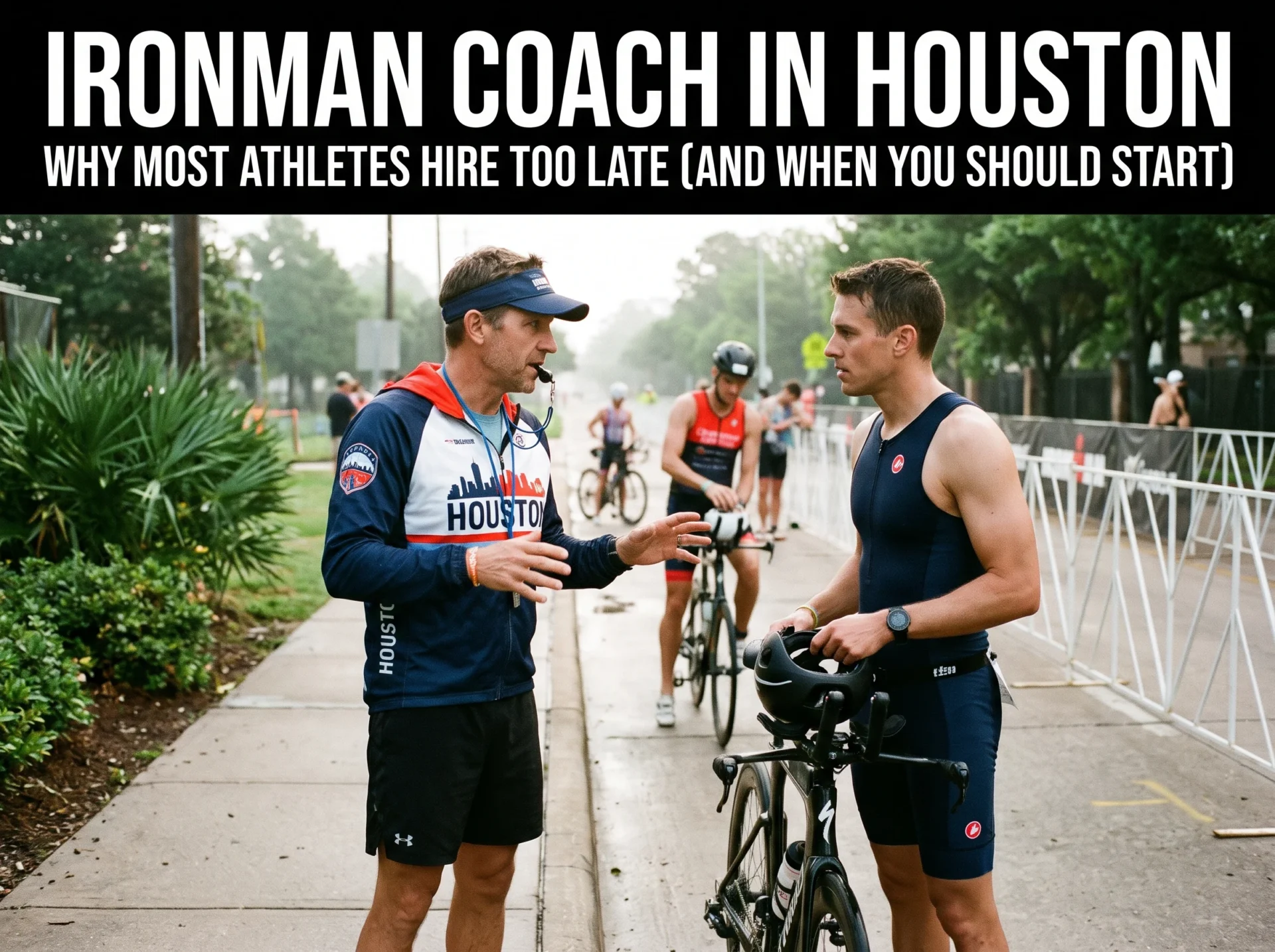
Ironman Coach in Houston: Why Most Athletes Hire Too Late (And When You Should Start)
Key Takeaways
Most athletes make a critical timing mistake when hiring an Ironman coach. They wait until 12-16 weeks before race day—already deep into missed opportunity, with the essential foundation-building phase long gone.
Optimal hiring timelines based on race distance:
- Full Ironman (140.6): Start working with a coach 9-12 months before race day to build aerobic base, develop race-specific fitness, and allow proper progression
- Half Ironman (70.3): Begin coaching 16-20 weeks out for athletes with an existing endurance base; newer athletes need 20-24 weeks
- Athletes transitioning from shorter distances: Require extended preparation time to safely scale up training volume and intensity
The hidden costs of hiring too late include:
- Missing the critical 12-week aerobic base period needed for mitochondrial density and fat oxidation adaptations
- Significantly higher injury risk from compressed training timelines—tendons and connective tissue can’t adapt as quickly as muscles
- Wasted training hours without proper structure, with most self-coached athletes spending too much time at moderate intensity instead of the recommended 80/20 split
When evaluating Houston-area coaches, prioritize:
- Experience with local races (Ironman Texas, Galveston 70.3, Woodlands Ironman) and understanding of Houston’s heat and humidity challenges
- Clear communication style, training philosophy, and willingness to adjust plans around your work and family commitments
- Budget expectations: monthly coaching ranges from $150-400, with bespoke plans around $180 for three months
The bottom line: your body needs time to adapt physiologically. No amount of money or heroic training weeks can compress the months required to build the engine for Ironman success. Start early enough to do the work properly.
Most athletes contact an Ironman coach just 12 to 16 weeks before race day, convinced they have plenty of time. The reality? Ironman distance is a massive undertaking, and by that point, the critical foundation-building phase is already behind you. A great Ironman training coach will build a personalized plan around your fitness level, goals, and schedule—but only if you give them enough runway to work with. Whether you’re targeting Ironman Texas 140.6, Ironman Galveston 70.3, or the Woodlands Ironman, timing is everything. This guide breaks down exactly when to hire a half Ironman coach, what late hiring costs you, and how to find the right fit in Houston.
Why Most Athletes Wait Until It’s Too Late to Hire an Ironman Training Coach
Triathlon has always embraced a do-it-yourself mentality. You download a training plan, follow the workouts, and figure things out as you go. The best athletes in the world have coaches, but somehow, you convince yourself that self-coaching will work just fine for your first Ironman Texas 140.6 or Ironman Galveston 70.3.
Sound familiar? You’re not alone.
The ‘I Can Do It Myself’ Mindset
Self-coaching works — until it doesn’t. Athletes lack objectivity when evaluating their own training and abilities. You scroll through Instagram, spot someone posting massive mileage weeks, and suddenly ditch your carefully structured plan to chase volume your legs simply can’t handle yet. Your eyes become bigger than your legs, and everyone online seems to be doing 50-hour training weeks. Before you know it, you’re overtraining without even realizing it.
Here’s where it gets worse. Athletes also struggle with realistic goal-setting and metric analysis without an outside perspective. Picture this: you’re deep in your biggest training block of the season, you get dropped on a local group ride, and panic sets in. An Ironman training coach would tell you the work is paying off — just not yet. Without that voice, doubt takes over.
Fear of Commitment and Cost
Monthly Ironman coach cost typically runs between $150 and $400. That number feels significant, especially when free training plans are sitting right there online. So you convince yourself that a new bike computer or a faster wetsuit is the smarter investment. Gear feels tangible. Coaching expertise doesn’t — until race day exposes the gap.
Not Knowing When the Right Time Is
Most athletes genuinely don’t know when to hire an Ironman coach. You’ve handled a few sprint and Olympic distance races on your own. Surely the jump to 70.3 or full distance can’t be that different, right? Without a reference point for what proper Ironman preparation actually demands, you default to waiting — until training starts feeling completely overwhelming.
Waiting for the ‘Perfect Moment’
Work will settle down next month. Training will free up after the holidays. You’ll be “serious enough” to justify the expense once you sign up officially. That perfect moment never arrives. Athletes routinely wait until they’re already buried in a training cycle before seeking help, and by then they’ve already missed the crucial base-building phase that determines how ready you’ll actually be on race day.
The Real Cost of Hiring an Ironman Coach Too Late
Some problems money can’t fix. Showing up with only weeks of coached training before Ironman Texas 140.6 is one of them. The physiological adaptations your body needs take months – and no amount of heroic training weeks will compress that timeline.
Limited Time to Build Your Aerobic Base
Your aerobic base demands a minimum 12-week period spent mostly in Zone 2. That’s not negotiable. Base training triggers mitochondrial density, capillary development, fat oxidation, and connective tissue resilience – adaptations that accumulate slowly through months of repeatable, deliberate work. They don’t arrive from a single brutal workout week.
Athletes who skip this phase hit the build period running on empty. The engine simply isn’t there to absorb harder training. By the time Ironman Galveston 70.3 arrives, you’re trying to race a car with half a tank.
Higher Injury Risk with Rushed Training
Research tells us something most athletes get backwards – how quickly you ramp up long run distance predicts injury far more than total weekly volume. Compress your training timeline, and progression turns aggressive. Muscles respond and adapt faster than tendons, joints, and connective tissue can keep up with, creating dangerous imbalance. Overuse injuries in the lower back, knees, and lower legs follow almost predictably.
The Woodlands Ironman doesn’t care that you ran out of time to prepare safely.
Missing Critical Race-Specific Preparation
The build period needs 8-12 weeks where training closely mirrors what race day actually demands. That means 4-6 long race-specific sessions before taper even begins. Without enough runway, your Ironman 70.3 coach can’t develop your ability to hold race pace when it counts – deep into the run, when everything hurts.
That capacity takes weeks to build. There are no shortcuts.
Wasted Training Hours Without Structure
Here’s what self-coached athletes rarely see: volume alone doesn’t drive Ironman performance. Intensity control does. Most athletes training without structure drift toward moderate effort – too hard to be truly aerobic, too easy to create a real training stimulus. Only 2 out of every 10 sessions should touch high intensity. The rest? Controlled, purposeful aerobic work.
Without that structure, you accumulate fatigue without fitness, compromising both quality and recovery. You’re putting in the hours. You’re just not getting the return.
When You Should Actually Start Working with an Ironman Coach
Your starting fitness determines everything. Match the timeline to your experience level and race distance, and you give yourself a real shot at crossing the finish line strong.
For First-Time Ironman Texas 140.6: 9-12 Months Out
Experienced triathletes with an Ironman 70.3 or two behind them can typically be ready in about 9 months. Athletes coming from a single-sport background should plan around two years. Those starting from scratch need up to three years to build a proper base and stay healthy.
Most age-group athletes give themselves six to twelve months, depending on starting fitness. The structure that works looks like this: a long aerobic base phase, a race-specific build of roughly 12 weeks, and a two to three-week taper. During the base phase alone, expect 10 to 16 hours of training per week. That’s before things get hard.
There’s no shortcut here. Your body needs time to build the engine — and no amount of money or heroic training blocks can rush that process.
For Ironman Galveston 70.3: 16-20 Weeks Before Race Day
16 weeks is the sweet spot for most athletes with a solid aerobic foundation already in place. Newer to endurance sport? Coming back from a layoff? Give yourself 20 to 24 weeks and build your base first.
Typical 70.3 training plans run 16 to 20 weeks, with 8 to 12 hours of training per week depending on your experience level. Start with an honest assessment of where your fitness actually sits — not where you wish it was.
For Athletes Transitioning from Shorter Distances
Olympic distance athletes often underestimate how much the step up to 70.3 or full Ironman demands. Before you start Ironman-specific training, you should already be comfortable completing at least three two-plus-hour runs, three four-plus-hour rides, and several 3,000-plus-yard swims.
That baseline fitness isn’t optional. A three-month half distance triathlon training plan can work well — but only if a solid endurance base is already there. Skip that foundation, and the plan works against you.
Already Deep in a Training Cycle?
Hiring an Ironman 70.3 coach mid-cycle still makes sense. A coach can evaluate where you are right now, adjust the upcoming weeks to get the most out of your remaining preparation time, and protect you from the common mistakes that creep into the final race-specific phase.
You won’t recover the full base-building period. But structured guidance at this stage beats grinding through the final weeks alone and hoping for the best.
Finding the Right Ironman Coach Near Me in Houston
Houston’s triathlon community has no shortage of coaching options. The harder part? Finding the right one.
Proximity alone won’t cut it. The coach who lives ten minutes away but has never prepped an athlete for Houston’s brutal summer heat isn’t your best option. The one who has guided athletes through Woodlands Ironman and Ironman Galveston 70.3—who knows exactly what that humidity does to your run pace—is worth far more.
Coaches with Woodlands Ironman and Local Race Experience
Local race knowledge creates a real advantage. Coaches familiar with Houston’s heat, humidity, and course-specific demands build training plans around conditions you’ll actually face on race day. Look for a coach with a track record of helping athletes at your experience level hit their goals—not just finish, but finish well.
Questions to Ask Before Hiring
Don’t skip this step. Ask potential coaches how many years they’ve been coaching and how many athletes they currently work with. Find out whether triathlon coaching is their full-time profession.
Then dig deeper. How often will they review your training data and provide feedback? Are they willing to adjust your plan around work deadlines and family commitments? A coach who hands you a generic plan and disappears until your next check-in isn’t coaching—they’re just selling spreadsheets.
Ask for athlete testimonials. Better yet, ask to speak with current clients. A confident coach won’t hesitate.
Ironman Coach Cost in Houston: What to Expect
Budget expectations vary based on what you need. Bespoke training plans typically cost around $180 for three months. Monthly online coaching with daily workout analysis runs approximately $250 per month, while check-in packages sit around $120 monthly.
The investment feels significant until you calculate what wasted training months actually cost you.
Virtual vs. In-Person Coaching Options
Online coaching handles most of what you need—structured training, daily feedback, and accountability. It works well for the majority of athletes.
Where in-person coaching earns its place is technique work, particularly swimming. Video analysis and real-time feedback on your stroke mechanics can produce gains that no written cue ever will. Many athletes find the best results with a combined approach—online coaching for daily training guidance and occasional in-person sessions for form work.
Conclusion
The difference between struggling through race day and achieving your Ironman goals comes down to timing. Athletes who hire an Ironman coach 9-12 months before a full distance or 16-20 weeks before a 70.3 build the aerobic foundation, avoid injuries, and arrive at the start line prepared. Of course, the investment feels significant, but the alternative costs more in wasted training hours and missed potential. Stop waiting for the perfect moment and start your search for an Ironman coach near me today.
FAQs
Q1. Is it too late to hire an Ironman coach 10 weeks before my race? At 10 weeks out, hiring a coach won’t significantly boost your fitness or FTP, but they can still help with fatigue management, race pacing, nutrition strategy, heat acclimation, and taper planning. If you’re already following a solid training plan and staying healthy, consider a one or two-session consultation instead of full coaching to review your strategy and identify any gaps.
Q2. How much should I expect to pay for Ironman coaching in Houston? In Houston, bespoke training plans typically cost around $180 for three months. Monthly online coaching with daily workout analysis runs approximately $250 per month, while monthly check-in packages cost around $120 monthly. Prices vary based on the level of personalization and communication frequency you need.
Q3. What does the 80/20 rule mean in Ironman training? The 80/20 rule means that only 2 out of every 10 training sessions should be high intensity, while the remaining 8 should be at lower, aerobic intensities. This approach prevents overtraining and allows your body to build the aerobic base necessary for Ironman distance racing while maintaining quality in your harder workouts.
Q4. How far in advance should I start training for my first Ironman? For first-time Ironman athletes with previous 70.3 experience, 9-12 months is ideal. Athletes with single-sport backgrounds should plan around two years, while complete beginners need up to three years to build a proper base and stay healthy. This timeline allows for adequate base building, race-specific preparation, and proper tapering.
Q5. Should I choose virtual or in-person Ironman coaching? Virtual coaching works effectively for most training structure, feedback, and accountability needs. However, in-person sessions provide superior value for technique work, especially swimming. Many athletes find success with a combination approach—using online coaching for daily training guidance while scheduling occasional in-person sessions for form analysis and technique refinement.