
15 Essential Triathlon Strength Training Exercises
July 14, 2025
The Beginner’s Guide to Open Water Swimming Training: Essential Safety & Skills
July 17, 2025
Here’s something that might surprise you: champions aren’t made during race season – they’re forged in the off season. Most triathletes completely underestimate this critical phase of their training cycle.
You might feel pretty good after just two or three weeks of recovery, but without a complete off-season, you’ll miss that last bit of reserves that makes the difference between a good season and a great season. The reality? You have to decondition if you plan to take it to another level the following season.
Don’t worry – you’re not alone in struggling with this concept. Scheduling downtime can be challenging, especially when you begin to feel almost recovered from a demanding training and racing block. Your chances of picking up a cold increase by 80% during these months, though they remain prime time for building your base fitness – the foundation upon which next year’s successes will inevitably be based.
Off season training for triathletes varies significantly based on your recent racing experience. Did you spend the previous season mostly racing short-course? Your approach will look much different from someone who just completed an Ironman. Most coaches agree on one thing: the best recipe includes two weeks of active recovery followed by two weeks of doing almost nothing.
Time matters when it comes to your off-season strategy. We’ll walk you through creating an effective plan that strengthens your foundation, prevents burnout, and sets you up for peak performance when triathlon season returns.
Step Back to Move Forward
Taking a strategic break from training isn’t laziness—it’s essential for your athletic development. The off season triathlon training period offers a valuable opportunity to recover while setting the foundation for future success.
Why doing less helps you gain more
Here’s what many triathletes struggle to accept: stepping back from intense training allows your body to rebuild stronger. Research shows that it’s impossible to keep building fitness indefinitely—there will inevitably be a plateau followed by a decline. Controlled deconditioning becomes necessary for long-term progress.
Professional coaches confirm that many amateur triathletes would perform better if they simply trained less. Studies reveal that training beyond 14 hours weekly doesn’t necessarily improve race times for amateur athletes. Many athletes experience unintentional weight loss, chronic fatigue, and decreased performance when overtraining—all factors that negatively impact race results.
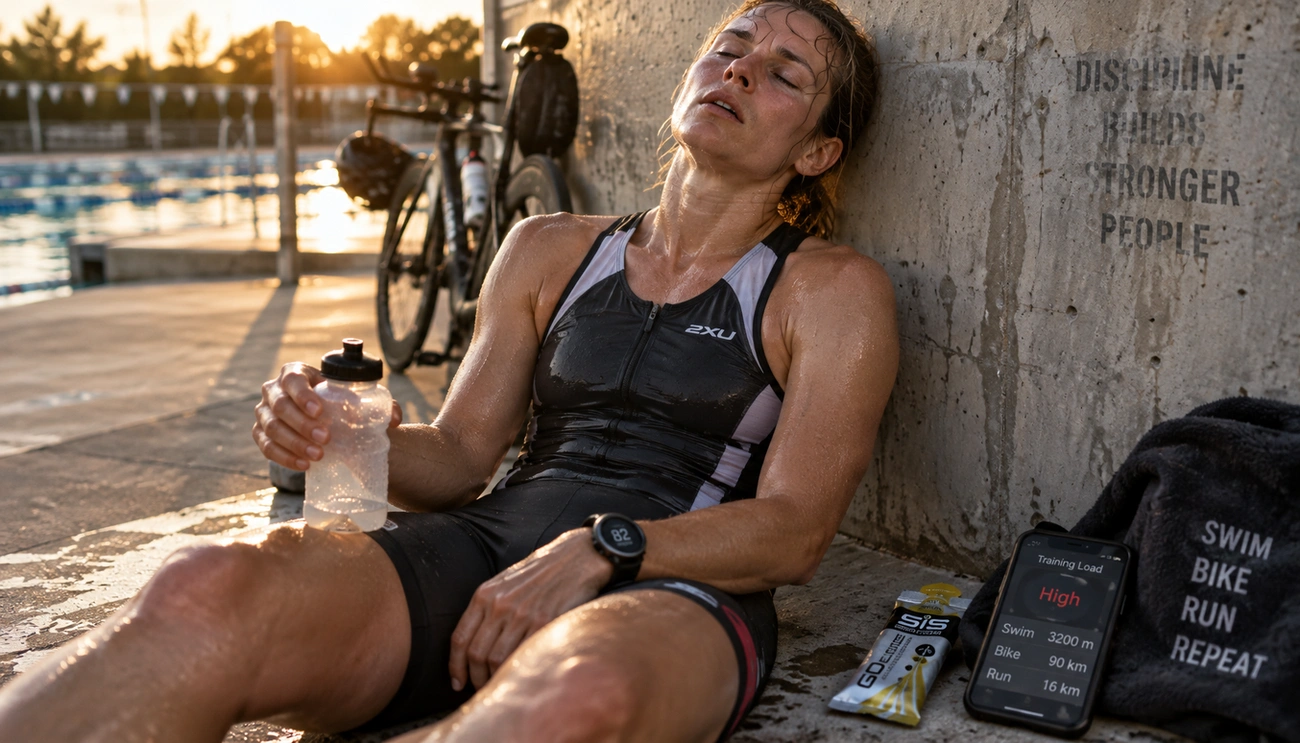
Signs you need a break
Your body sends clear signals when rest is needed. Have you noticed any of these warning signs creeping into your training?
- Declining motivation: When training feels like a chore rather than enjoyment
- Looking forward to off-season: Mentally craving more relaxed training periods
- Persistent fatigue: Tiredness lasting longer than 24 hours after workouts
- Performance plateau: Inability to maintain expected power outputs
- Mood changes: Irritability or decreased enthusiasm for training
Early recognition is crucial. Recovery from functional overreaching takes 7-14 days, while non-functional overreaching requires 2-4 weeks of rest. Ignore these warnings, and you risk full overtraining syndrome, which may take months or even years to overcome.
How to mentally detach from structured training
Mental recovery deserves as much attention as physical recuperation. Rather than setting rigid timeframes, allow yourself to return to training only when genuinely motivated. Trust your body’s signals.
Completely disconnect from the sport—including social media feeds dominated by training content. Instead, immerse yourself in activities unrelated to swimming, cycling, or running. Consider meditation or mindfulness practices to refresh your mental state.
Remember that proper recovery isn’t just about healing your body—it’s about regenerating the passion that makes you a triathlete in the first place.
Rebuild with Purpose
After taking your well-deserved break, it’s time to rebuild your triathlon foundation with purpose and precision. The off season provides a crucial window to develop strength, improve technique, and prepare for the demands of your upcoming races.
Creating an off season triathlon training plan
The off season isn’t an “off” season—it’s a “different” season. Begin by counting back from your target “A” race and choose a plan that fills that gap. Focus initially on steady-state aerobic workouts that maintain your cardiovascular base, along with short, sharp efforts to improve efficiency.
Your plan should include constant, gradual progression with regular recovery periods to optimize your body’s response. This structured approach ensures you don’t start from scratch when race season arrives—instead, you’ll begin your training cycle already ahead, making ambitious goals more achievable.
Need help creating the perfect plan? Schedule a consult to discuss setting up a proper off season training that addresses your specific needs and goals.
Off season strength training for triathletes
Strength training becomes your essential “fourth discipline” during the off season. Plan 12-16 weeks of consistent strength work starting in the off season before shifting to maintenance during the competitive period.
The primary goals should be injury prevention and positive transfer of strength to swimming, cycling, and running. Focus on:
- Building strength and correcting imbalances that developed during the season
- Compound movements like squats, deadlifts, and lunges to build core strength
- Targeted exercises for weaker muscle groups
Here’s what matters most: perform strength work when fresh—never do a long endurance session before training strength.
Mobility and flexibility routines to include
Flexibility and mobility training improves your range of motion, reduces injury risk, and enhances technique. Unlike static stretching, mobility exercises aim to enhance joint range of motion, benefiting posture, balance, and overall performance.
Incorporate sport-specific mobility work into your routine. Swimming demands shoulder and upper back mobility. Cycling requires hip mobility and posture improvements. Running benefits from ankle flexibility and hip rotation.
This targeted approach prepares each body area for the specific demands of triathlon, setting a strong foundation for peak performance in your upcoming season.
Experiment and Explore
The off season offers a perfect opportunity to break out of your routine and explore new athletic horizons. This period of discovery can simultaneously strengthen your triathlon performance while reigniting your passion for endurance sports.
Try new sports and activities
Venturing beyond swim-bike-run prevents mental fatigue and builds complementary fitness. Have you ever considered how cross-training might unlock performance gains you never expected? The off season provides the perfect window to incorporate alternative sports that develop endurance, motor skills, balance, and strength:
- Mountain biking improves handling skills, coordination, and pedal stroke efficiency—essential for better road cycling performance
- Cross-country skiing delivers exceptional cardiovascular benefits while developing lateral strength and stability
- Hiking adds aerobic pennies to your endurance piggybank with minimal impact
- Racket sports enhance mental alertness and strategic thinking under pressure
- Indoor climbing strengthens your core, arms and shoulders—perfect for swimming
Remember that fitness from your primary sport doesn’t always transfer easily, so begin gradually with any new activity.
Use the time to fix technique flaws
Without the pressure of upcoming races, you can finally address those nagging technique issues. Mark Allen, six-time Ironman world champion, notes that the off season is ideal for making small changes to technique, form, cadence, and bike position without impacting key training time.
Swimming holding you back? Join a masters swim group or invest in one-on-one sessions with a coach. Similarly, if biking holds you back, the off season provides an opportunity to schedule a proper bike fit or practice your handling skills.
How to keep motivation high without structure
Maintaining motivation becomes easier when you distinguish between training and exercising. Prior to resuming structured workouts, focus on moving because it feels good—not because you’re following a rigid plan.
Create momentum through small habits that don’t require motivation, such as preparing your workout gear the night before. Changing your training environment can reinvigorate your enthusiasm—if you typically run on roads, explore trails instead.
Finding a training community also helps maintain consistency. Even during the off season, training with others transforms workouts into social events that provide motivation, support, and fun.
Fuel, Hydrate, and Reflect
Nutrition and mindful reflection form the hidden foundations of successful off season triathlon training. The adjustments you make now set the stage for peak performance when racing resumes.
Off-season nutrition tips for triathletes
Did you know that your nutritional needs change dramatically during the off season? With reduced training load, adjust your carbohydrate intake to match lower energy expenditure—typically 3-5 grams per kilogram per day versus the 8-12 grams needed during peak training. Focus your meals on fresh, whole foods such as vegetables, leafy greens, and lean proteins to maintain muscle mass.
Protein remains essential regardless of training phase. Aim for 1.4-2.0g protein/kg/day to support muscle protein synthesis and control hunger. Start your day with at least 30 grams of protein, followed by protein at each meal and after workouts.
Don’t stress about minimal weight gain—it’s not only normal but actually healthy, as ideal racing weight isn’t sustainable year-round. The key? Avoid excessive holiday indulgences that might erase months of training progress.
Hydration strategies in colder months
Winter creates unique hydration challenges that many triathletes overlook. Though you might not feel as sweaty, you’re still losing significant fluid—sweat evaporates faster in cold, dry air, with rates up to 23.7 oz per hour. Your body also loses more water through respiration as it warms and humidifies cold air.
The surprising part? Your thirst response becomes blunted in colder temperatures. Set a timer every 15-20 minutes as a drinking reminder. The standard guideline of approximately 16-20 ounces of fluid per hour still applies during winter. Consider warm hydration options like hot teas or insulated bottles for cold-weather training.
Reflecting on your past season to improve
Post-season assessment provides actionable insight for future improvement. Review your races objectively: How did you feel while racing? Did your execution match your plan? Did results reflect your training?
Remember to evaluate your fueling and hydration strategies from races—analyze whether they were appropriate for the conditions and distance. Review pace-to-heart-rate ratios to identify potential dehydration issues. Lactate testing benefits for athletes can provide crucial insights into their performance and endurance levels. By understanding lactate thresholds, athletes can optimize their training intensity and recovery strategies. This information enables more tailored approaches to both nutrition and hydration, ultimately enhancing race-day outcomes.
This reflection period helps determine what to focus on during off-season. The goal isn’t just looking backward but using those insights to move forward more effectively.
Conclusion
Off-season triathlon training ultimately defines your success in the upcoming racing season. Time matters when it comes to balancing strategic rest with purposeful work. Your body needs time to heal completely, not just partially, if you aim to elevate your performance next season.
Remember the foundation we’ve built together through this guide. After taking that essential break, your focus shifts to rebuilding through targeted strength training, improved mobility, and technique refinements. This period offers a perfect opportunity to address weaknesses that held you back previously. Exploring new sports and activities keeps training fresh while building complementary fitness that transfers to triathlon. As you dive deeper into the specifics of mastering triathlon power training techniques, consider incorporating speed drills and endurance sets that challenge your limits. This focused approach not only enhances your performance but also reinforces the technical aspects of each discipline. By dedicating time to this specialized training, you’ll be well-equipped to tackle your next race with confidence and efficiency.
Your nutrition and hydration require adjustments during this phase. Reduced training load means lower carbohydrate needs, though protein remains crucial for recovery and muscle maintenance. Careful reflection on past performances provides valuable insights for future improvement.
The most successful triathletes understand that champions truly emerge during these quieter months. Your approach to the off-season directly determines your ceiling for the upcoming year. Allow yourself to rebuild both physically and mentally, so when race season arrives, you’ll stand on the starting line stronger, more balanced, and genuinely excited to compete.
Are you ready to make your off-season the foundation of your best racing year yet?
Key Takeaways
Master your off-season to unlock peak triathlon performance through strategic recovery, purposeful rebuilding, and smart preparation for race season success. Incorporating cycling strategies for triathlon success is essential for enhancing endurance and speed on race day. By focusing on tailored cycling workouts and effective nutrition plans, athletes can optimize their performance across all triathlon segments. Additionally, practicing transitions between cycling and running will help ensure a seamless shift, further boosting overall race efficiency. Incorporating effective triathlon swim training techniques into your regimen can enhance your overall efficiency in the water. By focusing on drills that improve your stroke technique and endurance, you’ll set a strong foundation for race day. Additionally, combining swim workouts with cross-training activities will help maintain your fitness level while minimizing the risk of injury.
• Take a complete break first: Allow 2-4 weeks of minimal activity to fully recover – champions are made during proper deconditioning periods, not endless training.
• Rebuild with strength and mobility focus: Use 12-16 weeks for targeted strength training and sport-specific mobility work to address weaknesses and prevent injuries.
• Experiment with new activities: Try mountain biking, skiing, or climbing to build complementary fitness while keeping motivation high and preventing mental burnout.
• Adjust nutrition for lower training load: Reduce carbs to 3-5g/kg/day while maintaining 1.4-2.0g protein/kg/day to support recovery without excess weight gain.
• Reflect and plan strategically: Analyze past race performances to identify improvement areas, then create a structured plan counting back from your target “A” race.
The off-season isn’t “off” time—it’s your foundation-building phase that determines your performance ceiling for the upcoming racing season.
FAQs
Q1. What is the ideal structure for off-season triathlon training? A typical off-season plan includes 2-4 weeks of active recovery followed by 12-16 weeks of focused training. Start with rebuilding your aerobic base, then gradually incorporate strength training, technique work, and sport-specific mobility exercises. Adjust the plan based on your goals and weaknesses identified from the previous season. Mastering triathlon training techniques during the off-season can lead to significant performance improvements. By focusing on skill development and strategic recovery, athletes can ensure they are both physically and mentally prepared for the upcoming season. Incorporating cross-training activities can also enhance your adaptability and overall fitness.
Q2. How can I maintain motivation during the off-season? Keep things fresh by trying new activities like mountain biking or cross-country skiing. Focus on exercising for enjoyment rather than following a rigid plan. Join a training community for social support, and set small, achievable goals to create momentum. Remember that this period is crucial for building your foundation for the upcoming season.
Q3. Should I adjust my nutrition during the off-season? Yes, you should adapt your diet to match your reduced training load. Decrease carbohydrate intake to 3-5 grams per kilogram of body weight per day, while maintaining protein intake at 1.4-2.0 grams per kilogram daily. Focus on whole foods and don’t stress about minimal weight gain, as it’s normal during this period.
Q4. How do I know if I’m overtraining during the off-season? Watch for signs like declining motivation, persistent fatigue lasting more than 24 hours after workouts, performance plateaus, and mood changes such as irritability. If you experience these symptoms, it’s crucial to take a step back and allow for proper recovery to avoid risking full overtraining syndrome.
Q5. What’s the best way to improve my weakest discipline during the off-season? Use this time to focus on technique and efficiency. For swimming, consider joining a masters swim group or getting one-on-one coaching. If cycling is your weakness, invest in a proper bike fit and practice handling skills. For running, incorporate drills and focus on form. Remember to balance this work with overall fitness maintenance and recovery.