
TitaniumJohnny: The Crash and Journey Back to Running – PT 2
July 1, 2024
TitaniumJohnny: The Crash and Journey Back to Running – PT 4
July 30, 2024
After spending a few weeks in Memorial Hermann’s acute care center, I transitioned to Houston Transitional Care, a Skilled Nursing Facility (SNF). For those unfamiliar, a SNF is a place where trained medical staff provide intensive treatment and rehabilitation to help patients recover. Because the team there was consistently friendly, knowledgeable, and professional, I made significant strides under their care. Ultimately, this was the best choice for me, as I still required a feeding tube, specialized medications, wound care, and assistance with almost every daily task.
Early Milestones and the Road to Independence
While in acute care, I required total assistance. Since I couldn’t get up to use the bathroom, drink, or eat, I felt much like an infant—relying on diapers and a feeding tube. To change this, my first goal was to build baseline strength. I did what I could while confined to the mattress, such as lifting my limbs, squeezing my glutes, and “bed dancing.” This effort paid off; consequently, by week two, I graduated to using a bedpan and urinal. No more diapers!
The Physical Toll of Trauma
Breathing and swallowing presented their own grueling challenges. Initially, I needed frequent suctioning to clear my airway, a process that felt like drowning. Furthermore, because of my neck surgery and the previous breathing tube, swallowing was incredibly difficult. My mouth was wired shut—save for a tiny gap where a tooth was missing—and wire cutters were kept nearby at all times for emergencies. Additionally, double vision and the fear of vomiting caused constant nausea, though doctors managed this with medication for both anxiety and stomach upset.
An Opportunity for Experimental Healing
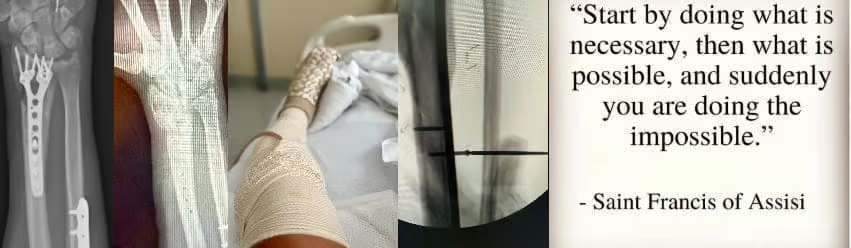
During this time, I recalled a detail from the ER: a mention of “experimental surgery.” In fact, while in the trauma ICU, my orthopedic doctors asked if I would volunteer for a specialized procedure. The goal was to track my recovery for a year to potentially help veterans and soldiers with similar limb injuries. Without hesitation, I said yes, hoping my recovery could eventually serve a greater purpose.
Facing Fear in Rehabilitation
On my first day at Houston Transitional Care, I met my new rehab team. This included physical therapists for my leg, occupational therapists for my left arm, and speech therapists for swallowing. However, the transition was stressful because I no longer had my suction tool, which had become a psychological safety net.
To manage my nerves, I developed a “Plan B” in case I ever threw up with my jaw wired shut. My plan was to hit the call button, roll out of bed, and crawl toward the hallway door. Since I knew I could hold my breath for two minutes, I figured I could last just long enough for someone to cut the wires. As a former Boy Scout, having this contingency plan gave me the peace of mind I needed to focus on work. titaniumjohnny’s path to recovery was not an easy journey. Every day presented new challenges, but I remained committed to following my plan. With determination, I slowly adapted to my circumstances and learned to embrace each step of the process. titaniumjohnny’s running recovery journey has been both challenging and rewarding. Each day brings new lessons about patience and resilience, reminding me that progress is often a slow but steady climb. I’m learning to celebrate small victories, from completing a short run to simply feeling stronger and more capable.
Regaining Strength and Mobility
The very next day, I began active rehab. Admittedly, I was shocked by my own weakness; simply sitting in a wheelchair for 30 minutes was exhausting. Nevertheless, I pushed harder each day, and the staff was visibly impressed by my progress. For example, my left arm, which I initially couldn’t lift past my shoulder, regained full range of motion in just two weeks. Before long, I was strong enough to stand and even walk with a cane.
The Path to Real Food
Speech therapy was equally vital as I relearned how to swallow safely. I started with tiny spoonfuls of apple juice and progressed to Jell-O. Once they finally unwired my jaw, I moved to pureed food. I even had to use popsicle sticks to stretch my jaw open again. While I could barely fit a pinky finger in my mouth at the start, I can now eat a burger with no issues.
Looking Toward the Future
Ultimately, the key to my success was the timing of my medication. Proper pain management led to better sleep, which in turn fueled more productive therapy sessions. As the pain shifted between my skull, leg, and arm, I gradually transitioned to weaker medications. Soon, I was wheeling myself down the halls using one good arm and one good leg. Just two months after my accident, I was discharged and successfully returned to work.
But Wait There’s More In The Next Installment:
Back To Work and The Introduction to Bone Pain