
How to Master Triathlon Training with Power: A Pro’s Guide to Racing Faster
August 27, 2025
Why Your Running Plateau Isn’t Your Fault (A Coach’s Perspective)
August 31, 2025
Here’s a surprising reality: elite swimmers use 70% less energy than beginners to cover the same distance – a remarkable efficiency gap that most triathletes never realize exists.
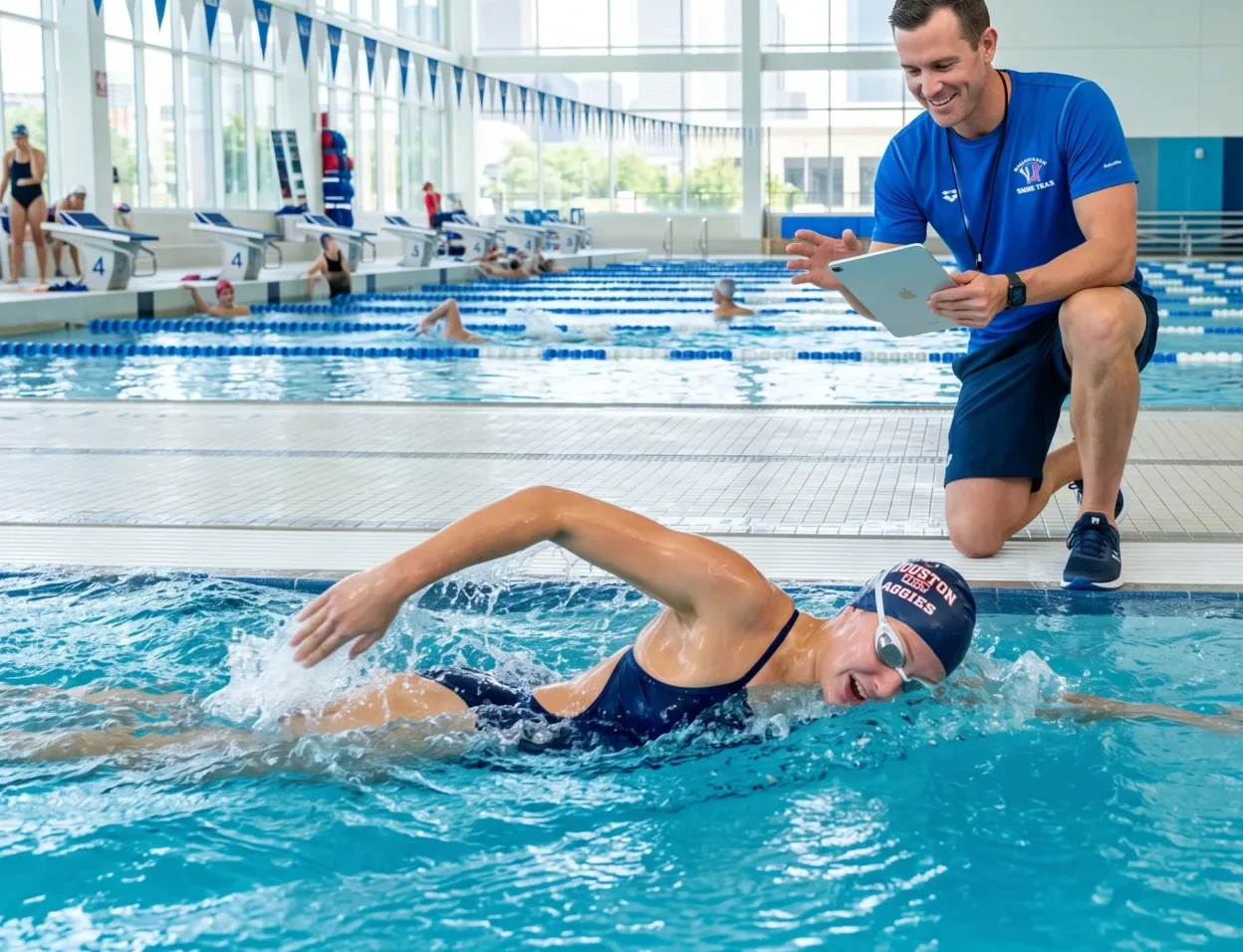
Swimming feels like your biggest challenge in triathlon training. Don’t worry – you’re not alone. Many triathletes find the water intimidating and get exhausted quickly, struggling with technique that wastes precious energy. The truth? Proper form matters far more than raw power when it comes to triathlon performance.
Time matters in triathlon swimming. Each stroke can make the difference between finishing strong for the bike leg and hitting the wall before you even leave the water. Focusing on efficient freestyle technique will boost your endurance across all race distances while conserving energy for those crucial final disciplines.
Have you ever wondered why some swimmers glide effortlessly past you while you’re working twice as hard? Poor breathing timing throws off your balance and disrupts your entire stroke rhythm. This guide reveals the specific techniques, open water skills, and race-day strategies that separate struggling swimmers from confident competitors ready to excel in any triathlon distance.
Master the Triathlon Swimming Environment
That first plunge into open water hits differently than your comfortable pool sessions. The controlled environment you’ve trained in suddenly becomes a chaotic battlefield of unpredictable conditions and crowded competition.
Pool vs Open Water: A Different Game Entirely
Pool training gives you clear lane lines, consistent temperatures, and perfect visibility. Open water throws you into murky conditions with no visual guides except distant buoys. You’ll lift your head every six to ten stroke cycles to sight forward – a technique that feels awkward until it becomes second nature.
Choppy water demands technique adjustments that pool training never teaches. Your high-elbow recovery that works perfectly in calm lanes becomes a liability when waves crash into your arms. Smart swimmers switch to a straight-arm recovery, swinging their hands higher to clear unpredictable water surfaces. Olympic triathletes boost their stroke rates to 82-92 strokes per minute in open water – significantly higher than the 65-80 range used in pools.
Combat Swimming: What Pool Training Can’t Prepare You For
Triathlon starts create a “combat swimming” environment that shocks even experienced pool swimmers. Picture this: hundreds of nervous athletes packed together, fighting for position while navigating unpredictable conditions.
You’ll encounter:
- Aggressive swimmers grabbing, pulling, and potentially swimming over you
- Waves and currents that disrupt your rhythm
- Zero visibility that makes navigation challenging
- Physical contact that throws off your stroke technique
Most triathletes fear open water because these conditions feel completely foreign. The solution? Specific simulation training – practice swimming three or four people in a single lane, frequent sighting drills, and race-start speed work.
Technique Efficiency: Your Secret Weapon
Competitive swimmers move 50% faster than triathletes using identical energy output. This efficiency gap becomes critical when you consider swimming is just your opening act.
Poor technique sabotages your entire race performance. Top swim coaches believe 70% of swimming success comes from proper body positioning, while only 30% relies on arm and leg power. Water is 784 times denser than air – even minor technique flaws create massive efficiency losses.
Proper form prevents injury too. Swimmers without coaching develop shoulder and hip problems that compromise their bike and run segments. Your technique investment in the water pays dividends across all three disciplines.
Master Open Water Swimming Skills
Open water swimming throws you into a completely different world than your familiar pool environment. The controlled lanes, clear visibility, and that trusty black line disappear – replaced by unpredictable conditions that can make or break your race.
Pool vs. Open Water: What Changes Everything
Pool swimming gives you consistent temperature, crystal-clear visibility, and defined lanes to guide your path. Open water? You’re swimming blind with no lane markers, variable temperatures, and conditions that shift by the minute. You’ll need to lift your head periodically – every six to ten strokes – to check your direction and avoid swimming hundreds of extra meters off course.
Your stroke technique needs adjustment too. That high-elbow recovery perfected in the pool? Choppy water demands a straighter-arm recovery with higher hand clearance to avoid waves disrupting your rhythm. Olympic triathletes maintain stroke rates of 82-92 strokes per minute compared to pool swimmers at 65-80 strokes per minute.
Navigate the Combat Zone
Race day presents what experienced triathletes call “combat swimming” – hundreds of nervous athletes packed together at the start line. You’ll encounter:
- Bodies everywhere with potential grabbing, pulling, and swimmers going over you
- Waves, currents, and water conditions that change mid-race
- Technique breakdown while trying to navigate through crowds
- Limited visibility making course navigation challenging
Most triathlon anxiety stems from unfamiliarity with these chaotic conditions. Practice swimming three or four athletes wide in a single pool lane, frequent sighting drills, and race-start speed intervals to simulate the real experience.
Technique Efficiency Wins Races
Competitive swimmers move 50% faster using identical energy output compared to untrained triathletes. This efficiency gap becomes critical since swimming is just your first discipline.
Poor technique wastes energy that impacts your entire race performance. Swimming coaches estimate 70% of successful swimming depends on proper body positioning while only 30% comes from arm and leg power. Water is 784 times denser than air – even small technique flaws create massive efficiency losses.
Maintaining proper body alignment prevents injuries that can derail your bike and run segments. Shoulder and hip pain from inefficient swimming technique can compromise your entire triathlon performance before you even reach transition.
Master Essential Technique Elements for Race Success
Most swimmers think building more strength and endurance will make them faster. The reality? Perfecting your technique can slash your energy expenditure by 50% while maintaining the same speed.
Build Proper Form with Targeted Drills
Smart drill work isolates specific stroke elements and builds muscle memory that transfers directly to race day performance. These three drills form the foundation of efficient freestyle:
Single-arm drill: Focus on one arm at a time to identify stroke imbalances. Keep your resting arm extended while swimming with the working arm. This drill reveals timing issues and helps maintain stroke symmetry.
Catch-up drill: Wait for one arm to “catch up” to the other before starting your next stroke. This extends your reach and improves stroke timing while building core stability.
Fist drill: Swim with closed fists to force your forearms to work harder during the catch phase. When you return to normal swimming, your hands feel like paddles and your catch position improves dramatically.
Create Long, Streamlined Strokes
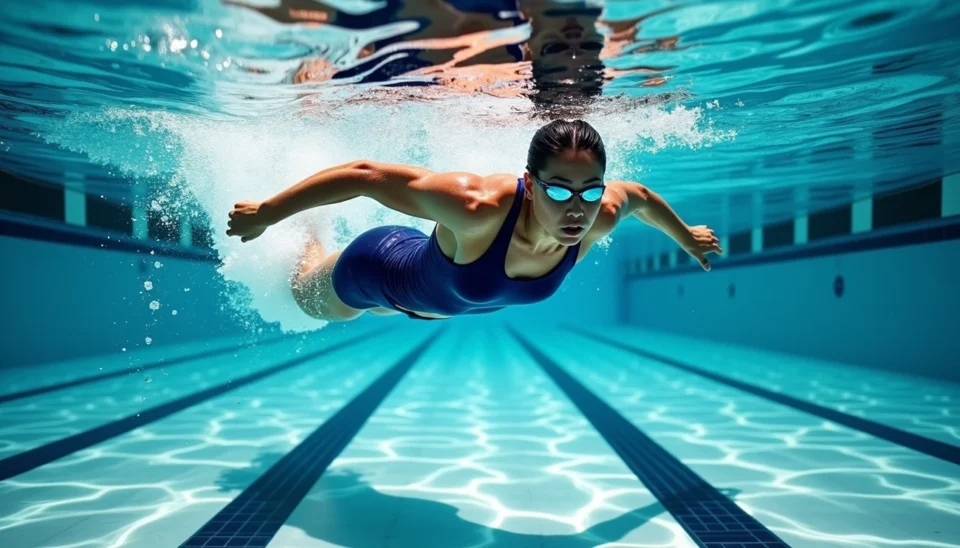
Body position determines everything in efficient swimming. Keep your body horizontal with your head in neutral position – eyes looking down, not forward. Your hand should enter the water directly in line with your shoulder, fingers pointing forward like you’re reaching into a mail slot.
Think long and narrow. The longer your body line, the less drag you create through the water.
Master Rotation and Breathing Rhythm
Effective body rotation powers your stroke while protecting your shoulders from injury. Rotate from your core, not your shoulders, allowing for longer reaches and more powerful pulls.
Breathe with purpose. Exhale completely underwater through your nose and mouth, then take a quick, sharp inhale as you rotate to breathe. Separate your breathing from your stroke timing – breathe when you need air, not just every third stroke.
Remember: relaxed swimmers are fast swimmers. Tension kills efficiency faster than poor technique.
Ready to take your technique to the next level? Schedule a coaching consultation to identify your specific stroke flaws and create a targeted improvement plan.
Build Endurance and Race-Day Readiness
Hitting a training plateau can be frustrating when your swim times stagnate despite logging more pool hours. Building swimming stamina requires structured training that mirrors the specific demands you’ll face on race day.
How to improve swimming endurance with long sets
Endurance swimming builds both cardiovascular and muscular resilience for race distances. Structure your workouts with these proven approaches:
Try 33×100 repeats using three separate intervals, maintaining strong sustainable pace on shorter intervals. Alternatively, build up with 400-meter repeats using minimal rest – start with 4-6 repetitions and gradually increase to 10 as your fitness improves.
Progressive sets work exceptionally well for race preparation. Build from easy to race pace throughout each set, teaching your body to handle intensity increases while fatigued.
Simulate race conditions in training
Pool training alone won’t prepare you for triathlon chaos. Create mini-races during practice sessions:
- Quick starts with 20-30 hard strokes followed by settling into race pace
- Mid-swim surges to mimic navigating around buoys or escaping congestion
- Practice physical contact while swimming with training partners
Set up simulation workouts weekly to experience race-day sensations beforehand. Your body adapts to what you practice most.
Practice swim-to-bike transitions
Efficiency in T1 requires repeated practice until wetsuit removal becomes automatic. Set up a mock transition area after swim sessions and practice wetsuit removal while jogging.
Apply lubricant to arms and legs for quicker wetsuit removal. Simplify your transition area with only essential items to reduce confusion and wasted seconds.
Use pacing strategies for different distances
Your pacing approach must match your race distance. Sprint and Olympic distances allow you to start slightly faster in the swim to secure better position.
Longer races demand energy conservation. For 70.3 and 140.6 distances, prioritize comfortable aerobic swimming that preserves energy for the bike and run.
Match your swim effort to race duration: 90-95% effort for sprints, 85-90% for 70.3, and 75-85% for full distance events. Remember – swimming is just the first discipline.
Your triathlon swimming journey demands patience and persistence. Technical improvements rarely happen overnight, but each stroke adjustment builds toward race-day success. Mastering strategies for efficient race transitions can dramatically enhance your performance on race day. By focusing on smooth gear changes and maintaining your composure, you will set yourself up for a successful and faster finish. Every second gained in transitions is a testament to your preparation and dedication to the sport.
Remember that efficient swimming sets the foundation for your entire race performance. Poor technique in the water creates fatigue that follows you onto the bike and through every running step. Master the fundamentals – body position, stroke mechanics, and open water navigation – and you’ll arrive at T1 ready to dominate the remaining disciplines.
Race simulation becomes your secret weapon against swim start anxiety. Practice those crowded conditions, perfect your sighting rhythm, and learn to draft effectively. These skills separate confident swimmers from those who waste energy fighting the water and other athletes.
Your pacing strategy should match your race distance goals. Sprint triathletes can push harder early to secure good position, while Ironman athletes must preserve energy for the long journey ahead. Each distance requires different tactical approaches, but efficient technique benefits every race length.
Swimming improvements compound over time. That slight adjustment to your catch position or breathing rhythm might feel insignificant during practice, but it saves precious energy over race distances. Stay committed to the process – your future race times will reflect every technique session you complete today.
Key Takeaways
Master these essential triathlon swimming fundamentals to swim more efficiently, conserve energy for the bike and run, and dramatically improve your race performance. Focusing on effective training techniques for triathlon cycling will enhance your speed and endurance on the bike leg. It’s important to incorporate interval training and hill workouts to build strength and stamina. Additionally, understanding proper bike mechanics can significantly improve your performance during races. Incorporating swim training techniques for triathletes into your regimen can significantly enhance your endurance in the water. By focusing on drills that improve stroke efficiency and breathing patterns, you will find yourself gaining valuable time during races. Additionally, integrating these techniques will help you transition more smoothly to the bike segment, ultimately leading to a more successful triathlon experience.
• Technique beats speed: Proper form can reduce energy expenditure by 50% while maintaining pace – focus on body position and stroke efficiency over raw power.
• Master open water skills: Practice sighting every 6-10 strokes, learn to draft behind other swimmers to save 30% energy, and adapt stroke technique for waves.
• Simulate race conditions: Train with crowded starts, practice swim-to-bike transitions, and use specific drills like single-arm and catch-up to build muscle memory.
• Pace strategically by distance: Use 90-95% effort for sprints, 85-90% for 70.3 races, and 75-85% for Ironman distances to optimize energy distribution.
Remember that swimming is just the first discipline – efficient technique preserves crucial energy for the bike and run segments, making proper form your most valuable training investment.
FAQs
Q1. How can I improve my triathlon swimming technique? Focus on developing proper form and body position in the water. Practice drills like single-arm and catch-up to build muscle memory. Work on maintaining a horizontal body position, engaging your core, and keeping your head in a neutral position. Efficient technique can reduce energy expenditure by up to 50% while maintaining the same speed. Incorporating triathlon swimming drills for beginners can further enhance your overall performance in the water. These drills not only familiarize you with various techniques but also build confidence and speed as you prepare for your race. As you progress, consider integrating more advanced drills that focus on endurance and breathing control to take your skills to the next level. In addition to improving your form, incorporating specific swimming techniques for ironman triathlon can significantly enhance your performance. Spend time working on your breathing patterns to ensure a steady and efficient stroke. Lastly, consider joining a local swim group or finding a coach who can provide personalized feedback and tips tailored to the Ironman distance.
Q2. How often should I swim when training for a triathlon? Aim for 2-3 swim sessions per week. Consistency is key to becoming more comfortable and efficient in the water. Balance your swim training with your overall triathlon training plan, including cycling and running workouts.
Q3. What are some essential open water skills for triathlon swimming? Practice sighting every 6-10 strokes to stay on course, learn to draft behind other swimmers to save up to 30% energy, and adapt your stroke technique for waves and choppy conditions. These skills are crucial for navigating efficiently and conserving energy during the swim leg.
Q4. How can I overcome breathing difficulties while swimming? Focus on bilateral breathing, exhaling fully underwater, and timing your breath with your stroke rotation. Practice breathing every 3 strokes to start. Keep your head low and rotate it slightly to breathe, rather than lifting it out of the water. Consistent practice will help you become more comfortable with breathing rhythm.
Q5. What’s the best way to pace myself during the swim portion of a triathlon? Adjust your effort based on the race distance. Use 90-95% effort for sprint triathlons, 85-90% for half-Ironman (70.3) distances, and 75-85% for full Ironman events. Start slightly faster in shorter races to secure a good position, but prioritize energy conservation in longer events. Remember, efficient swimming leaves you fresher for the bike and run segments.