
Why Elite Runners Rely on Sports Massage Therapy
October 8, 2025
Why Every Marathon Runner Needs Sports Massage Therapy
October 15, 2025
Did you know that a slight drop in hip position can increase drag by up to 20%? Your smooth swim suddenly becomes an exhausting battle against the water itself.
Picture yourself struggling through that first grueling kilometer, legs sinking like anchors while your stroke falls apart. Now imagine matching the legendary Kieren Perkins, who powered through thirty 100-meter freestyle sets at blistering pace. The gap between these experiences isn’t insurmountable. Swimming endurance follows both art and science.
Here’s what surprises most swimmers: beginners can progress from barely completing 1K to confidently finishing 10K events within a single year. This remarkable leap happens because swimming workouts build incredible full-body strength while enhancing cardiovascular fitness. Don’t worry – you’re not alone if this seems impossible right now.
You’ll discover proven methods that focus on efficient technique, structured training progressions, and mental conditioning. From mastering body position to creating training programs that work, we’ll guide you through every aspect of long distance swimming. Soon you’ll glide through the water with seemingly endless endurance.
Mastering the Basics of Long Distance Swimming
Long distance swimming separates itself from sprinting through one critical factor: efficiency beats power every time. While sprinters can muscle through 50 meters with raw strength, endurance swimming demands technical precision to conserve energy throughout extended periods.
Understanding body position and drag
Water is approximately 800 times denser than air. This single fact changes everything about how you approach swimming. Your body position becomes the difference between gliding effortlessly and fighting an exhausting battle against drag.
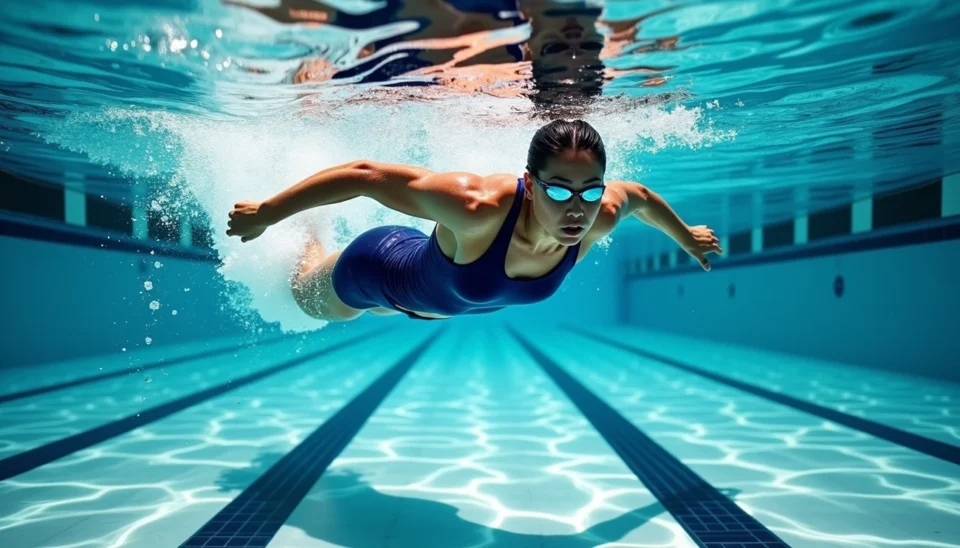
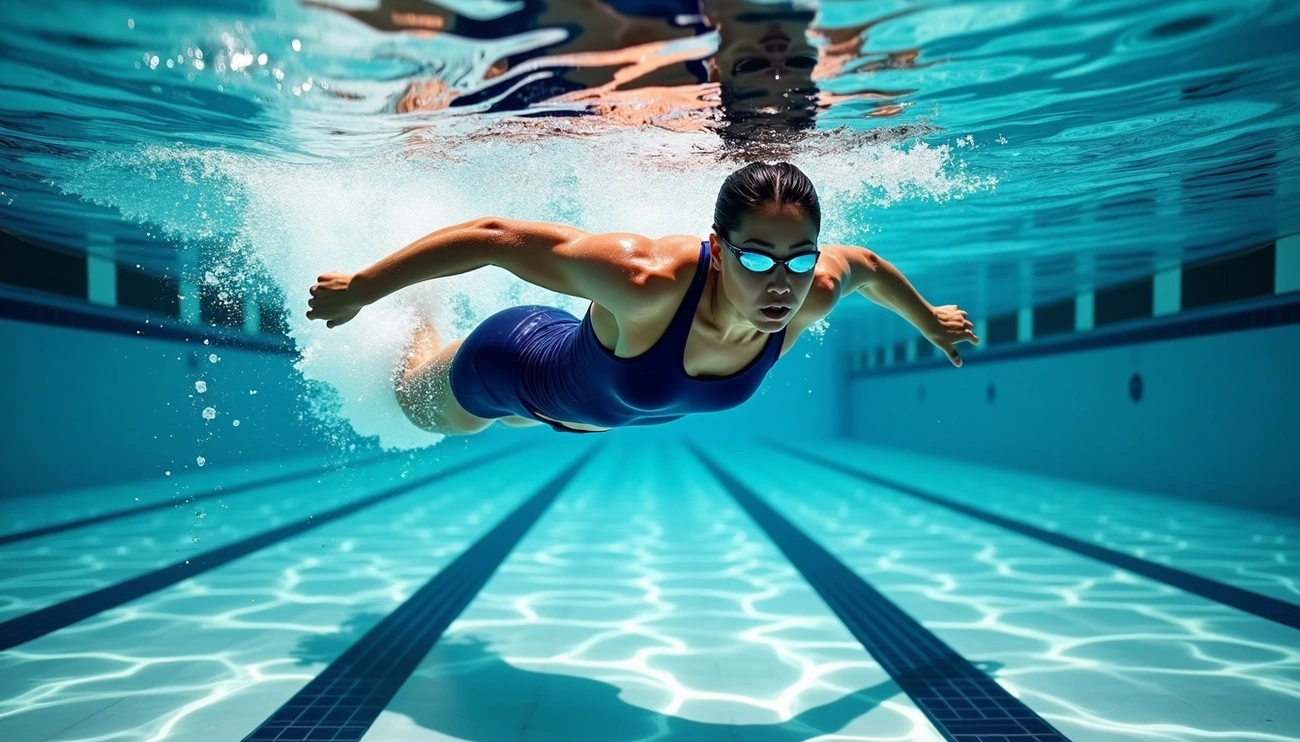
Think of your body as a torpedo moving through water. When swimming long distances, maintain a flat, horizontal position with your head and neck in neutral alignment. This torpedo-like position significantly reduces drag forces that slow you down.
Here’s how to achieve optimal position:
- Keep your head down and look straight down or just slightly forward to encourage your hips to float higher
- Press your chest slightly into the water to create a counterbalance that elevates your legs
- Maintain a tight core to prevent unnecessary body curve that increases frontal drag
- Ensure your legs never drop below your hips to maintain that horizontal line
Your lungs act as a natural fulcrum in the water. Press your head and chest down to counteract the imbalance created by your heavier legs and hips. Keep your head underwater during the fastest point of your stroke cycle – the “surge point” – to further reduce surface drag.
Choosing the right breathing rhythm
Breathing affects more than just oxygen intake. It fundamentally impacts your body position and energy conservation throughout long swims.
For endurance swimming, breathing every two strokes provides optimal oxygen flow. This unilateral pattern allows you to maintain rhythm and steady oxygen supply throughout extended swims. Practice bilateral breathing during training to develop balanced stroke mechanics and adaptability.
The technique matters as much as the pattern. Exhale continuously underwater rather than holding your breath and waiting to surface. This prevents carbon dioxide buildup, which creates that suffocating sense of breathlessness. Keep your head movements small, fast, and fluid when turning to breathe. Disrupting your body alignment costs precious energy.
Why stroke efficiency matters more than speed
Most swimmers think faster strokes equal faster times. The reality? Stroke efficiency trumps raw speed in distance events.
Efficiency means maximizing the distance covered with each stroke while minimizing energy expenditure. Distance per stroke (DPS) measures how far you travel forward with each arm movement. Research shows that maintaining stroke length produces better results than increasing stroke rate in endurance swimming. Swimmers who simply raise their stroke rate watch their stroke length decrease, forcing technical compromises.
Focus on these efficiency improvements:
- Develop your “early vertical forearm” catch position to enhance propulsion
- Maintain proper elbow position during your pull to reduce drag from your upper arm
- Practice rotational momentum to extend your reach and glide phases
Finding the optimal balance between stroke rate and efficiency requires experimentation. Each swimmer must discover their personal formula based on their physiology, event distance, and technical strengths.
How to Train for Long Distance Swimming
Training effectively for long distance swimming demands more than logging hours in the pool. The most successful distance swimmers follow proven methodologies that build both physical capacity and mental fortitude.
Building an aerobic base with steady swims
Your aerobic base forms the foundation of everything else. This critical physiological foundation allows your body to utilize oxygen efficiently and sustain effort over extended periods.
Aerobic base training—often called Zone 2 training—specifically targets your ability to perform steady-state work for prolonged periods. This training zone operates just below your aerobic threshold, which matters because endurance events primarily test your ability to sustain activity over time.
Here’s how to build this foundation:
- Perform steady-state swims at moderate, sustainable pace for 20 minutes to over an hour
- Focus on consistent, controlled effort rather than maximum speed
- Gradually increase duration before increasing intensity
The science behind this approach is compelling. Research shows that elite endurance athletes across sports incorporate aerobic base training into their weekly routines. This type of training improves lactate clearance by increasing the number of mitochondria in slow-twitch muscle fibers, essentially expanding your body’s engine capacity.
Many coaches recommend swimming longer distances at a pace that feels “almost uncomfortable” but sustainable. This creates the physiological adaptations needed before tackling more intense training.
Using interval training to improve stamina
Once you’ve established a base, interval training becomes your tool for developing greater stamina. Unlike continuous swimming, intervals allow you to accumulate more high-quality yardage while maintaining better technique.
Long interval training involves sustained efforts lasting several minutes with brief rest periods—for instance, 4×4 minutes at 90-95% effort with several minutes recovery between repetitions. This approach produces comparable physiological benefits to higher-intensity protocols but with less perceived effort.
Studies reveal the advantage clearly when comparing intervals to unbroken swimming. Breaking a 30-minute workout into 2×15 minute sets significantly increases post-exercise oxygen consumption (5.3L vs. 7.4L). You’ll swim faster, maintain better technique, and experience less mental fatigue through intervals.
Effective interval workouts include:
- 10×400m with 30 seconds rest (builds VO2max)
- 5×800m as negative splits (teaches pacing while building volume)
- 4×300m fast with 3 minutes rest between reps
Progressive overload and weekly structure
Progressive overload forms the cornerstone of effective swimming training. You gradually increase training stress to stimulate adaptation without risking injury or burnout. Most coaches recommend increasing weekly volume by no more than 5-10% to balance improvement with recovery.
An optimal weekly structure typically follows a three-week build followed by a recovery week. This pattern—often called a mesocycle—prevents overtraining while still driving adaptation. Example: swim 10,000 meters in week one, increase to 11,000 in week two and 12,000 in week three, then drop back to 10,000 for recovery in week four.
Start with 3-4 swimming workouts weekly, with more sessions only recommended for longer events. Alternate workout intensities, separating difficult sessions with recovery days. Most importantly, schedule one complete rest day weekly to allow physiological adaptation.
Even elite athletes follow structured plans that balance workload with recovery to prevent plateaus.
The most effective training weeks balance volume, intensity, and frequency. Volume refers to total distance, intensity addresses how hard you’re swimming, and frequency covers how often you train. Manipulating these variables progressively over time ensures continued improvement without stagnation.
Dryland and Strength Training for Swimmers
Pool workouts might dominate your training schedule, but what happens outside the water often determines who breaks through performance barriers. Many swimmers make the mistake of thinking endless laps will solve everything. The reality? Your body needs targeted strength work to become a more powerful swimming engine.
Core and shoulder stability exercises
Your core acts as the foundation for every stroke you take. A strong core prevents that dreaded technique breakdown when fatigue hits during long swims. Think of your core as the anchor that keeps your body position locked in place while your arms and legs do their work.
Focus on these essential exercises:
- Planks and variations – Build foundational stability by holding high planks for three 60-second sets
- Side planks with band – Address muscle imbalances while strengthening obliques and lateral stability
- Dead bug holds – Press your lower back to the floor while extending limbs to develop anti-rotation strength
Shoulder stability becomes critical when you consider this: competitive swimmers perform approximately 1.5 million shoulder rotations annually. That’s an incredible amount of repetitive motion. The shoulder joint’s complexity demands targeted work on both mobility and stability. Exercises such as batwings with dumbbells and seated wall angels effectively build shoulder stability while maintaining proper range of motion.
Lower body strength for better kicking
Your legs might not seem like the stars of the swimming show, but they provide crucial propulsion and stability. A 2022 study revealed that nine weeks of combined dryland and aquatic resistance training significantly improved maximum lower body strength, kick efficiency, and overall swim performance.
Lower body exercises that translate directly to swimming include goblet squats, which strengthen hips and quadriceps while training torso stability. Split squats ensure both legs develop equally, preventing imbalances that create inefficiency. Hamstring development powers the up-kick in flutter kicking – exercises like back extensions specifically target these often underdeveloped muscles.
Mobility work to prevent injuries
Restricted mobility acts like invisible chains holding back your performance. Ankle mobility directly impacts kick propulsion – restricted ankles essentially create drag similar to swimming with weights strapped to your legs.
Effective mobility exercises include ankle circles to maintain range of motion, hamstring lifts to improve flexibility, and thoracic spine mobilization using double tennis balls. Shoulder mobility exercises using tennis balls help open up the shoulder joint, which becomes especially important during the recovery portion of strokes.
Schedule these dryland exercises 2-3 times weekly, ideally on days when you’re not doing heavy swim training, to build strength and mobility that supports your endurance in the water.
Mental Conditioning for Endurance Swims
Picture yourself at the halfway point of a challenging swim. Your shoulders burn, your stroke feels heavy, and that voice in your head whispers, “You can’t do this.” Mental toughness often determines success in long distance swimming more than physical conditioning alone. Your mind becomes the ultimate deciding factor when your body screams to quit.
Breaking the swim into mental checkpoints
That overwhelming feeling when facing a lengthy swim? You’re not alone. The psychological weight can crush motivation before you even start. Breaking your swim into manageable chunks creates immediate targets that keep you moving forward.
Instead of fixating on the entire distance, set your sights on specific landmarks—the next buoy, completing another 30 minutes, or finishing a predetermined number of strokes. This distance segmentation technique transforms a daunting marathon into achievable sprints.
Establishing clear targets before starting helps maintain focus throughout your swim. When fatigue inevitably sets in, these predetermined checkpoints prevent mental drift and provide concrete evidence of progress.
Visualization and pre-race routines
Elite swimmers don’t simply hope things go well—they prepare meticulously through visualization. This powerful technique allows you to “swim the race before swimming the race”. Your brain struggles to differentiate between vividly imagined experiences and real ones, making mental rehearsal nearly as effective as physical practice when combined with actual training.
Develop a consistent pre-race routine that serves as your personal recipe for being physically and mentally ready. This routine acts as a primer that helps adjust your intensity levels and provides familiarity in unfamiliar situations. Katie Ledecky, for instance, says a quick prayer before races to calm her thoughts.
Using mantras and self-talk to stay focused
What you tell yourself during challenging moments profoundly affects performance. Develop specific mantras like “long and strong” to maintain proper technique and effort. These short, powerful phrases act as mental anchors when fatigue threatens to derail your form.
Positive self-talk doesn’t need to be overly cheerful to be effective—it simply needs to be believable. Curious self-talk like “I wonder how long I can maintain this pace” can be more effective than forced positivity. Studies show swimmers using visible self-talk reminders outperformed teammates by nearly 1.5%.
Remember that mental training requires the same dedication as physical preparation. Practice these techniques during training swims so they become second nature when you need them most.
Fueling Your Body for Long Distance Success
Have you ever hit the wall during a long swim, feeling like your energy reserves just vanished? Proper nutrition often makes the difference between finishing strong and barely making it to the end.
Pre-swim meals and hydration
Optimal hydration starts long before you touch the water. Drink 16-24 oz of fluid 2-3 hours before training, followed by 8 oz approximately 30 minutes before swimming. For enhanced performance, consume a strong electrolyte drink (1,500mg/l sodium) the night before and 90 minutes before events lasting over 90 minutes.
Your pre-swim meal timing matters. Carbohydrate-rich foods consumed 2-4 hours beforehand provide essential energy. Early morning swims throwing off your schedule? Ensure a carbohydrate-heavy dinner the night before.
What to eat during long swims
Your carbohydrate needs scale with swim duration:
- 1-2 hour swims: 30g carbohydrates per hour
- 2-3 hour swims: 30-60g carbohydrates per hour
- 2.5+ hour swims: 60-90g carbohydrates per hour
Marathon swimmers rely on proven fuel sources:
- Bananas (easy to swallow, rich in carbohydrates and potassium)
- Energy gels and chews (quick energy without digestion issues)
- Flattened cola or sports drinks (quick sugar and electrolytes)
- Carbohydrate powder mixed with water
Store nutrition in mesh bags attached to your suit or rely on a kayaker for longer events.
Post-swim recovery nutrition
Time matters for recovery. Replenish within 30-60 minutes with a 3:1 or 4:1 carbohydrate-to-protein ratio. This critical window helps muscles rebuild and restore energy reserves. Aim for 20-30g of protein alongside 60-75g of carbohydrates.
Rehydrate with 16-24 oz of fluid for each pound of body weight lost during your swim. Including electrolytes in your recovery nutrition helps restore balance and prevents cramping throughout the recovery process.
Conclusion
Long distance swimming demands dedication across several interconnected training aspects. Remember that technique serves as your foundation for everything else. Proper body position cuts drag significantly, while optimal breathing rhythm ensures steady oxygen flow without disrupting stroke mechanics.
Structured training builds your capabilities step by step. Establish your aerobic base through steady swims first, then add interval training for stamina. Pool work combined with targeted dryland exercises strengthens your core, shoulders, and lower body while preventing injuries.
Mental conditioning determines your success when your body screams to stop. Breaking swims into manageable segments, practicing visualization, and developing effective self-talk strategies help you push through barriers that once seemed impossible.
Proper nutrition fuels both training sessions and recovery. Strategic pre-swim meals, mid-swim fueling, and immediate post-swim recovery nutrition complete your endurance blueprint.
Long distance swimming requires patience and persistence. The rewards extend far beyond physical fitness—you’ll discover mental resilience you never knew existed. After implementing these principles consistently, you’ll transform from merely completing distances to gliding through water with seemingly effortless endurance.
Are you ready to tackle any swimming challenge that comes your way?
Key Takeaways
Master these essential principles to transform your long distance swimming from exhausting struggle to effortless endurance.
• Perfect your body position first – Maintain horizontal alignment with head down and hips high to reduce drag by up to 20%
• Build aerobic base before intensity – Focus on steady-state swims for 20+ minutes to develop oxygen efficiency and lactate clearance
• Use interval training strategically – Break long swims into manageable segments with brief rest to maintain technique and accumulate quality yardage
• Strengthen your swimming engine on land – Target core stability, shoulder strength, and lower body power 2-3 times weekly to prevent injury
• Train your mind like a muscle – Break swims into mental checkpoints, practice visualization, and develop mantras to push through fatigue barriers
• Fuel strategically for endurance – Consume 30-90g carbohydrates per hour during long swims and recover with 3:1 carb-to-protein ratio within 60 minutes
The key to endless endurance lies in treating swimming as both an art and science—where technical precision, structured training, mental conditioning, and proper nutrition work together to create seemingly effortless performance in the water.
Can Using Swimming Ear Plugs Improve Endurance in Long-Distance Training?
Using swimming ear plugs can significantly enhance your long-distance training experience. They help keep water out, preventing discomfort and distractions, allowing you to focus on your endurance. As a result, athletes can train longer and more effectively, maximizing the benefits of swimming ear plugs for improved performance in the water.
FAQs
Q1. How long does it typically take to build endurance for long-distance swimming? Building endurance for long-distance swimming varies depending on your starting fitness level and consistency in training. Generally, it can take anywhere from 6 months to 2 years of regular practice to comfortably swim distances of 750m to 1500m. Consistent training and focusing on proper technique are key to improving your endurance over time.
Q2. What’s the most effective way to improve long-distance swimming speed? To improve long-distance swimming speed, focus on developing an efficient, sustainable stroke technique. Incorporate interval training to build stamina, and practice maintaining proper form even when fatigued. Additionally, work on your aerobic base through steady-state swims and gradually increase your training volume over time.
Q3. How important is kicking in long-distance swimming? While kicking is essential for balance and body position, it’s less crucial for propulsion in long-distance swimming. Many experienced distance swimmers use a minimal two-beat kick to conserve energy. Focus more on developing a strong, efficient arm stroke and core stability for better overall performance in long-distance events.
Q4. What’s the best way to mentally prepare for a long-distance swim? Mental preparation is crucial for long-distance swimming. Break your swim into manageable segments or checkpoints to make the distance feel less daunting. Practice visualization techniques and develop a pre-race routine to calm your nerves. During the swim, use positive self-talk and mantras to stay focused and motivated when fatigue sets in.
Q5. How should I fuel my body for long-distance swimming? For long-distance swimming, proper nutrition is vital. Before your swim, consume a carbohydrate-rich meal 2-4 hours prior. During swims lasting over an hour, aim to consume 30-90g of carbohydrates per hour, depending on the duration. After your swim, replenish with a 3:1 or 4:1 carbohydrate-to-protein ratio within 30-60 minutes to aid recovery. Stay well-hydrated before, during, and after your swim.