
How to Start Triathlon Training: From Couch to Race Day in 8 Weeks
August 6, 2025
How to Master Triathlon Cycling: A Pro’s Guide to Speed and Endurance
August 10, 2025
A staggering 73% of triathletes finish their races feeling disappointed despite months of dedicated training. Have you ever crossed that finish line knowing you had more to give, wondering where your preparation went wrong?
Don’t worry – you’re not alone.
Most triathletes assume race day struggles stem from insufficient training volume. The reality? Hidden mistakes lurk beneath your carefully structured workouts, silently draining performance gains you’ve worked so hard to achieve. These errors don’t just steal precious seconds from your finish time – they can shatter the mental confidence you need most when racing gets tough.
Whether you’re chasing your first podium finish or simply trying to avoid common beginner pitfalls, these overlooked training flaws separate disappointed finishers from satisfied competitors. The gap between training hard and racing smart often comes down to subtle details that compound over months of preparation.
Here are five critical training mistakes that could be sabotaging your next race – mistakes so common that even experienced athletes fall into these traps repeatedly.
Relying on Outdated Swimming Skills
Most swimmers think building more strength and endurance will make them faster. The reality? Even elite swimmers waste 91% of their energy – only 9% actually propels them forward. Unlike cycling and running, swimming performance depends heavily on technique, making outdated skills particularly costly for triathletes.
Common mistake with swimming technique
Swimming hard with flawed technique essentially trains your body to swim incorrectly. You’re literally practicing failure with every stroke. The most destructive errors include:
- Crossover hand entry (causing weaving and adding up to 20% to race distance)
- Improper body position (sinking legs that create massive drag)
- Over-rotation of hips (destroying stability even with a wetsuit)
- Inefficient breathing patterns (holding breath underwater)
Many experienced swimmers still struggle with these inefficient strokes, unaware of the energy they’re wasting with each pool session.
Impact on race day performance
Poor swimming technique doesn’t just slow you down – it sabotages your entire race. Inefficient form leaves you gasping and disoriented after the swim, compromising the bike and run segments before they even begin. Your body transforms what should be an aerobic effort into an anaerobic struggle, burning through energy reserves you’ll desperately need later.
How to avoid this mistake
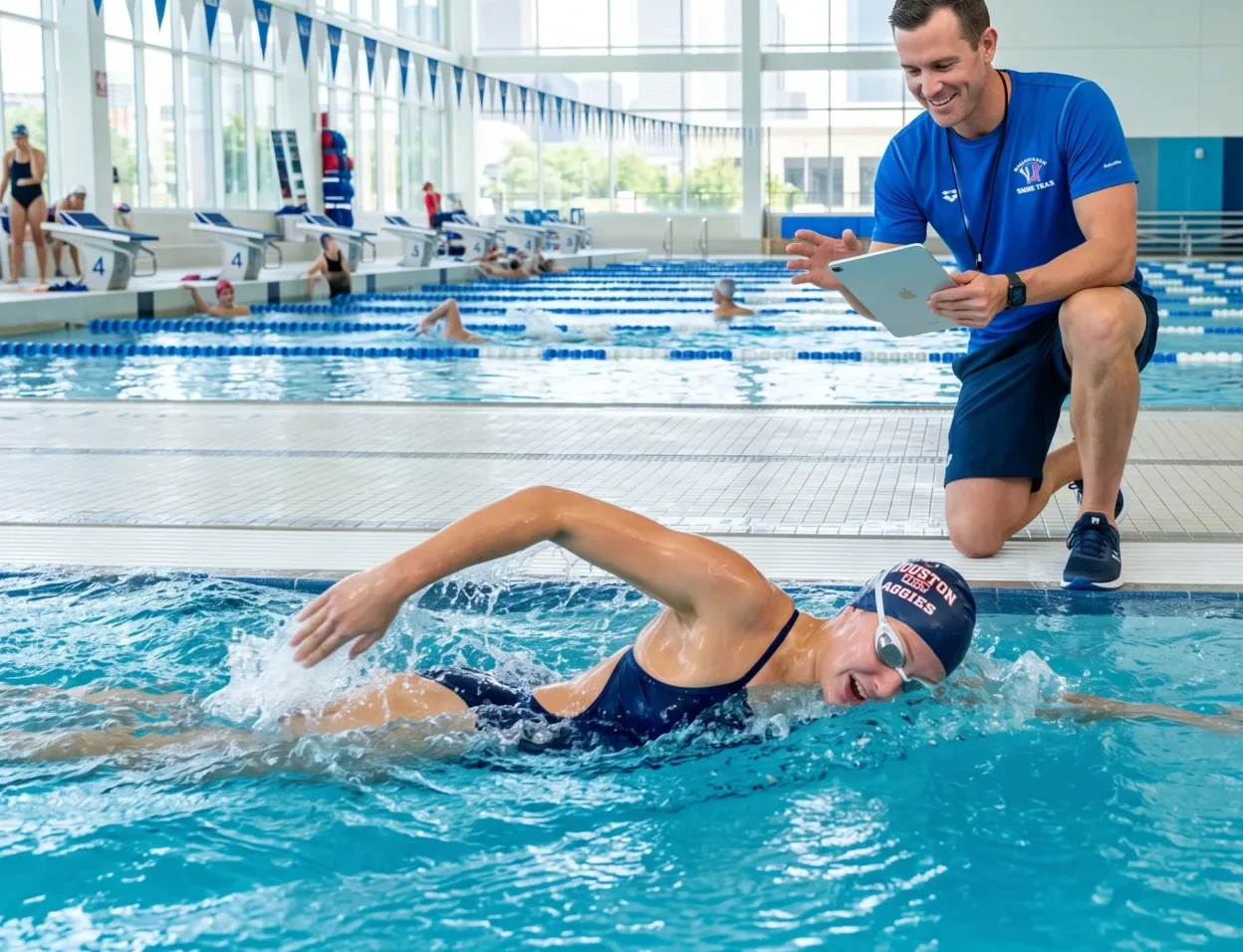
Have your stroke analyzed professionally through video recording. Focus on technique refinement before increasing training volume. Even accomplished swimmers benefit from periodic form reviews – small adjustments can yield remarkable efficiency gains.
Start each session with technique-only focus until you can swim 400m continuously. Build volume only after establishing proper mechanics.
Pro tip for improving swim efficiency
Count your strokes per length for immediate feedback. Olympic swimmers cover 50 meters in 28-40 single-arm strokes, while most triathletes require 50-80 strokes. This simple metric reveals efficiency gaps instantly.
Maintain body tautness throughout your stroke – structural integrity fades first when fatigue sets in. Practice with a snorkel during open water sessions to focus exclusively on body stability without breathing distractions.
Not Training Alone Enough
Group training sessions feel like the perfect solution. Camaraderie, accountability, and shared suffering make those early morning workouts bearable. Yet relying exclusively on training partners creates one of triathlon’s most overlooked performance killers.
Common mistake with group-only training
Group dynamics push triathletes into inappropriate training zones. When surrounded by peers, competitive instincts override training discipline. Easy recovery days transform into unplanned hammer sessions as athletes match each other’s intensity rather than following their prescribed zones.
This peer pressure doesn’t just affect single workouts. Many triathletes find themselves trapped in overtraining cycles when every session becomes an undeclared competition. Your body never gets the recovery it desperately needs.
Impact on mental endurance
Triathlon is an individual sport on race day. Training exclusively with groups fails to build the mental fortitude required when you’re racing alone against your own doubts.
That inner voice telling you to quit becomes your only companion during tough race moments. Solo training teaches you to recognize and silence that voice, building crucial mental toughness that transfers directly to race performance. Group-dependent athletes often crumble when facing race-day challenges without their usual support system.
How to build solo training habits
Identify key workouts that demand precise intensity control:
- Recovery sessions (complete these alone)
- Technical workouts requiring focused attention
- Race-specific sessions mimicking event conditions
Digital platforms like Strava or Garmin Connect provide accountability without intensity interference. You get the social connection without compromising your training zones.
Pro tip for triathlon motivation
Strategic blending works better than complete isolation. Reserve group sessions for workouts where motivation naturally lags, using training partners who aren’t direct competitors.
Schedule at least 30% of your training sessions completely alone. This builds the mental resilience you’ll need when race day gets tough and you’re facing those final miles with only your own determination to carry you forward.
Failing to Adjust Nutrition After the Swim
Time matters during the critical T1 transition. That moment when you stumble from the water, legs wobbling like a newborn giraffe, presents your most crucial fueling opportunity – yet most triathletes completely waste it.
Common mistake with energy planning
The “I’ll fuel later” mentality strikes immediately after the swim exit. Athletes delay their first nutrition intake, convinced they can make up the deficit during the run segment. This postponement mindset creates a cascade of performance problems that extend far beyond simple hunger. Others drastically underestimate their energy requirements, failing to account for the metabolic stress their bodies endure across three disciplines.
Impact on bike and run performance
Nutrition neglect after the swim segment sets up what experienced triathletes call the “death march” scenario. Your bike watts plummet unexpectedly. Your run pace evaporates into shuffling misery. Research confirms that early, frequent carbohydrate consumption extends performance capacity significantly compared to delayed fueling strategies.
How to fuel properly post-swim
Transform your bike into a rolling nutrition station. Target 30 grams of carbohydrates twice hourly rather than attempting 60-gram boluses. Start your fuel protocol within minutes of mounting your bike – after your heart rate stabilizes from the swim-to-bike transition shock. Simple carbohydrates deliver the fastest results: sports drinks, gels, and easily digestible bars consumed every 30-45 minutes.
Pro tip for triathlon race nutrition
Program nutrition alerts directly into your bike computer or GPS watch. Most importantly, rehearse your race-day fueling protocol during training sessions that mirror your expected race intensity – easy training rides teach your gut nothing about race-day absorption rates. Your digestive system responds differently under competitive stress, making intensity-specific practice essential for race success.
Pacing Based Only on Speed
Speed feels like the most logical pacing metric during races. After all, faster splits mean better finish times, right? This seemingly straightforward approach masks one of triathlon’s most performance-crushing mistakes.
Common mistake with speed-based pacing
Chasing pace targets ignores the physiological reality of effort distribution. Your body doesn’t care about your GPS watch when you’re grinding into a headwind or climbing a steep grade. Research shows the distribution of energy expenditure throughout a race is extremely important in optimizing performance. Athletes who fixate on speed metrics often push unsustainable efforts early, paying the price during later segments when their bodies have already accumulated significant stress.
Impact of wind and terrain on pacing
Environmental factors destroy speed-based pacing strategies. Large variations in power output are required to maintain even speed against headwinds or on hills, increasing physiological strain and reducing performance. Heat compounds these challenges—studies found earlier power declines during 40km time trials at 32°C compared to cooler temperatures. Your watch might show consistent splits while your body experiences wildly different effort levels.
How to use heart rate or power instead
Power meters cut through environmental noise. Unlike speed, wattage directly measures your actual output. Heart rate reveals how your body responds to that effort, creating a two-dimensional view of performance. Combine both metrics for intelligent pacing: power maintains consistent effort while heart rate monitors physiological stress. Add perceived exertion as your third checkpoint for complete effort awareness.
Pro tip for pacing smarter
Train with multiple metrics to develop what coaches call an “internalized effort clock”. Practice holding steady power output regardless of conditions during training sessions. This sometimes means accepting slower speeds, but remember that variable efforts are substantially more fatiguing than consistent ones. Race at the effort level you’ve trained at consistently—race day never delivers magical performance breakthroughs.
Overinvesting in Gear Too Early
Have you ever walked through a triathlon expo and felt overwhelmed by the endless displays of carbon fiber, aerodynamic wheels, and high-tech wetsuits? That feeling often leads to one of the costliest mistakes new triathletes make: buying expensive gear before understanding what they actually need.
Common mistake with triathlon gear
New triathletes frequently fall into the equipment trap, purchasing high-end gear without completing a single training session. A first-year athlete doing local sprint races has no business investing in a $1500 carbon disk wheel. Marketing promises and peer pressure drive beginners to acquire expensive equipment before logging even one hour of structured training.
The mistake compounds when athletes prioritize gear over fundamentals. You can’t buy speed – you have to earn it through consistent training and race experience.
Impact on budget and training focus
Premature gear investments drain resources that could fund coaching, race entries, or training camps. Athletes become fixated on equipment rather than developing the fitness and skills that actually determine performance. Research confirms that self-confidence – not equipment – is the primary factor that predicts race success.
Most gear purchases stem from anxiety rather than rational assessment. Athletes think expensive equipment will somehow compensate for inadequate preparation.
How to choose gear wisely
Smart gear acquisition follows a logical progression:
- Borrow or rent equipment before purchasing to test your actual needs
- Shop second-hand markets for quality gear at reduced prices
- Buy in logical tiers based on necessity, not desire
- Choose a reliable road bike over an expensive tri bike initially
Start with basics: a bike that fits, a wetsuit that allows proper swimming, and running shoes suited to your gait. Everything else can wait.
Pro tip for beginner triathletes
Earn your gear through experience. Complete several races using borrowed or entry-level equipment before making significant purchases. This approach ensures you understand what actually matters for your performance and racing style.
Your first few races will teach you more about gear needs than any marketing brochure or online review ever could.
Quick Reference Guide: Race-Sabotaging Mistakes and Solutions
Swimming Technique Breakdown Poor stroke mechanics multiply your energy expenditure while slashing forward speed. The fix? Video analysis reveals exactly where you’re bleeding time. Olympic swimmers cover 50 meters in 28-40 strokes – most triathletes need 50-80 strokes for the same distance. Count your strokes per length during training sessions to track efficiency improvements.
Solo Training Deficit Group training feels supportive, but racing happens alone. Athletes who train exclusively with others struggle when that inner voice starts whispering “quit” during tough race moments. Schedule 30% of your weekly sessions solo – particularly recovery days and technical workouts requiring precise intensity control.
Post-Swim Nutrition Neglect That critical transition from swim to bike determines whether you finish strong or face the dreaded “death march” during your run. Consume 30 grams of carbohydrates within minutes of mounting your bike, then repeat every 30-45 minutes. Set timer alerts on your bike computer – your depleted brain won’t remember to fuel consistently.
Speed-Only Pacing Trap Chasing pace targets ignores how wind, hills, and heat affect your actual effort output. Power meters provide objective measurement regardless of conditions. Train with multiple metrics to develop what coaches call an “internalized effort clock” – the ability to maintain steady effort even when external factors force speed variations.
Premature Gear Investment That $1,500 carbon disc wheel won’t help you finish your first sprint triathlon any faster. Complete several races using borrowed or second-hand equipment before making major purchases. Self-confidence predicts performance far better than expensive gear – invest in fitness and experience first.
Each mistake compounds the others. Poor swimming technique forces harder efforts that require more nutrition, which affects pacing decisions, while expensive gear distracts from the fundamentals that actually determine race outcomes.
Race Day Success Starts with Smart Training Choices
These five hidden mistakes separate podium finishers from frustrated competitors every race season. Most athletes chase additional training volume when the real performance gains lie in eliminating these subtle errors.
Swimming technique trumps endless pool hours. Solo training sessions build the mental toughness no group workout can provide. Your post-swim nutrition strategy determines whether you finish strong or hit the wall. Power-based pacing prevents the energy crashes that destroy race goals. Smart gear investments follow experience, not marketing hype.
Race day reveals every training oversight. The beautiful part? Fixing these mistakes requires no additional time commitment—just smarter choices during the hours you already dedicate to training.
Time matters in triathlon performance. Each correction you make today compounds over months of preparation, creating performance improvements that show up when it counts most. The path forward is clear: address these training blind spots now, and watch your next race reflect the difference that intelligent preparation makes.
Your breakthrough performance awaits on the other side of these simple but crucial adjustments.
Key Takeaways
These five hidden training mistakes can sabotage months of preparation, but addressing them now will unlock significant race day improvements without requiring additional training hours.
• Master swimming technique before volume – Poor form wastes 20% more energy; count strokes per length to measure efficiency (aim for under 50 strokes per 50m)
• Train solo 30% of the time – Group-only training fails to build mental toughness needed when racing alone; use groups strategically for motivation only
• Fuel immediately after the swim – Consume 30g carbohydrates within minutes of mounting your bike to prevent energy crashes during run segments
• Pace by power/heart rate, not speed – Environmental factors make speed unreliable; consistent effort prevents premature fatigue better than chasing pace targets
• Earn your gear through experience – Complete several races before investing in expensive equipment; focus on fitness and technique development first
Smart training beats hard training every time. These overlooked details separate podium finishers from disappointed competitors, proving that triathlon success comes from intelligent preparation rather than just increased volume.
FAQs
Q1. What are some common swimming technique mistakes in triathlon training? Common mistakes include crossover hand entry, improper body position, over-rotation of hips, and inefficient breathing patterns. These errors can increase energy expenditure and reduce propulsion, negatively impacting overall race performance. Training pitfalls for triathlon athletes can also stem from inadequate bike handling skills and poor nutrition strategies. Athletes may overlook the importance of consistent bike maintenance or fail to properly fuel their bodies before and during long training sessions. Addressing these factors is essential for improving performance and ensuring a well-rounded training regimen.
Q2. How important is solo training for triathletes? Solo training is crucial for developing mental toughness and race-day resilience. It’s recommended to schedule at least 30% of training sessions alone to build the mental fortitude needed when facing challenges during competition.
Q3. What’s the best approach to nutrition after the swim segment? It’s essential to consume nutrition within minutes of starting the bike segment. Aim for 30 grams of carbohydrates twice per hour, using simple carbs like sports drinks, gels, or bars every 30-45 minutes to prevent energy crashes.
Q4. Should triathletes pace based on speed alone? No, pacing based solely on speed can lead to premature fatigue. It’s better to use a combination of power output, heart rate monitoring, and perceived exertion to maintain consistent effort, especially when facing varying environmental conditions.
Q5. When should beginners invest in high-end triathlon gear? Beginners should focus on building fitness and gaining race experience before investing in expensive equipment. It’s advisable to complete several races using borrowed or second-hand gear to better understand specific needs before making significant purchases.